Carbon Fiber Multi-Axial Fabric: Why Is It Necessary to Secure Multiple Layers of Fiber?
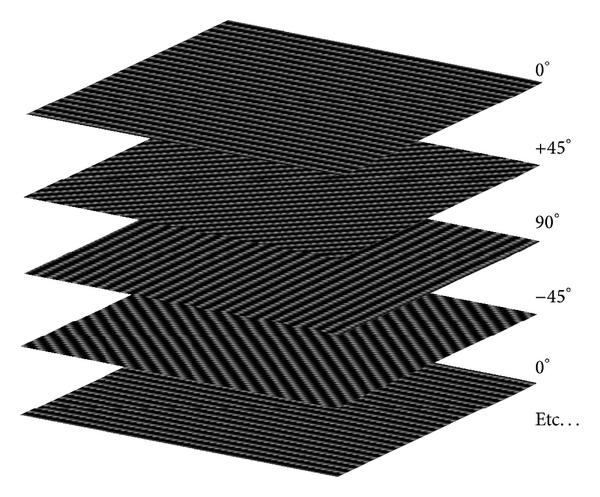
A key feature of multi-axial carbon fiber fabric is that multiple sets of carbon fibers are arranged at different angles and layered to form a multi-layer fiber structure.
Common orientations include:
0° orientation: Arranged primarily along the longitudinal direction to bear loads in that direction.
90° orientation: Arranged transversely to enhance transverse mechanical properties.
+45° orientation: Enhances diagonal load-bearing capacity.
-45° orientation: Works in conjunction with the +45° orientation to help the structure withstand loads from different directions.
When these fiber layers are laid out according to the designed angles, they form a more flexible structural configuration.
However, carbon fibers are relatively smooth, resulting in insufficient mutual restraint between individual fiber layers. When multiple layers of fibers are stacked, without an effective method of fixation, problems such as fiber layer loosening, misalignment, and angular deviation are likely to occur during handling, cutting, layup, or subsequent processing.
Therefore, multi-axial fabrics not only require the fibers to be arranged according to the design orientation but also necessitate a technology to stably bond these fiber layers together.
This is where warp-knitting technology comes into play.
What is warp-knitting technology? How does it secure multiple layers of fibers?
Warp knitting is a weaving technique in which yarns form loops that are interconnected to create a fabric structure.
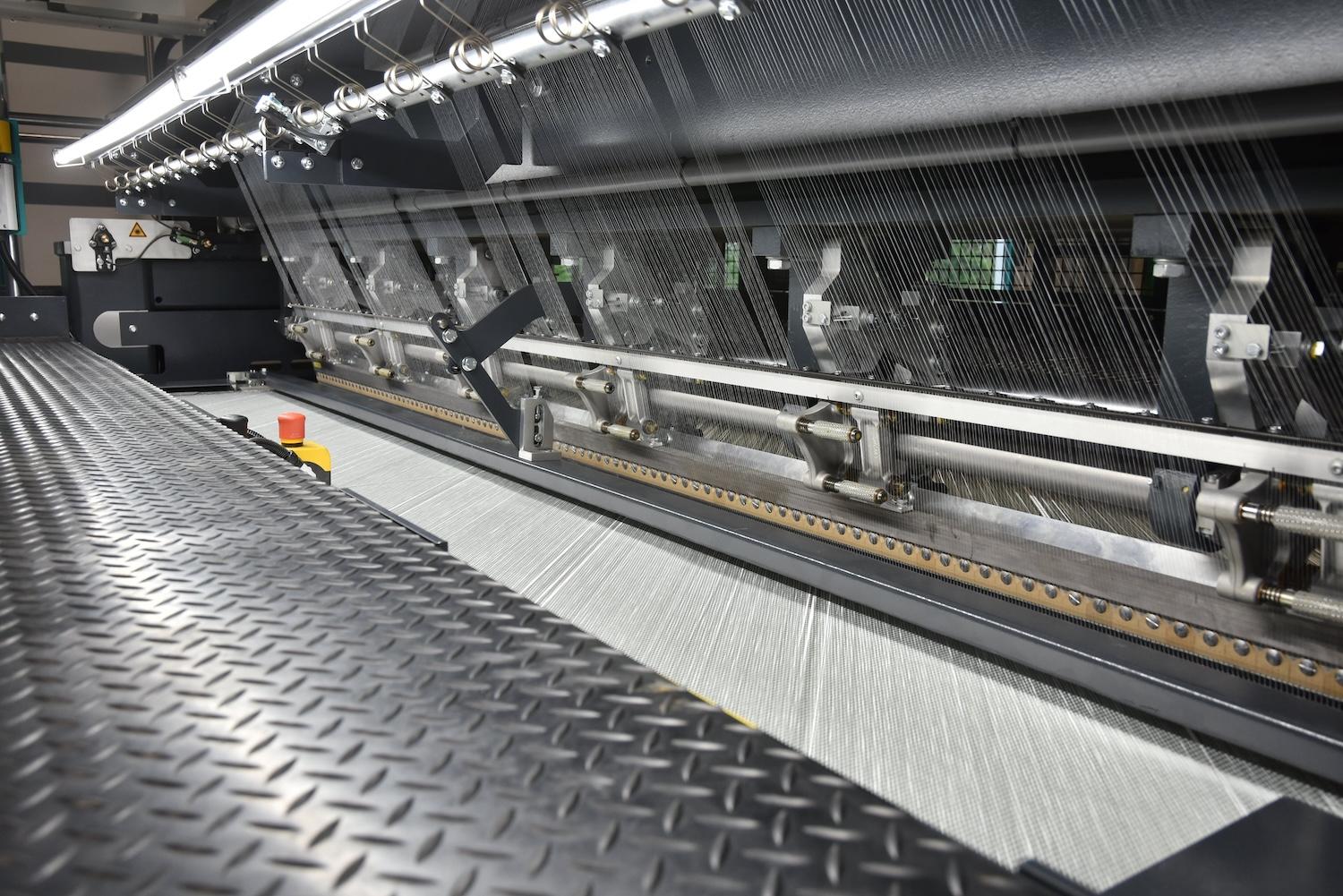
In the production of multi-axial carbon fiber fabrics, warp knitting does not interlace carbon fibers in different directions as in traditional fabrics; instead, it uses specialized warp knitting yarns to connect and secure pre-arranged multi-layer carbon fiber bundles.
Simply put, the carbon fibers are arranged in different directions, while the warp-knitting yarns hold these fiber layers together.
The basic process can be understood as three steps:
Multi-Directional Fiber Layup
The production equipment lays carbon fiber bundles in different directions at preset angles—such as 0°, 90°, +45°, and -45°—to form a multi-layer fiber structure.
Warp-knitted yarn forms loops
The warp-knitting mechanism, through the coordinated action of needles and yarn-guiding mechanisms, transforms specialized stitch-knitted yarn into a continuous loop structure.
Loops Connect and Secure Fiber Layers
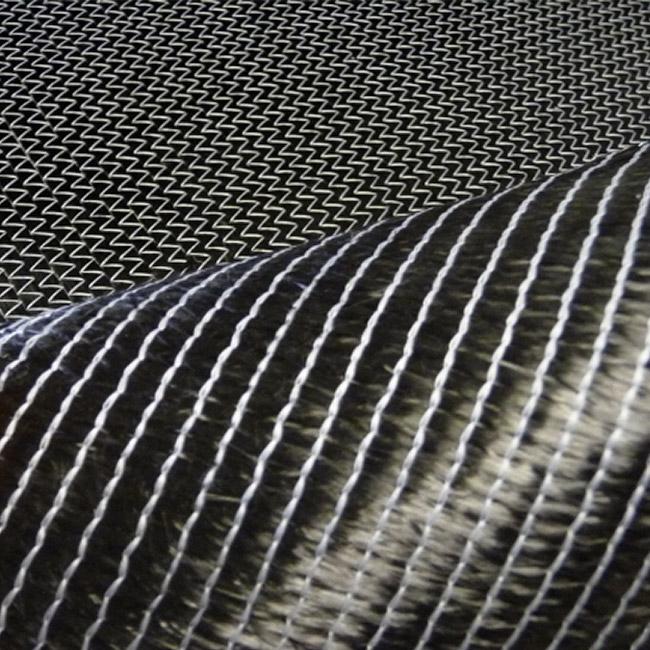
The formed loops pass through or connect the stacked fiber layers, binding the fiber bundles oriented in different directions together. This creates a unified fabric structure and reduces looseness and shifting between fiber layers.
The warp-knitted yarn acts as a connecting bond within the fabric, securing the originally independently arranged multi-layer fibers into a single unit, facilitating subsequent processing and use.
What role does warp-knitting technology play in carbon fiber multi-axial fabrics?
Secures Fiber Layers, Reduces Structural Looseness
Multi-axial fabrics consist of multiple sets of fibers stacked in different directions. Warp-knitted yarns bind the fiber layers together through a loop structure, reducing the degree of looseness between layers during handling, cutting, and processing, and helping the fabric maintain a relatively stable structure.
Maintaining Fiber Orientation and Layering Structure
The performance of multi-axial fabrics is closely related to the direction of fiber alignment. Warp-knitting reinforcement helps the fiber layers maintain their predetermined angles and arrangements, reducing interlayer displacement during processing and thereby helping to preserve the designed fiber structure.
Improved Processing Convenience
Multi-axial fabrics secured by warp knitting exhibit greater structural integrity, making them easier to handle during cutting, transport, layering, and subsequent composite molding processes.
For composite products requiring multi-layer fiber combinations, this structure facilitates production and processing.
Balancing Multi-Directional Fiber Design and Structural Stability
Traditional fabrics rely on the interlacing of warp and weft threads to form their structure, whereas multi-axial fabrics allow fibers to be laid in different directions according to product requirements and then secured using warp-knitted yarns.
This approach reduces the constraints on fiber orientation design imposed by traditional interlaced structures, providing greater design flexibility for multi-directional reinforcement structures.
Does warp-knitted yarn affect the performance of carbon fiber multi-axial fabrics?
Yes.
Although warp-knitted yarns primarily serve to secure and connect the fabric—rather than acting as the main load-bearing fibers in multi-axial fabrics—factors such as their material, loop structure, gauge, and warp-knitting density can still influence the fabric’s overall performance.
For example:
Stitch density: This affects the fabric’s degree of fixation, overall integrity, and processing performance.
Stitch structure: Different loop structures can affect the fabric’s softness, stability, and deformation characteristics.
Stitch yarn material: Stitch yarns made from different materials may affect the fabric’s processability and composite forming performance.
Stitch-knitting process: Stitch-knitting tension, process parameters, and other factors must be matched to the fiber layer structure to avoid adverse effects on fiber alignment and fabric quality.
Therefore, in the production of multi-axial fabrics, the warp-knitting process involves more than simply stitching fiber layers together; it also requires the proper coordination of fiber laying angles, the number of layers, the stitch-knitting structure, and the production process.
The essence of carbon fiber multi-axial fabrics lies not merely in laying the fibers in different directions, but rather in how these fiber layers are organized into a stable, easily processable overall structure.
Multi-directional lay-up determines the direction of fiber reinforcement, while warp-knitting technology provides bonding and stabilization for the multi-layer fibers. The synergy between these two elements enables multi-axial fabrics to leverage their advantages in structural design, processing efficiency, and composite material applications.
As the composite materials industry continues to evolve with growing demands for lightweight designs, multidirectional reinforcement, and efficient processing, multi-axial fabrics are providing an expanding range of material options for sectors such as drones, transportation, sports equipment, and industrial machinery.
Zhangjiagang Weinuo Composite Materials Co., Ltd. specializes in the research, development, and production of carbon fiber and composite materials, offering a product portfolio that includes carbon fiber fabrics, prepregs, unidirectional fabrics, multi-axial fabrics, and carbon fiber panels, providing composite material solutions for a wide range of applications.
Copyright © 2026 Zhangjiagang Weinuo Composites Co., Ltd. All rights reserved
 EN