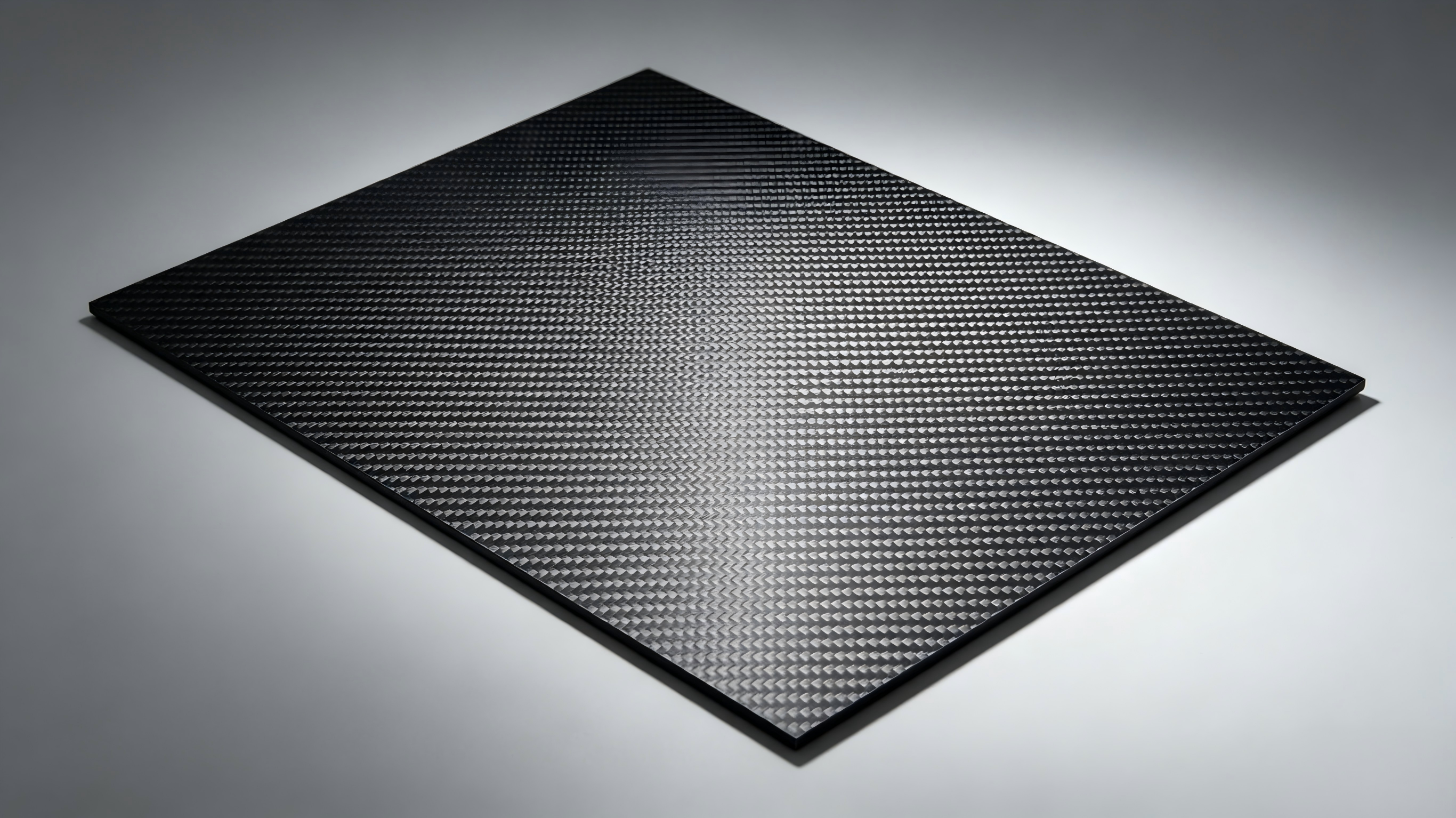
Laat ons begin met die oppervlak: vlakheid en voorkoms is die eerste ‘kontrole’
’n Goeie koolstofveselblad moet, veral, ’n relatief eenvormige en plat oppervlak hê.
Plaas die blad op ’n plat oppervlak en ondersoek dit van verskillende hoeke, met spesifieke aandag aan die volgende:
(1) Of daar enige waarneembare vertrekking of vervorming is;
(2) Of die oppervlak plat is;
(3) Of daar enige waarneembare in-drukkinge of uit-bulles is;
(4) Of daar enige krake, afskalling of voor die hand liggende lugborrels is;
(5) Of die rande netjies is;
(6) Of daar enige voor die hand liggende harsopbou of openinge in die harsbedekking op die oppervlak is.
Vir toepassings met hoë estetiese vereistes, is dit ook nodig om te kontroleer of die koolstofveselweefsel eenvormig en duidelik is.
Dit moet egter daarop gewys word dat ’n aantreklike weefsel nie noodwendig
gelykstaan aan hoë prestasie nie.
Sommige dekoratiewe koolstofveselpaneel het baie aantreklike oppervlakteksture, maar hul interne uitleg en meganiese eienskappe mag nie geskik wees vir gebruik in strukturele komponente nie.
Tydens die verhitting, verharding en afkoeling van koolstofveselpaneel kan vervorming voorkom indien temperatuur, druk, uitlegstruktuur of vormbeheer nie behoorlik bestuur word nie.
Eenvoudig gestel: as ’n paneel nie voldoende plat is nie, beïnvloed dit nie net sy voorkoms nie, maar kan dit ook verdere bewerking en samestelling beïnvloed.
Kom ons kyk nou na dikte: kyk nie net na die ‘nominale dikte’ nie
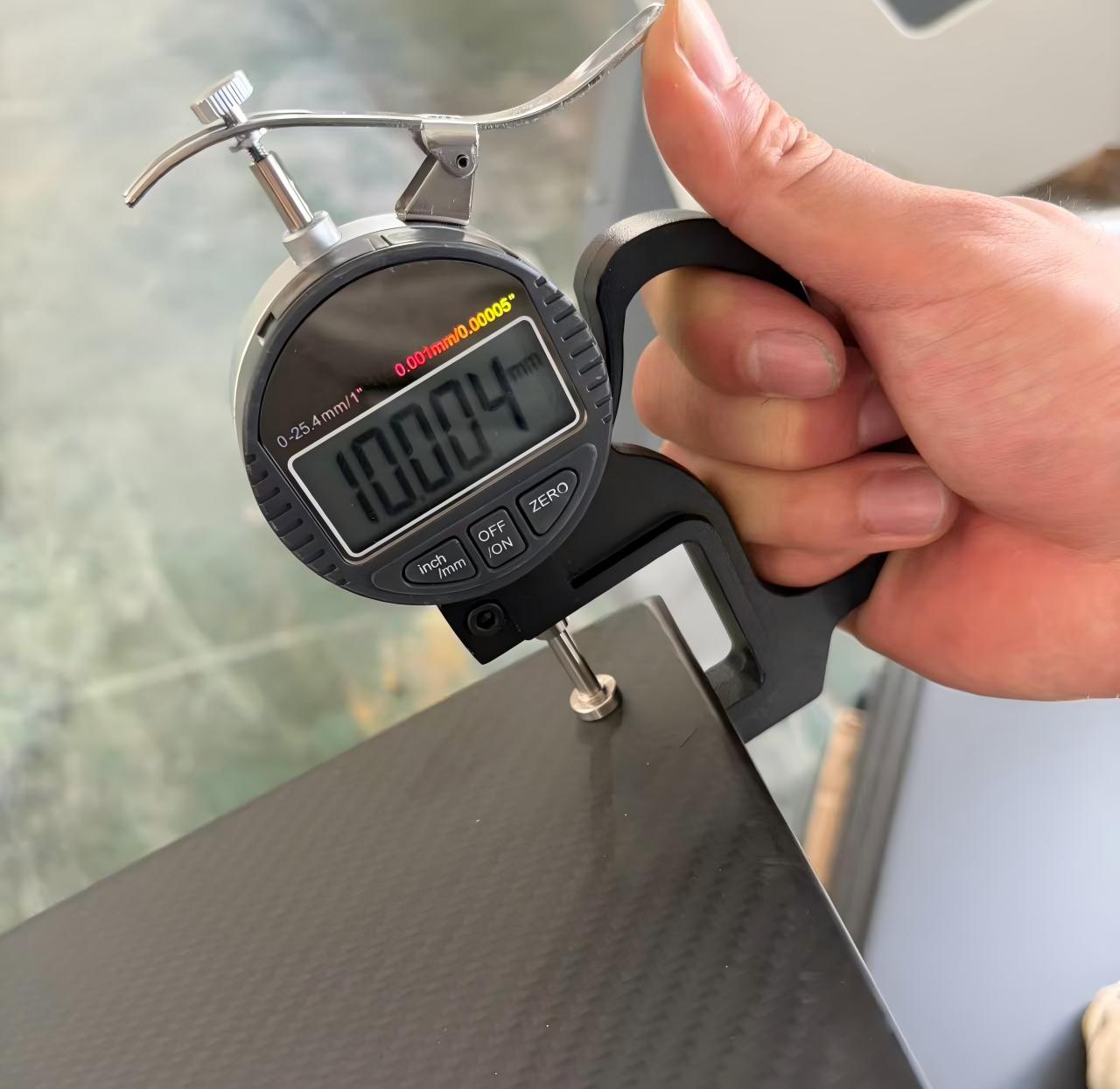
Byvoorbeeld, beteken ’n produk wat as 2 mm dik gemerk is nie noodwendig dat elke punt op die hele blad presies 2,00 mm is nie.
Indien faktore soos druk, temperatuur, voorverhardde harsdikte en die aantal vlakke nie tydens die vervaardigingsproses behoorlik beheer word nie, kan plaaslike variasies in dikte voorkom.
Daarom word dit vir toepassings wat hoë presisie vereis, aanbeveel om ’n mikrometer of ’n hoë-presisie-diktemeter te gebruik om verskeie metings op verskillende punte op die blad te neem.
Let veral op twee aanwysers:
of die gemiddelde dikte aan die vereistes voldoen, en of die dikteverskille tussen verskillende punte binne die toelaatbare reeks val.
Diktekonsekwentheid is veral belangrik vir koolstofveselblaaie wat CNC-bewerking, samestelling of presisie-laminering vereis.
Wat werklik tel, is of daar enige ‘gebrekke’ aan die binnekant is.
Koolstofveselpanele word nie bloot deur die pers van koolstofvesellae teen mekaar gevorm nie.
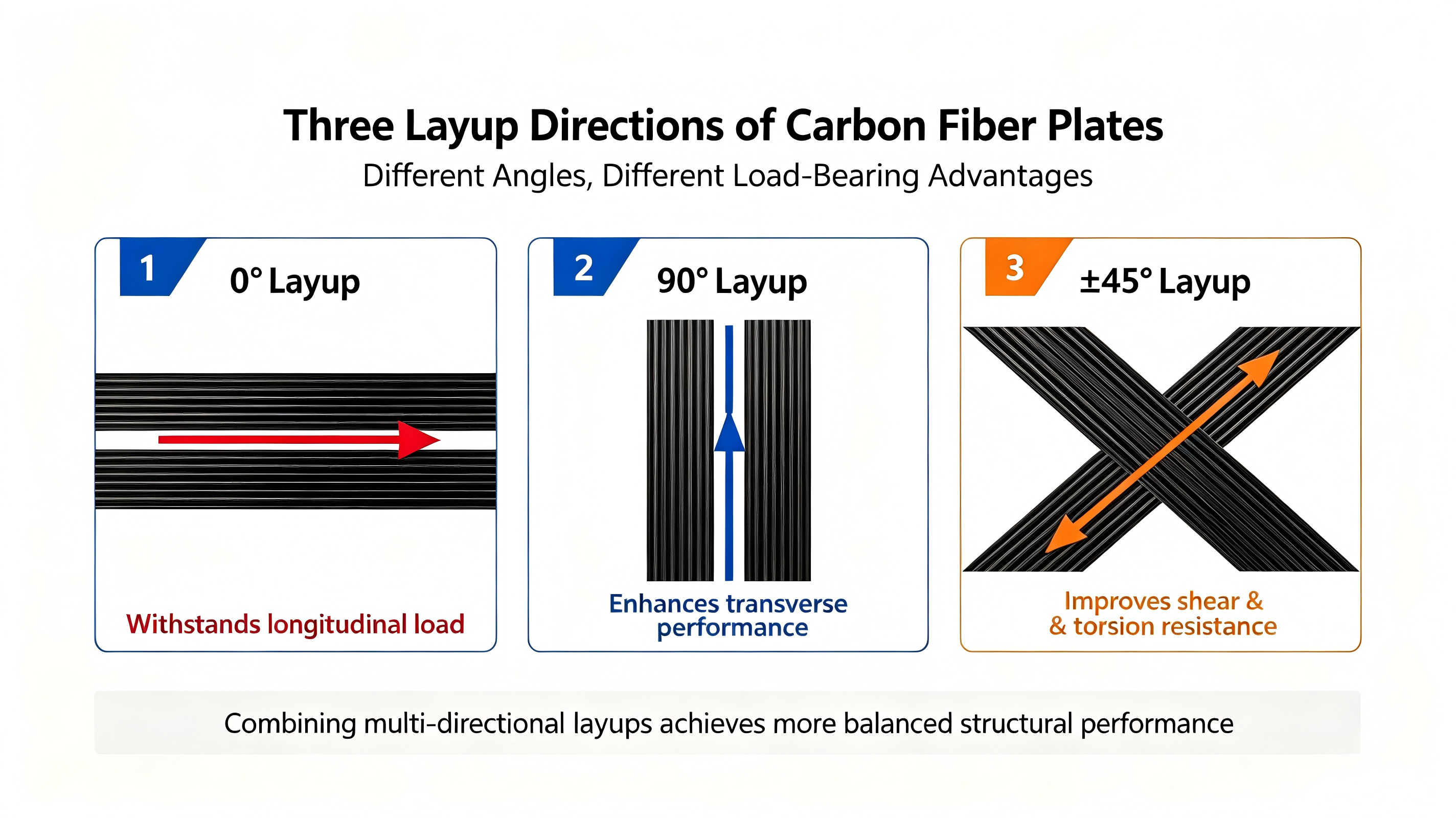
Verskillende lêpatrone beïnvloed direk die sterkte en styfheid van die paneel in verskillende rigtings.
Byvoorbeeld:
’n 0°-lêpatroon is meer effektief om longitudinale belastings te weerstaan;
’n 90°-lêpatroon word hoofsaaklik gebruik om dwarsprestasie te verbeter;
Terwyl ’n ±45°-lêpatroon prestasie onder skuif- en torsiebelastings verbeter.
Daarom vereis ’n hoë-kwaliteit koolstofvezelpaneel ’n rasionele lêontwerp wat afgestem is op die spesifieke toepassing .
Selfs vir koolstofvezelpanele met dieselfde 2 mm-dikte kan die finale prestasie aansienlik wissel, afhangende van die veseltipe, lêverhouding, lêvolgorde en harsstelsel.
So, wanneer u koop, vra nie net:
“Hoe dik is hierdie paneel?”
U moet eerder vra:
“Watter tipe vesel, lêpatroon en harsstelsel word vir hierdie paneel gebruik?”
Oorweeg die harsinhoud: ’n Hoër koolstofveselinhoud beteken nie noodwendig dat die plaat van beter gehalte is nie
Koolstofvesels dra die hooflas, terwyl die hars die vesels bind, die las oordra en ’n volledige saamgestelde struktuur vorm.
Indien daar te veel hars is, kan dit die gewig van die plaat verhoog en die effektiewe lasdra-verhouding van die vesels beïnvloed;
Indien daar te min hars is, kan probleme soos onvoldoende natmaak, porositeit en swak tussenlaagbinding ontstaan.
Daarom vereis ’n hoëgehawte koolstofveselplaat ’n redelike balans tussen veselinhou, harsinhoud en die vormproses.
Dit is ook een van die sleutelprosesparameters wat professionele vervaardigers moet beheer.
Voer ’n eenvoudige ‘gewigtoets’ uit
Selfs wanneer afmetings en dikte identies is, kan daar variasies in die gewig van verskillende koolstofveselpanele wees.
De digtheid van ’n paneel kan bereken word deur die lengte, breedte, dikte en massa daarvan te meet, en dit kan dan vergelyk word met die produk se ontwerp-spesifikasies of tegniese parameters.
Indien die werklike massa beduidend van die normale reeks afwyk, vereis dit verdere ondersoek.
Natuurlik beteken ’n lae massa nie noodwendig hoë gehalte nie.
Indien die strewe na massa-vermindering lei tot onvoldoende hars, verhoogde porositeit of swak tussenlaag-binding, kan dit eintlik die algehele prestasie benadeel.
Ware massa-vermindering word bereik terwyl prestasie behou word.
Die mees betroubare manier om te bepaal: kyk na die toetsverslae en werklike prestasie
Indien koolstofvezelpaneel vir kritieke strukturele komponente gebruik gaan word, is visuele inspeksie duidelik ontoereikend.
’n Meer betroubare benadering is om die relevante tegniese dokumentasie en toetsdata wat deur die verskaffer verskaf word, te ondersoek, soos:
treksterkte, trekmodulus, buigsterkte, buigmodulus, interlaminaire skuifsterkte, digtheid, veselvolumefraksie, dikte en dikte-toleransie, vlakheid, verhardingsvoorwaardes, ens.
Waar die toepassing hoë veiligheids-, betroubaarheids- en konsekwentheidsvereistes stel, kan doelgerigte prestasieverifikasie ook volgens die produk se bedoelde gebruik uitgevoer word.
'n Werklik hoë gehalte-koolstofveselplaat moet deur data geverifieer kan word, eerder as om bloot 'goed te lyk'.
Wat presies lyk 'n 'goeie' koolstofveselplaat so?
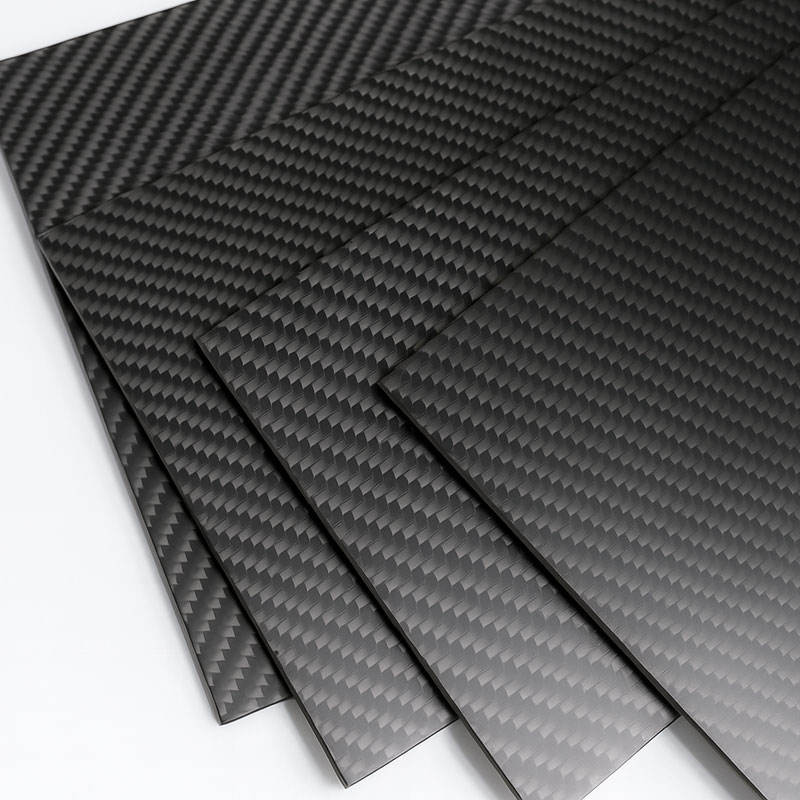
Om kortliks saam te vat, moet 'n werklik hoë gehalte-koolstofveselplaat ten minste aan die volgende kriteria voldoen:
'n Gladde oppervlak en dimensionele stabiliteit;
Eenvormige dikte en goeie vlakheid;
'n Digte interne struktuur met beheerbare defekte;
'n Rasionele veselopstelling met 'n duidelike oriëntasie;
Toepaslike harsinhoud en grondige impregnering;
Stabiele meganiese eienskappe en goeie partyskonsekwentheid;
Sowel as volledige en betroubare gehalte-inspeksiedata.
Dus, die volgende keer wat jy koolstofveselplate koop, vra dalk een minder vraag:
‘Hoeveel per plaat?’
En vra ‘n paar meer:
‘Watter tipe vesel?’
‘Wat is die opbou?’
‘Wat is die dikte-toleransie?’
‘Hoe is die vlakheid?’
‘Is daar enige data oor die meganiese eienskappe?’
“Is daar ’n gehalte-inspeksieverslag?”
Want wat werklik die waarde van ’n koolstofveselplaat bepaal, is nooit net daardie aantreklike koolstofveselpatroon op die oppervlak nie, maar eerder die materiale, struktuur en vervaardigingsprosesse wat onder dit weggesteek is.
Wat betref koolstofveselplate: ‘Wat jy sien, is die voorkoms; wat jy nie kan sien nie, is die werklike gehalte.’
Dit is ook die belangrikste punt om in ag te neem wanneer ’n verskaffer van koolstofveselpaneel gekies word.
Kopiereg © 2026 Zhangjiagang Weinuo Composites Co., Ltd. Alle regte voorbehou
 EN
EN