
 EN
EN

When engineers and designers seek the highest level of structural performance in composite materials, carbon fiber multiaxial fabrics consistently stand out as the preferred reinforcement solution. Unlike conventional woven or stitched fabrics, carbon fiber multiaxial fabrics are engineered to orient fibers precisely along multiple load-bearing axes simultaneously, eliminating the mechanical compromises found in traditional textile architectures. This fundamental design advantage makes carbon fiber multiaxial fabrics the go-to choice for aerospace, automotive, marine, and industrial applications where strength-to-weight ratio is non-negotiable.
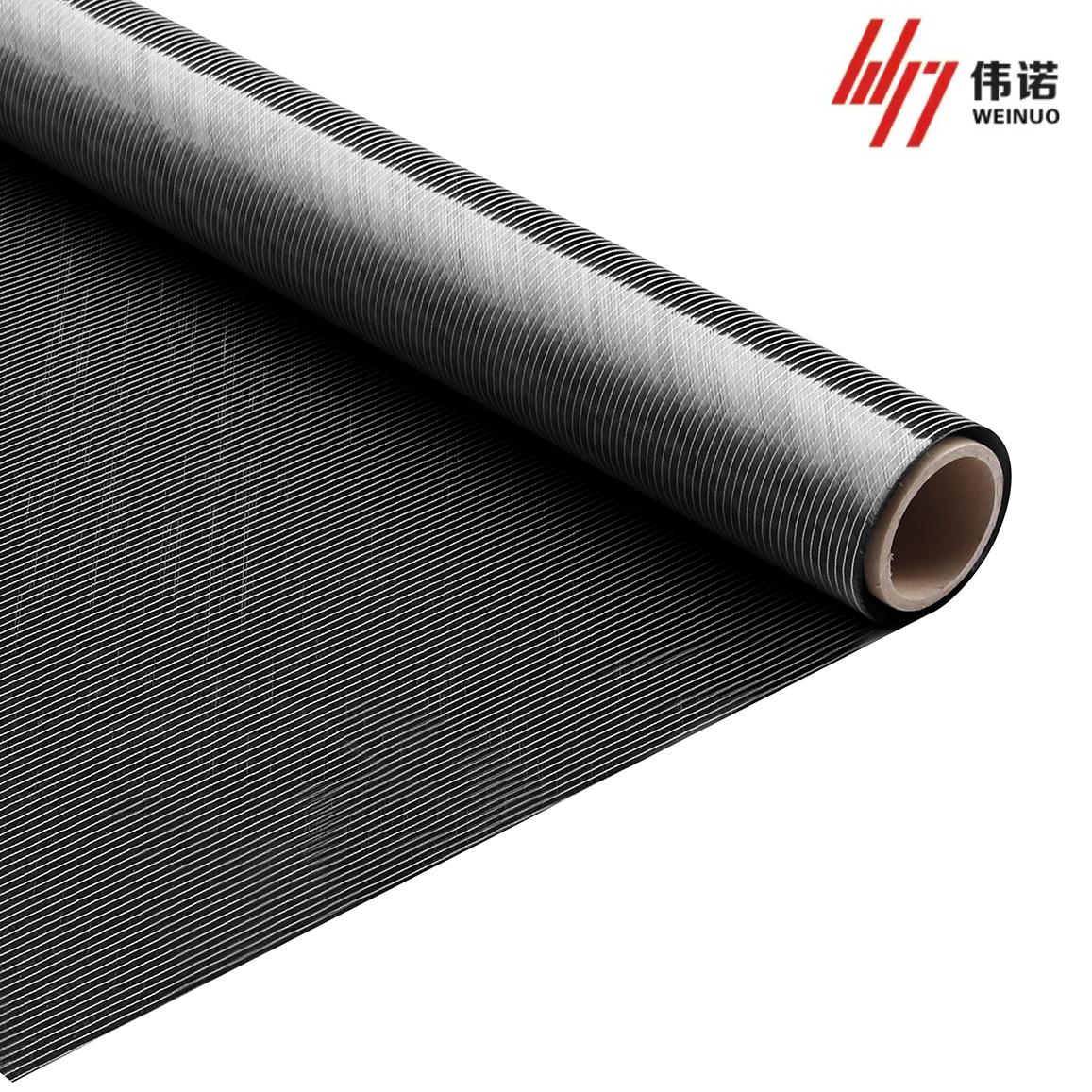
Understanding exactly how carbon fiber multiaxial fabrics outperform other fabrics requires examining their construction logic, their mechanical properties, and their processing advantages. Carbon fiber multiaxial fabrics are built by layering unidirectional carbon fiber tows at precisely controlled angles — commonly 0°, 90°, +45°, and -45° — and stitching or bonding these layers together without weaving. This architecture preserves fiber straightness and maximizes the contribution of each fiber to the final composite laminate. In this article, we explore how carbon fiber multiaxial fabrics achieve superior performance across the dimensions that matter most to engineers and buyers.
Structural Architecture of Carbon Fiber Multiaxial Fabrics
Straight Fiber Paths and Load Transfer Efficiency
The performance superiority of carbon fiber multiaxial fabrics begins at the fiber level. In a conventional woven fabric, fibers must crimp and undulate as they pass over and under crossing fibers. This undulation introduces off-axis stress concentrations that reduce the effective stiffness and tensile strength of the cured laminate. Carbon fiber multiaxial fabrics eliminate this problem entirely by keeping fibers straight and flat across each layer. Because each fiber in carbon fiber multiaxial fabrics runs in a perfectly linear path, mechanical loads transfer directly through the fibers without bending losses.
Research consistently shows that laminates produced from carbon fiber multiaxial fabrics achieve higher in-plane stiffness and tensile strength compared to woven equivalents of the same areal weight. This efficiency means that engineers using carbon fiber multiaxial fabrics can achieve the same structural performance with less material, reducing both weight and cost. For load-critical components such as wing spars, chassis panels, or pressure vessels, the straight-fiber architecture of carbon fiber multiaxial fabrics translates directly into measurable performance gains.
Multi-Directional Reinforcement in a Single Ply
Carbon fiber multiaxial fabrics offer another critical structural advantage: multi-directional fiber coverage within a single fabric layer. A biaxial or triaxial carbon fiber multiaxial fabric delivers reinforcement along two or three fiber orientations simultaneously, eliminating the need to manually stack multiple unidirectional plies. This consolidation simplifies layup processes without sacrificing directional control. Carbon fiber multiaxial fabrics thus make it practical to tailor the fiber angle distribution precisely to the actual stress state of a component, something that neither plain woven fabrics nor random mat materials can achieve with the same precision.
Mechanical Performance Advantages Over Other Fabrics
Superior Strength-to-Weight Ratio
One of the clearest ways carbon fiber multiaxial fabrics outperform other fabrics is in their strength-to-weight ratio. Because carbon fiber multiaxial fabrics allow every fiber to contribute maximally to load-bearing capacity, the resulting laminates are both lighter and stronger than those made from woven fabrics, chopped strand mats, or glass fiber alternatives. In applications where every gram matters — racing vehicles, unmanned aircraft, high-performance sporting equipment — carbon fiber multiaxial fabrics provide a performance margin that other fabric types simply cannot match. The combination of high fiber volume fraction and controlled fiber orientation makes carbon fiber multiaxial fabrics exceptionally efficient reinforcement materials.
Fatigue Resistance and Damage Tolerance
Carbon fiber multiaxial fabrics also exhibit superior fatigue resistance compared to woven fabrics. In woven structures, the crimp points act as stress concentration sites under cyclic loading, which can initiate micro-cracks and accelerate delamination. Carbon fiber multiaxial fabrics, by contrast, distribute cyclic stresses more evenly across straight fiber paths. This characteristic extends the service life of components made from carbon fiber multiaxial fabrics under repeated loading conditions. For structural elements in wind energy blades, marine hulls, or industrial machinery, the improved fatigue behavior of carbon fiber multiaxial fabrics represents a significant long-term reliability advantage over conventional fabric types.
Processing and Design Flexibility of Carbon Fiber Multiaxial Fabrics
Compatibility with Resin Infusion and Prepreg Processes
Carbon fiber multiaxial fabrics are highly compatible with a range of manufacturing processes including vacuum infusion, resin transfer molding, and prepreg layup. Their open, non-woven structure allows resin to flow evenly through the fabric stack, reducing the risk of dry spots and void formation. Compared to tightly woven fabrics, carbon fiber multiaxial fabrics typically infuse faster and more completely, improving production efficiency and laminate quality. This processing advantage means that manufacturers working with carbon fiber multiaxial fabrics can achieve more consistent mechanical properties across large production batches, which is critical for certified structural applications.
Tailorable Fiber Orientations for Complex Geometries
Another reason carbon fiber multiaxial fabrics outperform other fabrics in advanced manufacturing is their design flexibility. Engineers can select from a wide range of fiber angle combinations — including ±45°, 0°/90°, triaxial, and quadriaxial configurations — to match the specific stress distribution of any component. Carbon fiber multiaxial fabrics drape reasonably well over curved surfaces, and their stitched construction keeps the fabric layers aligned during handling, reducing layup errors. Compared to unidirectional tapes that must be individually placed, carbon fiber multiaxial fabrics streamline the layup process while maintaining directional fiber precision. This combination of tailorability and ease of handling makes carbon fiber multiaxial fabrics the practical choice for complex structural components.
FAQ
What makes carbon fiber multiaxial fabrics different from woven carbon fabrics?
Carbon fiber multiaxial fabrics keep fibers straight and unidirectional within each layer, while woven fabrics crimp fibers as they interlace. This straight-fiber architecture in carbon fiber multiaxial fabrics eliminates mechanical losses caused by fiber undulation, resulting in higher stiffness and strength in the cured laminate compared to woven alternatives.
Which industries benefit most from using carbon fiber multiaxial fabrics?
Carbon fiber multiaxial fabrics are widely used in aerospace, automotive, wind energy, marine, and sporting goods industries. Any application that demands high structural efficiency, low weight, and reliable fatigue performance benefits from carbon fiber multiaxial fabrics, as their controlled fiber architecture delivers consistent mechanical properties that standard fabrics cannot replicate.
Are carbon fiber multiaxial fabrics suitable for complex curved components?
Yes, carbon fiber multiaxial fabrics offer reasonable drapability, particularly in lighter areal weights and when using softer stitching constructions. For tightly curved geometries, selecting appropriate carbon fiber multiaxial fabrics with compatible fiber angles and binder systems ensures good conformability without fiber distortion, making them suitable for complex shapes used in structural composite manufacturing.