
 EN
EN

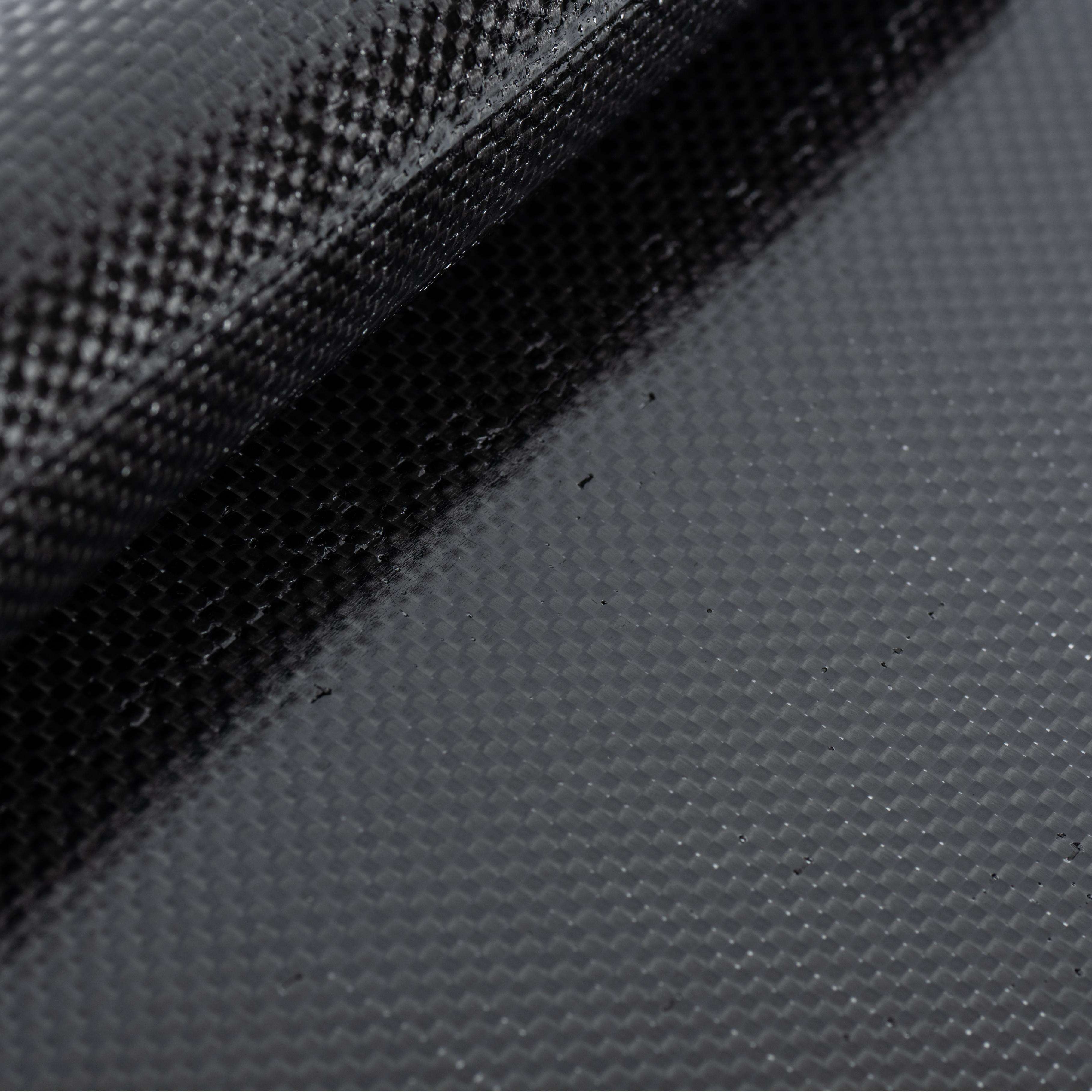
In high-performance composite manufacturing, achieving part-to-part consistency is not a luxury — it is an engineering requirement. Whether you are producing aerospace structural panels, automotive chassis components, or industrial tooling, the uniformity of your raw material directly determines the reliability of your finished product. carbon fiber prepreg has emerged as the preferred material system for manufacturers who cannot tolerate variability, because it brings a controlled resin-to-fiber ratio, consistent fiber alignment, and repeatable cure chemistry into a single, ready-to-use format.
Understanding how carbon fiber prepreg achieves this level of consistency requires looking at each stage of its production and use: from the impregnation of fiber with resin, through storage and handling, to the final cure cycle. Each of these stages introduces a control point that, when properly managed, eliminates the random variation that plagues wet layup and other open-mold processes. This article explores the specific mechanisms through which carbon fiber prepreg enforces dimensional, mechanical, and cosmetic consistency across composite parts.
The Foundation of Consistency: Controlled Resin Content
How Resin-to-Fiber Ratio Is Locked In During Manufacturing
One of the most critical variables in any composite laminate is the ratio of resin to reinforcing fiber. Too much resin adds unnecessary weight and reduces fiber-dominated mechanical properties. Too little resin creates dry zones, poor fiber wetting, and structural weakness. In wet layup processes, this ratio depends entirely on operator skill and the viscosity of the resin at the time of application — both of which vary.
Carbon fiber prepreg eliminates this uncertainty by fixing the resin content during the manufacturing of the prepreg itself. Specialized impregnation lines pass the carbon fiber fabric or unidirectional tape through a precisely metered resin film or bath, applying a controlled and verified mass of resin per unit area. The result is a material with a defined fiber areal weight and a calibrated resin content, typically expressed as a percentage by mass, that remains constant from roll to roll within tight tolerances.
This precision means that every ply cut from a roll of carbon fiber prepreg contributes the same resin volume to the laminate. When multiple plies are stacked, the cumulative resin content is predictable and can be validated against design calculations. Engineers designing composite structures can therefore specify layup schedules with confidence that the fabricated part will match the modeled part in both weight and stiffness.
Resin System Uniformity and Its Effect on Part Performance
Beyond simply controlling the quantity of resin, carbon fiber prepreg also delivers consistency in resin chemistry. Prepreg manufacturers blend epoxy or other thermosetting resins with hardeners, accelerators, and toughening agents in precise formulations before impregnation. This means every square meter of carbon fiber prepreg contains the same chemical system in the same proportions.
In contrast, when operators mix resin manually on the shop floor, mixing ratios can drift, pot life management introduces variables, and even minor contamination can alter cure kinetics. Carbon fiber prepreg removes the resin mixing step entirely from the fabrication process, placing chemical uniformity under the control of the material supplier rather than the production floor. This elevates consistency from a process skill to a material property.
The downstream benefit is consistent glass transition temperature, consistent interlaminar shear strength, and consistent toughness across all parts made with the same carbon fiber prepreg lot. For industries like aerospace and motorsport, where material qualification is a regulatory and safety matter, this batch-level chemical consistency is foundational.
Fiber Architecture Control and Ply-Level Repeatability
Aligned Fiber Orientation as a Source of Mechanical Predictability
The mechanical properties of a carbon fiber composite are strongly directional. Tensile strength and stiffness are dominated by fiber orientation, meaning a ply laid at zero degrees contributes very differently to the laminate than a ply laid at forty-five or ninety degrees. Carbon fiber prepreg, particularly in unidirectional form, maintains fiber alignment with exceptional precision because the fibers are locked into position by the surrounding resin matrix during impregnation.
When laminators cut and position plies from a roll of carbon fiber prepreg, they work with a material whose fiber direction is already fixed and visible. Accurate angular placement is supported by the fabric's own structure and by cutting guides or automated ply cutters. The tolerance on fiber angle achieved with carbon fiber prepreg is significantly tighter than what can be achieved by laying dry fiber and then wetting it out, where individual tows can shift during resin application.
Tighter fiber angle tolerances translate directly into more predictable stiffness and strength, less scatter in test data, and greater confidence that a design's safety factors will be met across the entire production run rather than just in prototypes or test coupons.
Ply Thickness Consistency and Its Role in Dimensional Accuracy
Carbon fiber prepreg is manufactured to a specified cured ply thickness, typically derived from the fiber areal weight and the resin content. Because both of these parameters are tightly controlled, the thickness contribution of each ply after cure is highly repeatable. This ply-level dimensional consistency compounds across a multi-ply laminate, allowing engineers to predict final part thickness with confidence.
In wet layup, resin content variation means that ply thickness varies from part to part and even within a single part. This creates dimensional non-conformance, mismatch at bonded joints, and unpredictable aerodynamic surfaces. Carbon fiber prepreg's controlled thickness means that bonding interfaces can be designed to close tolerances, structural assemblies fit together predictably, and machining allowances can be minimized because the 'as-cured' dimensions are well understood.
For toolmakers and mold designers, the predictable shrinkage and thickness behavior of carbon fiber prepreg also simplifies tool compensation. Molds designed for use with carbon fiber prepreg can be machined to repeatable offset values that reflect the material's known consolidation behavior, reducing the number of tool modification cycles required during part development.
The Role of Cure Cycle Standardization
How Autoclave and Oven Cure Cycles Reinforce Material Consistency
The cure cycle — the time-temperature-pressure profile applied to a carbon fiber prepreg layup — is a critical factor in determining final part properties. Fortunately, because the resin chemistry in carbon fiber prepreg is defined and consistent, the optimal cure cycle can be precisely characterized once and then applied repeatably to every subsequent part. This is a fundamental advantage over processes where resin chemistry varies.
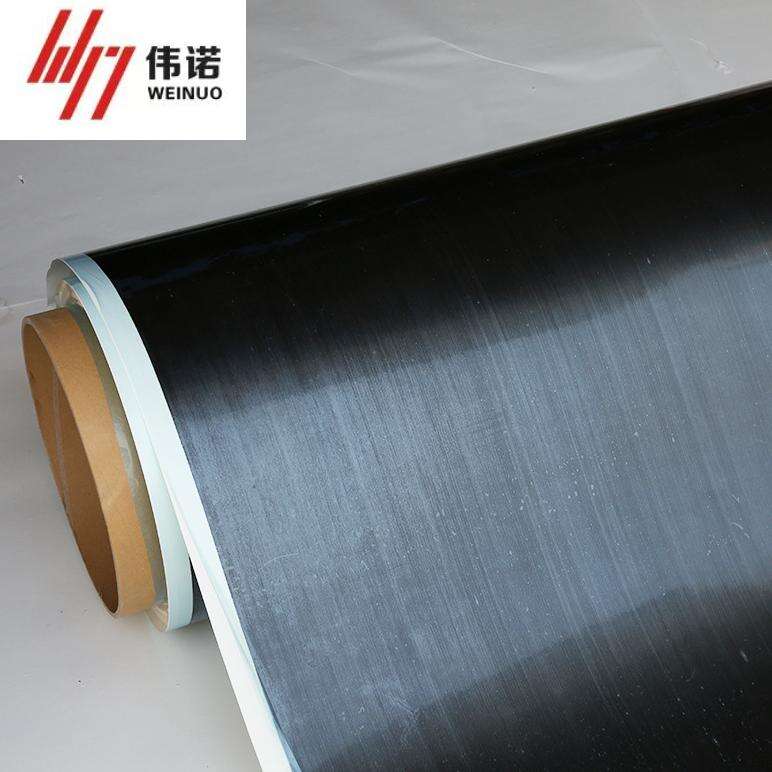
Autoclave processing, the most common method used with carbon fiber prepreg in aerospace applications, combines elevated temperature with positive pressure. The pressure consolidates the plies, eliminates void content, and ensures intimate contact between adjacent plies. Because carbon fiber prepreg already contains the correct amount of resin, consolidation pressure primarily serves to remove entrapped air rather than to redistribute resin — making the process inherently more controllable than vacuum infusion or resin transfer molding.
Out-of-autoclave carbon fiber prepreg systems, designed for oven cure, achieve comparable consistency through optimized resin flow and tack characteristics that enable vacuum-only consolidation without the void content penalty that would affect wet layup parts processed the same way. The material engineering built into the carbon fiber prepreg compensates for the lower consolidation pressure.
Cure Monitoring and Process Control for Batch Repeatability
Modern manufacturing environments that use carbon fiber prepreg often integrate cure monitoring tools such as dielectric sensors or embedded thermocouples to track resin cure state in real time. Because the resin chemistry in carbon fiber prepreg is consistent and well-characterized, the data from these sensors can be compared against a validated baseline, allowing operators to confirm that each cure cycle has achieved the intended degree of cure.
This process verification is possible precisely because the material is consistent. If every batch of carbon fiber prepreg contains the same resin system at the same loading, the cure model built from initial characterization remains valid indefinitely — provided storage and handling protocols are followed. This creates a closed loop between material consistency, process control, and quality assurance that is extremely difficult to replicate with manually mixed or infused resin systems.
For manufacturers producing certified parts under quality management systems such as AS9100 or IATF 16949, the traceability and repeatability enabled by carbon fiber prepreg's defined cure behavior is a significant compliance advantage. Each batch of parts can be tied back to a specific material lot with documented properties, simplifying both internal quality records and customer-facing documentation.
Storage, Handling, and Out-Life Management
Cold Storage as a Consistency Preservation Mechanism
Carbon fiber prepreg contains partially advanced resin — the hardener and resin have been combined but the cure reaction has been deliberately arrested at a low-conversion state by storing the material at sub-zero temperatures, typically between minus eighteen and minus twenty degrees Celsius. This cold storage protocol is not a limitation of the material; it is a deliberate consistency preservation mechanism.
By keeping carbon fiber prepreg frozen until it is needed, the resin advancement is paused, ensuring that the material used in the first layup of a roll is chemically identical to the material used in the last layup from the same roll. Without cold storage, the resin would continue to advance over time, gradually increasing viscosity and reactivity, which would alter drape, tack, and ultimately cured properties. Cold storage removes time as a variable in material behavior.
Manufacturers who implement proper inventory rotation, documented out-time tracking, and controlled warm-up procedures when removing carbon fiber prepreg from cold storage ensure that every ply placed in a layup is operating within its validated property window. This discipline is part of what makes carbon fiber prepreg a consistency-enabling material system rather than simply a more expensive alternative to dry fabric.
Out-Life Tracking and Its Influence on Quality Management
Every roll of carbon fiber prepreg carries a specified out-life — the total cumulative time it can spend at room temperature before its properties deviate beyond acceptable limits. Tracking this out-life is a quality management practice that directly protects part-to-part consistency. Material used within its out-life window will behave predictably; material used beyond it may exhibit altered tack, poor consolidation, or incomplete cure.
Quality-conscious fabricators implement material management systems that log each roll's time at temperature, alert operators when out-life is approaching, and quarantine any material that has exceeded its limit. This level of material traceability is straightforward to implement with carbon fiber prepreg because the material comes with documented shelf life and out-life specifications from the manufacturer — specifications that are derived from rigorous testing and are tied to the material's consistent chemistry.
The combination of defined out-life, cold storage requirements, and documented warm-up procedures creates a material handling discipline that, when followed, directly translates into consistent incoming material quality for every production run. This systemic approach to material management is one of the reasons that carbon fiber prepreg is the material of choice for applications where process validation and part conformance are non-negotiable requirements.
FAQ
What makes carbon fiber prepreg more consistent than wet layup processes?
Carbon fiber prepreg delivers consistency because the resin content, resin chemistry, and fiber alignment are all fixed during the material's manufacture, not during the fabrication process. Wet layup depends on operator skill and real-time resin mixing, both of which introduce variability. With carbon fiber prepreg, these critical variables are controlled upstream, leaving the fabricator to manage only layup sequence and cure cycle — both of which are far easier to standardize than manual resin application.
How does cold storage affect the quality of carbon fiber prepreg?
Cold storage preserves the carbon fiber prepreg's resin in its partially advanced state, preventing further chemical progression during storage. This ensures that the material retains its specified tack, drape, and cure behavior throughout its designated shelf life. Proper cold storage is essential to the consistency of the final composite part because it prevents the incoming material from varying between production runs due to resin aging.
Can carbon fiber prepreg be used for both autoclave and out-of-autoclave processes?
Yes, carbon fiber prepreg is available in formulations engineered for both autoclave and out-of-autoclave processing. Autoclave-grade carbon fiber prepreg typically uses resins optimized for high-pressure consolidation and elevated-temperature cure, while out-of-autoclave grades are formulated with resin flow and air evacuation characteristics suited to vacuum-only consolidation. Both types provide the same fundamental consistency benefits in terms of controlled resin content and fiber alignment.
How does carbon fiber prepreg support aerospace certification requirements?
Aerospace certification relies on the ability to demonstrate that material and process properties are consistent and traceable. Carbon fiber prepreg supports this through defined material specifications, batch testing documentation, and repeatable cure behavior that allows process qualification to remain valid across multiple production lots. The material's traceability — from fiber supplier through impregnation to finished roll — also simplifies the documentation requirements imposed by aviation regulatory frameworks.