
 EN
EN

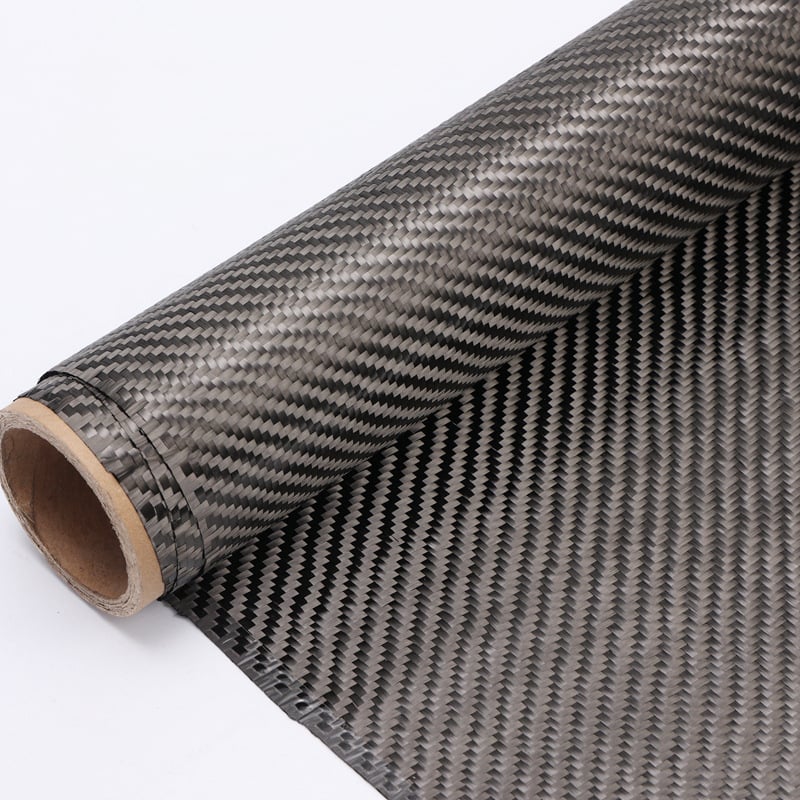
In high-performance manufacturing, material selection is never arbitrary. When engineers and production teams are tasked with producing components that demand exceptional dimensional accuracy, consistent mechanical properties, and repeatable results, the material they choose often determines whether a part succeeds or fails in real-world conditions. This is precisely why carbon fiber prepreg has become the material of choice across industries ranging from aerospace and motorsport to medical devices and precision robotics. Its unique combination of pre-impregnated resin control and high-grade carbon reinforcement makes it fundamentally different from other composite formats.
The growing preference for carbon fiber prepreg in precision molding environments is not simply a trend driven by marketing. It is grounded in measurable, engineering-backed advantages that directly address the core challenges of precision manufacturing. From fiber-to-resin ratio control to thermal performance during cure cycles, every attribute of carbon fiber prepreg is engineered to serve the demands of precision molding. Understanding why manufacturers consistently return to this material requires a closer look at the technical and operational advantages it delivers.
The Fundamentals of Carbon Fiber Prepreg in a Manufacturing Context
What Sets Prepreg Apart from Other Composite Formats
Carbon fiber prepreg refers to carbon fiber reinforcement that has been pre-impregnated with a precisely measured quantity of resin — typically epoxy — under controlled factory conditions. Unlike dry fiber layup processes that require manual wet-out or resin infusion at the fabrication stage, carbon fiber prepreg arrives at the molder with the resin system already uniformly distributed throughout the fiber matrix. This pre-impregnation process eliminates one of the most significant sources of variability in composite manufacturing.
In precision molding, variability is the enemy. Even minor inconsistencies in resin content, fiber orientation, or void distribution can cause dimensional drift, delamination risk, or mechanical property degradation in a finished part. Because carbon fiber prepreg standardizes resin distribution at the material production stage, manufacturers gain a controlled, repeatable starting point for every molding cycle. This level of upstream process control is simply not achievable with equivalent reliability using wet layup or infusion methods.
Additionally, carbon fiber prepreg materials are available in a wide range of fiber architectures — including unidirectional, woven, and quasi-isotropic formats — giving design engineers flexibility without sacrificing the consistency benefits that prepreg inherently provides. The ability to select specific fiber areal weight, resin system, and tack level adds further precision to how these materials are deployed in tooling-intensive molding operations.
The Role of Resin Content Control in Precision Outcomes
One of the defining advantages of carbon fiber prepreg is the precision with which resin content is controlled. In standard composite production, the resin-to-fiber ratio depends heavily on operator skill, environmental conditions, and process variables. With carbon fiber prepreg, the resin content is fixed at manufacturing — typically between 35% and 42% by weight depending on the specification — and can be held within extremely tight tolerances.
This resin content consistency directly translates to predictable part thickness, surface finish quality, and cured mechanical properties. For precision molds where the end component must meet strict dimensional tolerances — such as aerospace structural brackets, satellite panels, or precision instrument housings — the ability to predict and verify resin content before layup is a critical process assurance advantage. Carbon fiber prepreg supports process qualification requirements that many regulated industries demand.
Resin systems used in carbon fiber prepreg are also formulated to remain stable during refrigerated storage and to cure predictably under defined temperature-pressure profiles. This thermal processing consistency allows manufacturers to develop reliable autoclave or press cure cycles that produce repeatable results across production batches, which is essential for any precision molding environment with quality certification obligations.
Why Precision Molding Demands the Properties Carbon Fiber Prepreg Delivers
Dimensional Stability and Near-Net-Shape Accuracy
Precision molding is fundamentally about achieving near-net-shape geometry with minimal post-processing. Every departure from the mold geometry translates into additional machining, fitting, or rework — costs that erode efficiency and introduce risk of further error. Carbon fiber prepreg is ideally suited to precision molding because its controlled resin flow during cure prevents the kind of unintended material migration that causes warping, thickness variation, or surface sink that can occur with other composite approaches.
The stiffness-to-weight ratio of carbon fiber prepreg laminates is among the highest achievable with any engineering material. When cured in precision molds under controlled pressure, the resulting parts maintain their intended geometry with exceptional fidelity. The low coefficient of thermal expansion of carbon fiber also means that cured components remain dimensionally stable across a wide range of service temperatures — a property especially valued in applications such as optical instrument frames, antenna structures, and precision mechanical assemblies.
Manufacturers who have transitioned from metal fabrication to carbon fiber prepreg components frequently report significant reductions in dimensional variation between parts. The consistency of prepreg layup, combined with the predictable cure shrinkage of the resin system, supports tighter tolerance stacking across assemblies. This is a primary reason why precision molding operations in demanding sectors choose carbon fiber prepreg over alternative lightweight materials.
Surface Quality and Tooling Interface Performance
In precision molding, the interface between the carbon fiber prepreg and the mold tool surface is critical to achieving the required class-A or precision surface finish. Because prepreg materials have controlled tack and uniform resin distribution on their outer surfaces, they conform tightly to mold features, radii, and contours without bridging or resin-starved zones. This uniform contact ensures that the cured surface accurately replicates the tool surface, which is essential for aerodynamic panels, structural housings, and cosmetic exterior components.
The ability of carbon fiber prepreg to produce high-quality surfaces directly out of the mold reduces the need for post-cure surface treatment, filling, or finishing operations. In high-volume precision manufacturing, this represents a meaningful reduction in cycle time and labor cost. Furthermore, the consistency of surface finish across production runs supports quality control processes that rely on visual or tactile inspection as part of their acceptance criteria.
Advanced carbon fiber prepreg formulations also include film adhesive variants and surfacing films that can be co-cured during the molding process, further enhancing surface performance without additional assembly steps. These integrated material solutions reflect the depth of process engineering that has been developed around carbon fiber prepreg to support the most demanding precision molding applications.
Process Efficiency and Manufacturing Repeatability
Streamlined Layup Operations and Labor Efficiency
Beyond material performance, carbon fiber prepreg delivers significant process efficiency advantages in precision molding operations. Because the resin is already incorporated into the fiber, technicians do not need to mix, apply, or manage wet resin systems during layup. This simplification reduces preparation time, minimizes the potential for human error, and makes it easier to train new personnel to consistent quality standards. The result is a more controlled, auditable production process.
Carbon fiber prepreg plies are typically cut using automated ply cutting equipment, enabling precise ply geometry, consistent fiber orientation, and minimal material waste. The cut plies can be pre-kitted in the correct sequence and orientation for each mold configuration, further reducing layup time on the tool. For complex-geometry precision parts with tight angular tolerances on fiber orientation, this level of preparatory control is invaluable in maintaining structural performance predictions.
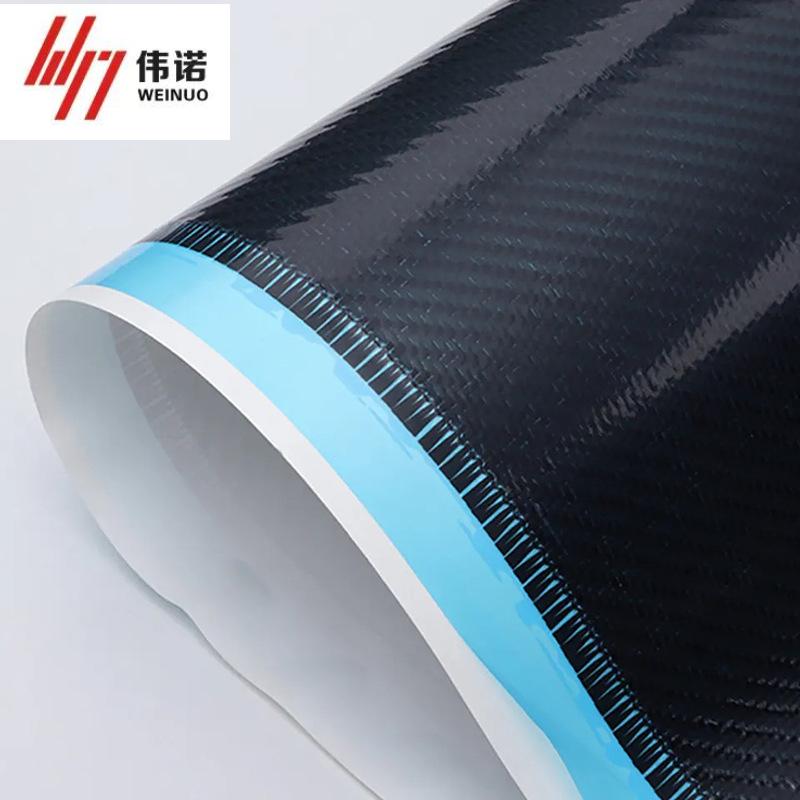
The measurable reduction in out-time sensitivity — made possible by refrigerated storage protocols for carbon fiber prepreg — means that production schedules are less vulnerable to material aging issues. Manufacturers can plan layup windows around production needs rather than resin pot-life constraints, giving operations teams greater scheduling flexibility without compromising material integrity.
Cure Process Control and Batch-to-Batch Consistency
The cure process for carbon fiber prepreg is highly programmable. Whether processed in an autoclave, a heated press, or an oven cure environment, the thermal profile — including ramp rates, dwell temperatures, and applied pressure — is defined, documented, and repeatable. This process predictability is fundamental to precision molding, where part acceptance is tied to verified mechanical properties and dimensional conformance rather than simply visual inspection.
Batch-to-batch material traceability is another important advantage that carbon fiber prepreg provides in a precision manufacturing context. Each roll of prepreg is supplied with a material data sheet documenting fiber specification, resin content, shelf life, and cure parameters. This documentation supports first-article inspection requirements, statistical process control initiatives, and the material qualification records that regulated industries such as aerospace, defense, and medical devices demand.
The ability to link specific production lots of carbon fiber prepreg to specific cured components creates a traceable quality chain that is increasingly important in precision manufacturing environments where component failure analysis or warranty investigations may require material forensics. This traceability advantage positions carbon fiber prepreg not just as a high-performance material but as a quality management asset.
Application Suitability and Industry Adoption Drivers
Aerospace and Defense Precision Component Manufacturing
The aerospace industry was an early and enthusiastic adopter of carbon fiber prepreg for precision structural components. Primary and secondary structures on commercial and military aircraft rely on carbon fiber prepreg layups for their combination of high specific strength, fatigue resistance, and dimensional precision. The stringent certification requirements of aerospace manufacturing — which demand material qualification, process control documentation, and in-process inspection at every stage — align naturally with the process discipline that carbon fiber prepreg encourages.
In defense applications, the demand for lightweight, high-stiffness components in unmanned aerial vehicles, satellite structures, and precision-guided systems has further accelerated the use of carbon fiber prepreg. The ability to mold complex three-dimensional geometries with consistent wall thickness, accurate fiber placement, and high surface quality makes prepreg the definitive choice for structural precision in these environments. Defense procurement standards often mandate specific material forms, and carbon fiber prepreg qualifications are among the most widely recognized in the supply chain.
The precision requirements of space-grade hardware — where a fractional millimeter of dimensional error can compromise the alignment of optical systems or structural interfaces in zero-gravity environments — represent the upper tier of what carbon fiber prepreg molding can achieve. The thermal stability, dimensional predictability, and documented process control of prepreg laminates have made this material a cornerstone of space hardware manufacturing for decades.
Industrial and High-Performance Commercial Applications
Beyond aerospace, carbon fiber prepreg precision molding has established a strong presence in motorsport, where chassis components, aerodynamic elements, and suspension parts require the highest levels of stiffness, weight reduction, and geometric accuracy. In motorsport environments, parts are often produced in small batches under tight schedules, and the layup efficiency and cure predictability of carbon fiber prepreg support the rapid iteration cycles that competitive development demands.
The medical device sector is another growing application domain for carbon fiber prepreg precision molding. Imaging equipment components, orthopedic structural elements, and surgical robotic arm structures all benefit from the radiolucency, biocompatibility of the cured resin system, and dimensional stability that carbon fiber prepreg laminates provide. The rigorous quality documentation associated with prepreg materials also supports the regulatory submission requirements of medical device approvals.
Across industrial automation, precision instrument manufacturing, and advanced consumer electronics, the trend toward lightweight structural precision is making carbon fiber prepreg an increasingly mainstream material choice. As manufacturing processes mature and material costs become more accessible, the barriers to adopting carbon fiber prepreg in non-aerospace industries are steadily declining, expanding the addressable market for precision prepreg molding capabilities.
FAQ
What makes carbon fiber prepreg more suitable for precision molding than dry fiber processes?
Carbon fiber prepreg arrives at the manufacturing facility with a precisely controlled resin-to-fiber ratio already incorporated, eliminating the variability associated with manual resin application. This upstream consistency ensures that every cured part begins from the same material baseline, which is essential for maintaining tight dimensional tolerances and mechanical property repeatability in precision molding operations. Dry fiber processes require additional resin introduction steps that introduce process variables that are difficult to control to the same standard.
How does the cure process for carbon fiber prepreg support precision manufacturing quality standards?
The cure cycle for carbon fiber prepreg is fully programmable and documented, with defined temperature ramp rates, dwell conditions, and applied pressure profiles. This process programmability ensures that every production batch is cured under identical conditions, producing consistent mechanical properties and dimensional outcomes. The process parameters can be formally qualified and validated, supporting the quality management system requirements of regulated industries such as aerospace, defense, and medical devices.
Can carbon fiber prepreg be used for complex-geometry precision molds?
Yes. Carbon fiber prepreg is well suited to complex-geometry molding because its controlled tack level allows plies to conform closely to mold surfaces, including compound curves, tight radii, and internal features, without bridging or dry zones. Careful ply design, including the use of darts, overlaps, and engineered fiber orientations, allows experienced laminators to achieve excellent geometric fidelity even in highly contoured precision molds. Automated cutting and kitting further support accurate ply placement in complex configurations.
What storage and handling requirements apply to carbon fiber prepreg in a production environment?
Carbon fiber prepreg requires refrigerated storage — typically at or below -18°C — to arrest resin advancement and preserve out-time for production use. Material must be allowed to warm to ambient temperature before opening to prevent moisture condensation on the resin surface. Properly managed storage and handling protocols ensure that carbon fiber prepreg arrives at the layup station with full material integrity, supporting the process consistency and quality outcomes that precision molding demands.
Table of Contents
- The Fundamentals of Carbon Fiber Prepreg in a Manufacturing Context
- Why Precision Molding Demands the Properties Carbon Fiber Prepreg Delivers
- Process Efficiency and Manufacturing Repeatability
- Application Suitability and Industry Adoption Drivers
-
FAQ
- What makes carbon fiber prepreg more suitable for precision molding than dry fiber processes?
- How does the cure process for carbon fiber prepreg support precision manufacturing quality standards?
- Can carbon fiber prepreg be used for complex-geometry precision molds?
- What storage and handling requirements apply to carbon fiber prepreg in a production environment?