
 EN
EN

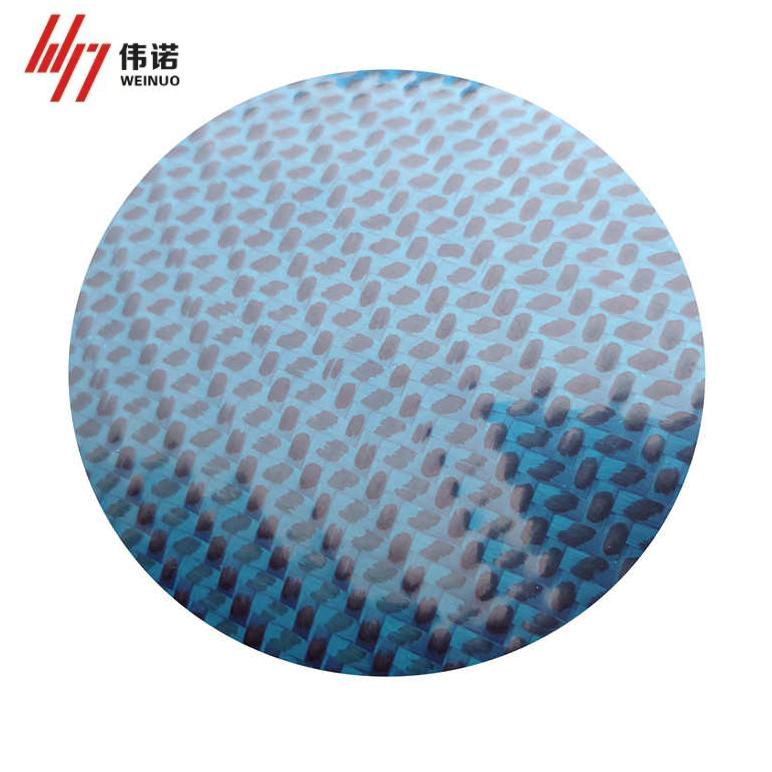
When engineers and composite manufacturers evaluate advanced reinforcement materials, the choice of resin system is rarely an afterthought. In fact, the resin matrix embedded within a carbon fiber prepreg is one of the most decisive factors governing how the final composite will behave in service. From mechanical strength and thermal resistance to cure behavior and shelf life, the resin chemistry shapes virtually every performance characteristic that matters on a production floor or in a demanding structural application.
Understanding the relationship between resin systems and carbon fiber prepreg performance is not merely academic. It has direct consequences for part quality, manufacturing economics, and end-use reliability. This article examines the major resin families used in carbon fiber prepreg manufacturing, explains how each one influences key performance metrics, and provides practical guidance for selecting the right resin system based on application requirements.
The Role of Resin Systems in Carbon Fiber Prepreg
What a Resin System Actually Does in a Prepreg
A carbon fiber prepreg is essentially a semi-finished composite material in which carbon fiber reinforcement has been pre-impregnated with a resin matrix in a controlled factory environment. The resin serves as the binder that transfers loads between individual fiber filaments, protects the fibers from environmental damage, and determines the processing conditions required to achieve full consolidation and cure.
The resin also governs the tack and drape of the uncured carbon fiber prepreg, both of which are critical for layup and tooling operations. Too little tack and plies will not adhere to each other during hand layup. Too much tackiness creates handling difficulties and increases the risk of fiber distortion. The resin chemistry is what controls this balance.
Beyond handling, the resin matrix defines the interlaminar shear strength, moisture absorption behavior, elevated-temperature performance, and fatigue resistance of the cured laminate. Choosing the right resin system is therefore inseparable from specifying the carbon fiber prepreg itself.
Key Performance Metrics Governed by Resin Chemistry
Several performance metrics in carbon fiber prepreg laminates are primarily resin-dependent rather than fiber-dependent. These include glass transition temperature (Tg), which defines the upper service temperature limit; impact toughness and damage tolerance; and chemical resistance to fluids, solvents, and UV exposure.
Fiber-dominated properties such as tensile modulus and tensile strength are less sensitive to resin choice, but compression strength and interlaminar shear strength are strongly influenced by how well the resin matrix supports the fibers under load. A higher-modulus resin can improve compression performance significantly in a carbon fiber prepreg laminate.
Cure shrinkage and residual stress are also resin-dependent. Systems with high cure shrinkage can introduce internal stresses that reduce fatigue life or cause warpage in thin-shell structures. Selecting a low-shrinkage resin system is particularly important for precision aerospace components made from carbon fiber prepreg.
Epoxy Resin Systems and Their Influence on Prepreg Performance
Why Epoxy Dominates Carbon Fiber Prepreg Applications
Epoxy remains the most widely used resin system in carbon fiber prepreg production, and for good reason. Epoxy resins offer an exceptional combination of mechanical properties, adhesion to carbon fiber surfaces, low cure shrinkage, and processing versatility. They can be formulated for room-temperature cure, elevated-temperature cure, or high-temperature cure, making them adaptable to a broad range of manufacturing environments.
Standard aerospace-grade epoxy prepreg systems are typically cured at 120°C or 180°C, yielding Tg values in the range of 120°C to over 200°C depending on formulation. The Tg directly limits the service temperature of the carbon fiber prepreg laminate, so selecting the right cure cycle and hardener system is critical for applications near thermal boundaries.
Epoxy systems also offer excellent chemical compatibility with carbon fiber sizing agents, which promotes strong fiber-matrix interfacial bonding. This interfacial bond quality is a major contributor to the interlaminar shear strength of the finished carbon fiber prepreg laminate, and it is one reason why epoxy consistently outperforms many alternative resins in structural applications.
Limitations of Epoxy in High-Performance Scenarios
Despite their advantages, epoxy-based carbon fiber prepreg systems do have well-recognized limitations. The most significant is brittleness: conventional epoxy matrices exhibit relatively low fracture toughness, which limits impact damage resistance. In applications where impact events are likely, such as automotive body panels or aircraft interiors, toughened epoxy formulations or alternative resin systems must be considered.
Moisture absorption is another concern. Epoxy resins absorb moisture from the environment, and this absorbed water acts as a plasticizer, reducing the effective Tg of the cured carbon fiber prepreg laminate. Wet Tg values can be 20°C to 40°C lower than dry Tg, which must be accounted for in structural design when the component will operate in humid environments.
For applications requiring service temperatures above 200°C, standard epoxy systems approach their performance limits. In these cases, engineers must look to high-temperature resin alternatives to achieve reliable performance from their carbon fiber prepreg components.
High-Temperature Resin Systems for Demanding Prepreg Applications
Bismaleimide Resins in Carbon Fiber Prepreg
Bismaleimide (BMI) resins extend the performance envelope of carbon fiber prepreg into the 200°C to 230°C service temperature range without requiring the extremely complex processing cycles associated with polyimides. BMI systems cure via addition polymerization, which means they produce no volatile byproducts during cure, reducing the risk of void formation in the laminate.
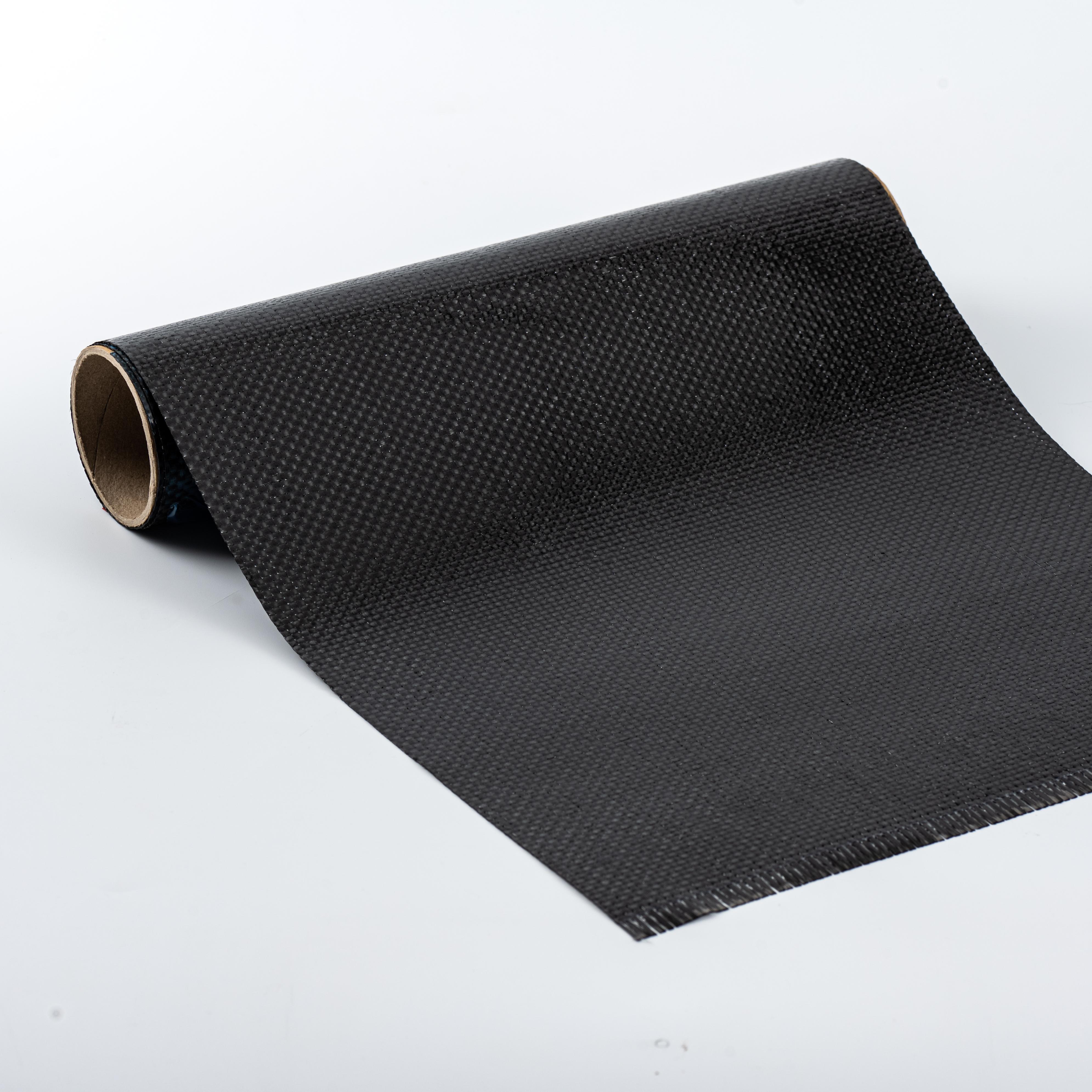
Carbon fiber prepreg made with BMI resins is commonly used in military aircraft, high-performance motorsport components, and industrial tooling that must withstand autoclave temperatures repeatedly over its service life. The resin offers excellent hot-wet retention of mechanical properties, meaning that moisture absorption has less impact on elevated-temperature performance compared to epoxy.
The trade-off with BMI systems is that they are inherently more brittle than toughened epoxies and require higher processing temperatures, typically 175°C to 200°C, to achieve full cure. Post-cure cycles at even higher temperatures are often needed to maximize Tg and thermal stability in the finished carbon fiber prepreg laminate.
Polyimide and Cyanate Ester Resins for Extreme Environments
For applications requiring sustained service above 250°C, polyimide resins represent the state of the art in carbon fiber prepreg technology. Polyimide-based prepregs are used in aerospace engine components, spacecraft structures, and hypersonic vehicle skins where extreme thermal performance is non-negotiable. However, processing polyimide systems requires high pressures and temperatures, as well as careful management of volatile byproducts during cure.
Cyanate ester resins occupy a performance niche between epoxy and BMI systems. They offer lower moisture absorption than epoxy, good dielectric properties, and service temperatures in the range of 200°C to 250°C. These characteristics make cyanate ester carbon fiber prepreg particularly attractive for radome applications, satellite structures, and electronics packaging where low dielectric loss is a critical requirement.
Both polyimide and cyanate ester systems are more expensive than epoxy and demand tighter process controls, but for applications where thermal performance is the defining constraint, no epoxy-based carbon fiber prepreg system can compete on a like-for-like basis.
Toughened and Out-of-Autoclave Resin Systems
Rubber and Thermoplastic Toughening of Epoxy Prepregs
One of the most impactful developments in carbon fiber prepreg technology has been the introduction of toughening agents into epoxy matrices. By incorporating rubber particles, thermoplastic additives, or interleaf films between plies, resin formulators have significantly improved the damage tolerance and compression-after-impact (CAI) performance of epoxy-based prepreg systems.
Toughened carbon fiber prepreg systems are now standard in primary aircraft structures, where the ability to withstand low-velocity impact without catastrophic delamination is a certification requirement. The toughening mechanism works by creating energy-absorbing crack bridging zones in the resin matrix, blunting crack propagation that would otherwise cause widespread delamination.
The introduction of toughening agents does increase resin viscosity and can reduce the maximum service temperature slightly compared to un-toughened epoxy formulations. Designers working with toughened carbon fiber prepreg must therefore balance damage tolerance requirements against thermal performance targets in their material selection process.
Out-of-Autoclave Prepreg Systems and Their Resin Requirements
Out-of-autoclave (OOA) processing is an increasingly important manufacturing route for large structures and lower-volume applications where autoclave capital and operating costs are prohibitive. OOA carbon fiber prepreg systems use specially engineered resins with partially open porosity channels that allow trapped air and volatiles to escape under vacuum-bag-only cure conditions.
The resin in an OOA carbon fiber prepreg must remain at a sufficiently low viscosity during the early stages of the cure cycle to allow gas evacuation before the resin gels. This requires precise control of the resin flow window, which is defined by the relationship between temperature, time, and viscosity evolution during cure. OOA resin systems are typically formulated with higher initial tack than autoclave systems to compensate for the lower consolidation pressure available.
Mechanical properties of OOA-cured carbon fiber prepreg laminates have improved dramatically over the past decade and now approach those of autoclave-processed parts for many structural applications. The resin system design is the key enabler of this performance parity, making OOA prepreg an increasingly viable option for aerospace, marine, and wind energy structures.
Matching Resin Systems to Application Requirements in Carbon Fiber Prepreg Selection
Structural and Thermal Requirements as Primary Drivers
When specifying a carbon fiber prepreg for a structural application, the resin system selection process should begin with a clear definition of the thermal environment. The maximum continuous service temperature, wet or dry conditions, and the required safety margin above Tg all point toward a specific class of resin chemistry. Epoxy systems will satisfy the majority of applications below 150°C, while BMI or cyanate ester systems are required above that threshold.
Impact loading scenarios should be the second consideration. Applications with high probability of tool drops, hail impact, or debris strike require toughened carbon fiber prepreg systems with demonstrated CAI performance, verified by standardized test methods. Specifying an un-toughened epoxy prepreg in such environments is a design risk that can lead to premature in-service damage and costly repair.
Chemical exposure requirements, including resistance to hydraulic fluids, fuel, cleaning agents, or salt spray, further narrow the resin selection. Some resin systems absorb specific solvents or degrade in acidic or alkaline environments more rapidly than others. Qualification testing against the specific chemical environment is always recommended before committing to a resin system for a carbon fiber prepreg application.
Manufacturing Constraints and Processing Compatibility
The available manufacturing infrastructure must also factor into resin system selection for carbon fiber prepreg applications. Autoclave capacity, oven size, vacuum bagging capability, and the workforce's experience with specific cure cycles all influence which resin system is practically viable. Specifying a BMI prepreg when only ambient-temperature cure infrastructure is available creates a mismatch that will result in under-cured, non-conforming parts.
Shelf life and out-time are resin-dependent parameters with direct cost implications. Most carbon fiber prepreg systems require frozen storage at -18°C to arrest resin advancement and maintain tack and processability. The frozen shelf life and the allowable out-time at room temperature vary significantly between resin systems. High-reactivity resin systems designed for rapid cure typically have shorter out-times, which limits the complexity of layup operations that can be performed before the material must be re-frozen or committed to cure.
Repairability is a final but often overlooked consideration. Some high-temperature resin systems used in carbon fiber prepreg laminates are difficult to repair in the field because they require elevated cure temperatures that cannot be achieved with portable heating equipment. Epoxy-based systems generally offer more practical repair options, which is an important factor for operators of aerospace structures or motorsport vehicles where rapid turnaround after damage is commercially critical.
FAQ
What resin system is most commonly used in carbon fiber prepreg for aerospace applications?
Epoxy resin systems are the most widely used in aerospace carbon fiber prepreg due to their excellent mechanical properties, low cure shrinkage, and strong adhesion to carbon fiber. Toughened epoxy formulations are standard for primary structures requiring impact resistance. For higher service temperatures above 180°C, bismaleimide or cyanate ester systems are specified instead.
How does resin toughening affect the mechanical performance of carbon fiber prepreg laminates?
Toughening agents such as rubber particles or thermoplastic additives significantly improve the impact damage resistance and compression-after-impact strength of carbon fiber prepreg laminates. They work by creating energy-absorbing zones in the resin matrix that blunt crack propagation. The trade-off is a modest reduction in maximum service temperature and sometimes a slight reduction in interlaminar shear strength compared to un-toughened systems.
Can carbon fiber prepreg be processed without an autoclave using standard resin systems?
Standard autoclave-grade carbon fiber prepreg resin systems are not designed for out-of-autoclave processing and typically produce high void content when cured under vacuum bag only conditions. Dedicated OOA resin systems with engineered porosity and controlled flow behavior are required to achieve low void content and acceptable mechanical properties when processing carbon fiber prepreg without autoclave pressure.
How does moisture affect the service performance of epoxy-based carbon fiber prepreg laminates?
Absorbed moisture plasticizes the epoxy matrix in a carbon fiber prepreg laminate, reducing the effective glass transition temperature by 20°C to 40°C compared to the dry condition. This wet Tg reduction must be accounted for in the structural design, particularly for parts that will operate in hot-wet environments. Resin systems with lower equilibrium moisture absorption, such as cyanate ester or certain toughened epoxy systems, offer better hot-wet property retention in service.
Table of Contents
- The Role of Resin Systems in Carbon Fiber Prepreg
- Epoxy Resin Systems and Their Influence on Prepreg Performance
- High-Temperature Resin Systems for Demanding Prepreg Applications
- Toughened and Out-of-Autoclave Resin Systems
- Matching Resin Systems to Application Requirements in Carbon Fiber Prepreg Selection
-
FAQ
- What resin system is most commonly used in carbon fiber prepreg for aerospace applications?
- How does resin toughening affect the mechanical performance of carbon fiber prepreg laminates?
- Can carbon fiber prepreg be processed without an autoclave using standard resin systems?
- How does moisture affect the service performance of epoxy-based carbon fiber prepreg laminates?