Mikrokrystalografie: ‚Šestiúhelníková armáda‘ tvořená uhlíkovými atomy
Odkud pochází pevnost uhlíkových vláken? Musíme začít s jejich mikrostrukturou.
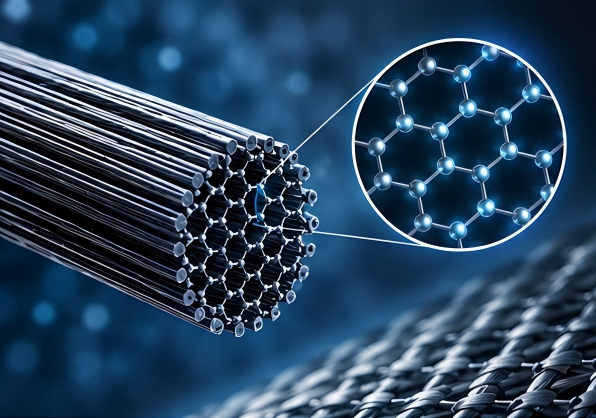
Průměr uhlíkových vláken činí pouze 5 až 10 mikrometrů, což je více než desetkrát jemnější než lidský vlas. Uvnitř těchto jemných filamentů jsou uhlíkové atomy uspořádány do šestiúhelníkové mřížkové struktury a jsou vysoce orientovány podél osy vlákna. Lze si to představit jako bezpočet ‚vyztužovacích prutů v mikrometrové velikosti‘, které jsou dokonale zarovnané ve stejném směru a společně odolávají tahovým silám.
Výsledkem této struktury je, že uhlíková vlákna jsou 7 až 10krát pevnější než ocel, avšak mají pouze čtvrtinovou hustotu. Při stejné hmotnosti uhlíková vlákna odolají mnohem větším tahovým silám než ocel; při stejné pevnosti jsou o více než 70 procent lehčí než ocel.
Jednoduše řečeno, jsou přirozeně ‚lehkými silovými jednotkami‘.
Umění tkání: Z ‚vyztužovacích prutů‘ se stává ‚brnění‘
Ať je jediný vláknový prvek sebepevnější, nelze ho použít přímo. Prvním krokem výroby uhlíkové tkaniny je tkání – stočení tisíců a tisíců uhlíkových vláken do ‚přadla‘, podobně jako při výrobě nitě, a následné utkání do tkaniny pomocí plátnové, křížové nebo saténové vazby.
Různé metody tkání určují vlastnosti tkaniny:
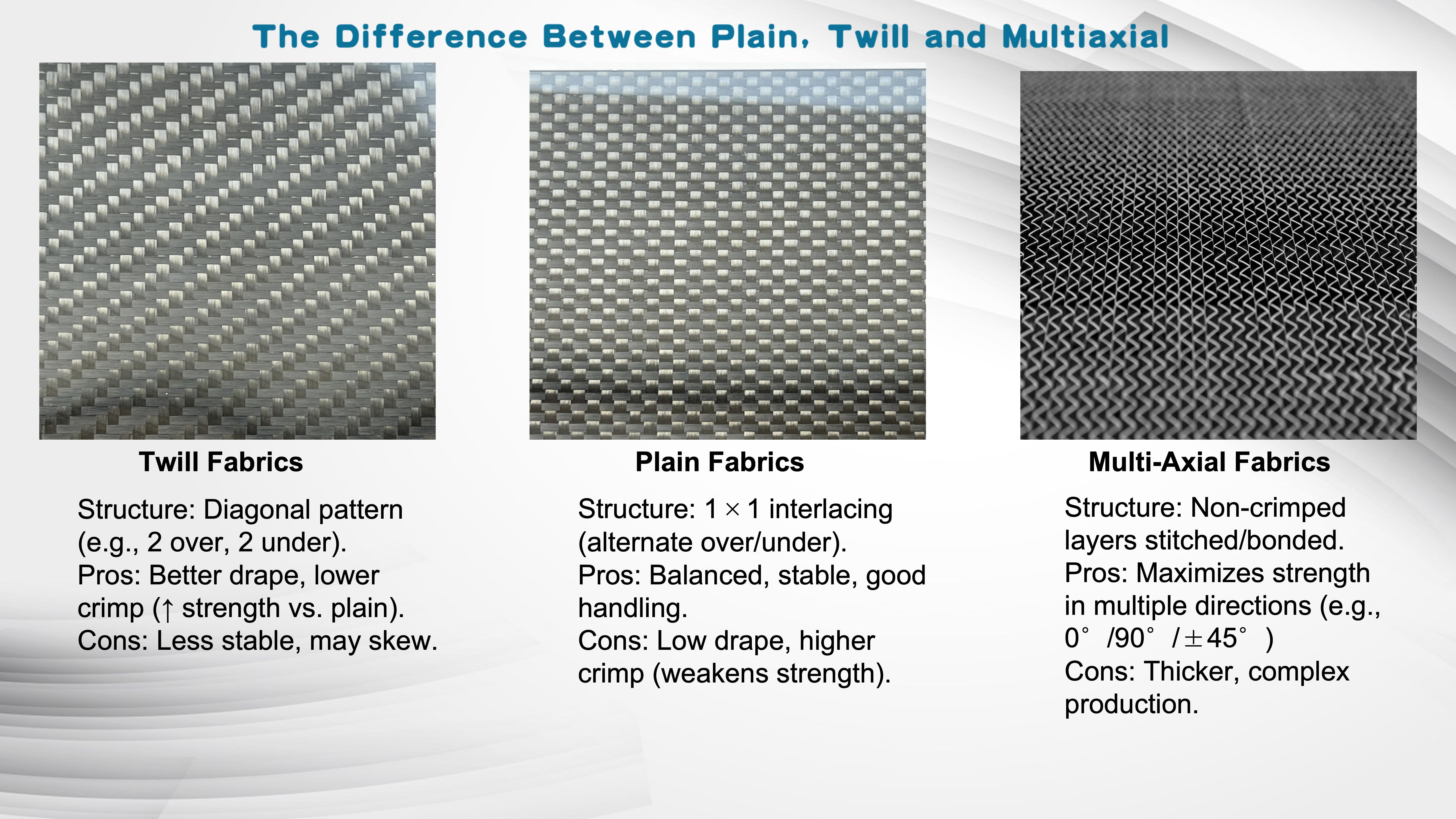
Plátnová vazba: Řady osnovních a útkových vláken se střídají jedno nad jedním a jedno pod jedním, čímž vzniká stabilní struktura vhodná pro díly s pravidelným tvarem.
Křížová vazba: Osnovní vlákna procházejí přes dvě nebo více útkových vláken, než se s nimi propletou, a vytvářejí tak souvislý ‚šikmý‘ vzor.
Saténová tkanina: Vláknové prameny procházejí přes několik vláken, než se s nimi propletou, což zajišťuje vynikající drape a schopnost přilnout ke složitým zakřiveným povrchům.
křížová tkanina ±45°: Řadová nit svírá s okrajem úhel 45°, což zajišťuje vynikající pružnost při obalování kuželovitých nebo zakřivených předmětů; je vhodná pro součásti nepravidelného tvaru, např. špičky raket a bojové hlavice střel.
Důležitější je však samotná tkaninová struktura, která funguje jako ‚síť přenosu sil‘. Dvouosý prostředník umožňuje rovnoměrné rozložení zatížení jak ve směru řadových, tak útkových nití, čímž se zvyšuje celkový mechanický výkon. Výzkum ukazuje, že čím vyšší je hustota tkaniny a čím tlustší jsou vlákna, tím větší je tahová pevnost látky – vysoká hustota totiž snižuje poškození vláken způsobené třením.
Kouzlo synergického účinku: efekt 1+12
Látka sama o sobě však nestačí – je jako hromada volných cihel, které potřebují ‚cement‘, aby se držely pohromadě. Tímto ‚cementem‘ je pryskyřičná matrice (obvykle epoxidová pryskyřice).
Skutečně se uhlíkové vlákno stává kompozitním materiálem pouze tehdy, když je uhlíková tkanina nasycena pryskyřicí a ztvrdne. Tento krok přináší dva klíčové vylepšení:
1. Přenos síly a odolnost proti trhlinám
Pryskyřice pevně zakotví každé jednotlivé vlákno. Při působení vnější síly se napětí přenáší prostřednictvím pryskyřice na extrémně pevná vlákna, která „nese“ většinu tahové síly. Matrice pryskyřice brání šíření trhlin mezi vlákny a tím zvyšuje celkovou houževnatost.
2. Zesílení rozhraní
Uhlíková vlákna mají hladký povrch, což vede k přirozeně špatné ‚přilnavosti‘ k pryskyřici. Pomocí technik jako je povrchová oxidace, chemické případování a modifikace nanočástic zvýšili výzkumníci drsnost povrchu a na vlákna zavedli aktivní funkční skupiny, čímž umožnili, aby se vlákna a pryskyřice ‚vázaly‘ pevněji. To výrazně zvyšuje mezní smykovou pevnost mezi vrstvami a celkové mechanické vlastnosti kompozitního materiálu.
Trvanlivost: Nejen odolné, ale také ‚dlouhodobě použitelné‘
Výrobky musí být nejen pevné, ale i trvanlivé. Trvanlivost uhlíkových vláken je patrná v několika ohledech:
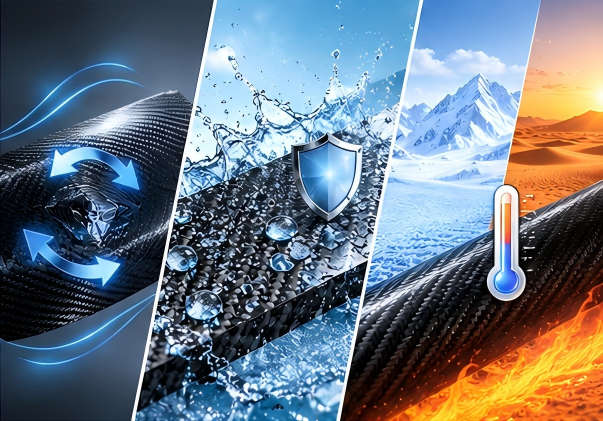
Odolnost proti unavení:
Kovy se po opakovaném namáhání poškozují a nakonec selžou únavou. Naopak kompozity z uhlíkových vláken vykazují extrémně pomalé snižování výkonu při střídavých zátěžích, což je činí vhodnými pro součásti s dlouhou životností, například pro letadla a lopatky větrných turbín.
Odolnost proti korozi:
Uhlíková vlákna jsou chemicky stabilní a nekorodují jako ocel. Při použití v lanových mostech lze jejich životnost prodloužit z nynějších 20–25 let na více než 100 let.
Odolnost vůči teplotě:
Uhlíkové vláknové látky udržují stálou tlakovou pevnost v rozmezí teplot od –55 °C do 75 °C, což svědčí o vynikajících mechanických vlastnostech i za extrémních teplot.
Skutečné aplikace: od vesmíru až po každodenní život
Díky těmto vlastnostem se uhlíkové vláknové látky stávají revolučním prvkem v řadě průmyslových odvětví:
🚗 Nové energetické vozidla
Uhlíková vlákna jsou 7 až 9krát pevnější než ocel, avšak mají pouze čtvrtinovou hustotu. Použití uhlíkových vláken na karoserii umožňuje snížit celkovou hmotnost vozidla o 30–50 procent, čímž se výrazně zvyšuje jeho dojezd. Optimalizovaná uhlíková přepážka pro elektrická vozidla snižuje hmotnost o 36 procent a zároveň zvyšuje tuhost o 26 procent.
✈️ Letectví a kosmonautika
Nahrazení kovu uhlíkovým vláknem v primární nosné konstrukci letadla může snížit hmotnost o 20 až 40 procent, čímž se zvyšuje dolet a palivová účinnost. Tělo rakety z uhlíkového vlákna lze snadno zvednout pouze jednou rukou.
🛥️ Lodní stavba
Optimalizací posloupnosti vrstev různých tkanin se inženýrům podařilo snížit hmotnost o 30 procent při zachování stejné pevnosti základny hlavní jednotky.
🌉 Stavební inženýrství
Mostní kabely z kompozitních táhel z uhlíkového vlákna jsou lehké a odolné proti korozi, což umožňuje prodloužit rozpětí visutých mostů z 2 kilometrů na 5 kilometrů nebo dokonce na 10 kilometrů.

Tajemství, jak uhlíkové vláknité látky dosahují jak „lehkosti“, tak i „pevnosti“, spočívá v podstatě v kombinaci několika faktorů: na mikroskopické úrovni tvoří uspořádání uhlíkových atomů základ pro pevnost; z hlediska tkání vytváří provázání osnovních a útkových nití síť přenášející sílu; a při zpracování kompozitů umožňuje synergická interakce s pryskyřicí dosáhnout efektu, kdy 1 + 1 = 2; nakonec tak produktu dodává komplexní výhody, jako jsou nízká hmotnost, vysoká pevnost, odolnost proti únavě materiálu a korozní odolnost.
To znamená, že „lehčí“ a „pevnější“ již nejsou vzájemně vylučujícími pojmy. Díky průlomům v sériové výrobě uhlíkových vláken s velkým počtem nití (48K) a snížení nákladů přibližně o 20 procent se tomuto „černému zlatu“ daří rychle proniknout z pokročilých oblastí do každodenního života. V budoucnu bude auto, kterým jezdíte, most, po kterém projíždíte, a letadlo, na které se díváte, pravděpodobně všechna úzce spojena s touto „černou látkou“.
Copyright © 2026 Zhangjiagang Weinuo Composites Co., Ltd. Všechna práva vyhrazena
 EN
EN