
 EN
EN

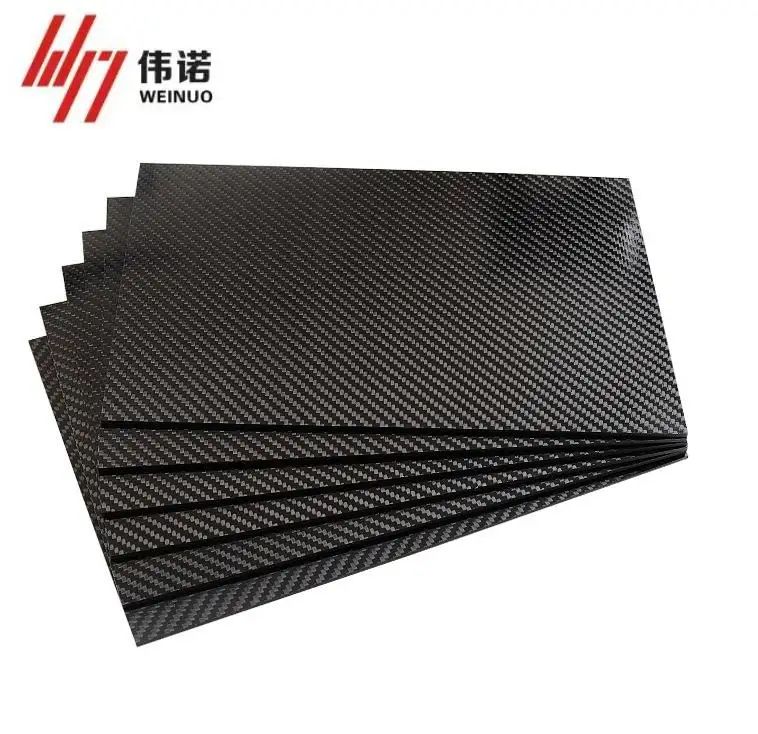
The practicality of twill weave carbon fiber for industrial laminates depends on several critical factors that determine whether this textile architecture delivers the performance characteristics required for demanding applications. Unlike plain weave configurations, twill weave carbon fiber exhibits distinct mechanical properties, manufacturing advantages, and cost considerations that make it suitable for specific industrial laminate requirements while potentially limiting its effectiveness in others.
Industrial laminate applications require careful evaluation of material properties against performance requirements, manufacturing constraints, and economic factors. Twill weave carbon fiber presents a compelling option for many industrial scenarios due to its balanced combination of mechanical performance, drapability characteristics, and processing advantages that can significantly impact both the manufacturing process and final product performance in composite structures.
Mechanical Performance Characteristics of Twill Weave Carbon Fiber
Strength and Stiffness Properties in Industrial Applications
Twill weave carbon fiber demonstrates excellent mechanical properties that make it highly practical for industrial laminates requiring balanced strength characteristics. The diagonal weave pattern creates a fiber architecture that distributes loads more evenly across multiple directions compared to unidirectional reinforcements, resulting in improved damage tolerance and fatigue resistance in composite structures.
The interlacing pattern inherent in twill weave carbon fiber provides superior impact resistance compared to plain weave alternatives, making it particularly suitable for industrial applications where components may experience dynamic loading or occasional impact events. This enhanced toughness stems from the longer float lengths that allow individual fiber tows to move slightly under stress, absorbing energy before failure occurs.
Industrial testing has consistently shown that twill weave carbon fiber laminates exhibit reduced stress concentrations at fiber crossover points, leading to improved fatigue life in cyclically loaded applications. This characteristic becomes especially important in industrial equipment subjected to continuous operation cycles, where material degradation over time can compromise structural integrity and operational safety.
Directional Properties and Load Distribution
The asymmetric nature of twill weave carbon fiber creates distinct directional properties that can be advantageous for specific industrial laminate applications. The weave pattern produces slightly different mechanical properties in the warp and weft directions, allowing engineers to orient the fabric to optimize performance for primary loading directions in the final component.
This directional characteristic of twill weave carbon fiber enables designers to tailor laminate properties by strategic layer orientation, creating composite structures that efficiently carry expected loads while minimizing material usage. The ability to predict and control these directional properties makes twill weave carbon fiber particularly practical for industrial applications where weight optimization and performance predictability are critical requirements.
Industrial applications benefit from the improved shear properties that twill weave carbon fiber provides compared to plain weave configurations. The diagonal fiber orientation inherent in the weave pattern creates natural pathways for shear load transfer, making it especially suitable for components experiencing torsional loads or complex stress states common in industrial machinery and structural applications.
Manufacturing Advantages for Industrial Laminate Production
Drapability and Complex Geometry Formation
Twill weave carbon fiber exhibits superior drapability characteristics that make it highly practical for industrial laminates requiring formation around complex geometries. The weave structure allows individual fiber tows to slide past each other more easily than in plain weave configurations, enabling the fabric to conform to curved surfaces and compound angles without creating wrinkles or fiber distortions that could compromise laminate quality.
This enhanced drapability of twill weave carbon fiber significantly reduces manufacturing complexity and labor requirements when producing industrial laminates for components with intricate shapes. The ability to achieve smooth fabric lay-up over complex tooling surfaces without excessive manipulation reduces the risk of fiber damage and ensures consistent fiber volume fractions throughout the laminate thickness.
Industrial manufacturers particularly value the reduced tendency of twill weave carbon fiber to develop bridging over sharp radii and tight corners. This characteristic enables the production of high-quality laminates in applications where geometric complexity would otherwise require expensive fabric cutting and piecing operations that introduce potential weak points and increase manufacturing time.
Resin Infusion and Processing Characteristics
The open structure created by the twill weave pattern facilitates improved resin flow during infusion processes commonly used in industrial laminate manufacturing. The diagonal pathways created by the weave architecture provide multiple flow channels that promote uniform resin distribution and reduce the likelihood of dry spots or resin-rich areas that can compromise laminate quality.
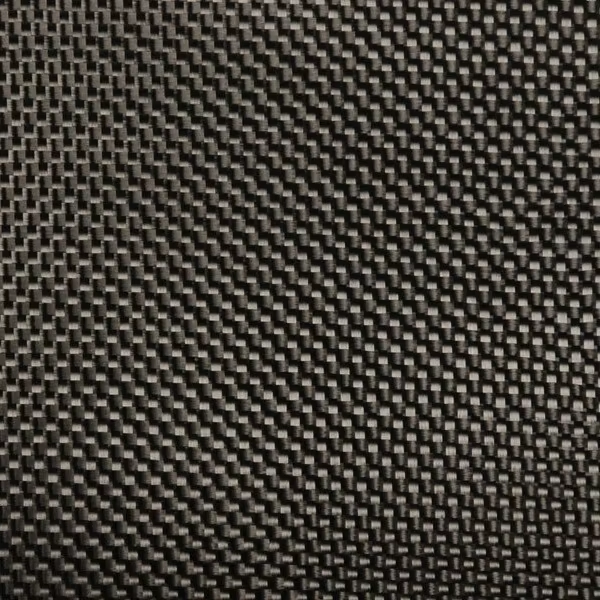
Twill weave carbon fiber demonstrates excellent wet-out characteristics that make it practical for various resin systems commonly used in industrial applications. The weave structure promotes capillary action that draws resin into fiber bundles more effectively than some alternative reinforcement architectures, resulting in more complete fiber wet-out and improved mechanical properties in the cured laminate.
Manufacturing facilities report that twill weave carbon fiber exhibits more predictable processing behavior during automated lay-up operations, with reduced tendency for edge fraying and improved handling characteristics that support higher production rates. These processing advantages translate directly into reduced manufacturing costs and improved quality consistency for industrial laminate production.
Cost-Effectiveness Analysis for Industrial Applications
Material Cost Considerations and Value Proposition
The cost-effectiveness of twill weave carbon fiber for industrial laminates depends significantly on the specific performance requirements and production volumes involved in each application. While twill weave carbon fiber typically commands a premium over plain weave alternatives, the enhanced mechanical properties and processing advantages often justify the additional material cost through improved component performance and reduced manufacturing expenses.
Industrial applications requiring high damage tolerance and fatigue resistance often find twill weave carbon fiber more cost-effective than alternative solutions when total lifecycle costs are considered. The improved durability characteristics can extend component service life significantly, reducing maintenance requirements and replacement frequency that contribute substantially to operational costs in industrial environments.
Manufacturing cost analysis consistently shows that the superior drapability of twill weave carbon fiber reduces labor requirements for complex geometries, often offsetting the higher material cost through improved production efficiency. The reduced likelihood of manufacturing defects also contributes to lower scrap rates and improved yield, further enhancing the overall cost-effectiveness for industrial laminate production.
Production Efficiency and Quality Benefits
Twill weave carbon fiber enables improved production efficiency in industrial laminate manufacturing through reduced handling time and decreased complexity of lay-up operations. The enhanced fabric stability and conformability allow operators to achieve consistent results with less specialized training and reduced setup time, contributing to improved overall productivity in manufacturing operations.
Quality benefits associated with twill weave carbon fiber include more predictable mechanical properties and reduced variability in laminate thickness and fiber volume fraction. These characteristics are particularly valuable in industrial applications where consistent performance is critical for safety and operational reliability, making the material practical despite potentially higher initial costs.
The improved surface finish achievable with twill weave carbon fiber can eliminate secondary finishing operations in many industrial applications, providing additional cost savings that contribute to overall project economics. The distinctive aesthetic appearance of the twill pattern also provides value in applications where visual quality is important, such as exposed structural components in architectural or transportation applications.
Application-Specific Suitability Assessment
Structural Components and Load-Bearing Applications
Twill weave carbon fiber proves highly practical for structural components in industrial laminates where balanced mechanical properties and damage tolerance are priorities. The weave architecture provides excellent performance in applications such as pressure vessels, structural panels, and load-bearing frames where multidirectional strength and stiffness are required to handle complex loading conditions.
Industrial structural applications benefit from the improved crack propagation resistance that twill weave carbon fiber provides compared to unidirectional reinforcements. The interlaced fiber architecture creates multiple load paths that help prevent catastrophic failure modes, making it particularly suitable for safety-critical applications where progressive failure characteristics are preferred over sudden brittle failure.
The balanced nature of twill weave carbon fiber makes it practical for industrial components where loading directions may vary during operation or where precise load analysis is difficult to perform. This versatility reduces design risk and provides confidence in component performance across a range of operating conditions commonly encountered in industrial environments.
Specialized Industrial Applications and Performance Requirements
Certain specialized industrial applications find twill weave carbon fiber particularly well-suited to their unique performance requirements. Manufacturing equipment components, tooling applications, and precision machinery parts often benefit from the dimensional stability and thermal properties that twill weave carbon fiber laminates provide under varying environmental conditions.
Industrial applications requiring electromagnetic transparency or specific electrical properties must carefully evaluate whether twill weave carbon fiber meets their requirements, as the conductive nature of carbon fibers can interfere with electronic systems in some applications. However, for applications requiring static electricity dissipation or electromagnetic shielding, the conductive properties of twill weave carbon fiber can provide beneficial functionality.
Chemical resistance requirements in industrial environments often determine the practicality of twill weave carbon fiber for specific applications. While the carbon fibers themselves exhibit excellent chemical resistance, the matrix resin system and potential galvanic corrosion concerns with metallic components must be carefully evaluated to ensure long-term performance in harsh industrial environments.
FAQ
What are the main advantages of twill weave carbon fiber over plain weave for industrial laminates?
Twill weave carbon fiber offers superior drapability, improved damage tolerance, better fatigue resistance, and enhanced surface finish compared to plain weave alternatives. The diagonal weave pattern provides more balanced mechanical properties and reduces stress concentrations at fiber crossover points, making it particularly suitable for complex geometries and cyclically loaded industrial applications.
How does the cost of twill weave carbon fiber compare to other reinforcement options for industrial use?
While twill weave carbon fiber typically costs more than plain weave alternatives, the enhanced performance characteristics and processing advantages often justify the premium through improved component durability, reduced manufacturing complexity, and lower total lifecycle costs. The cost-effectiveness depends on specific application requirements and production volumes.
Can twill weave carbon fiber handle high-temperature industrial applications?
Twill weave carbon fiber itself maintains excellent properties at elevated temperatures, but the practical temperature limits for industrial laminates depend primarily on the matrix resin system used. Standard epoxy systems typically limit service temperatures to around 120-180°C, while specialized high-temperature resins can extend this range significantly for demanding industrial applications.
What thickness limitations should be considered when using twill weave carbon fiber for industrial laminates?
Twill weave carbon fiber can be used in laminates ranging from single-layer applications to thick structural components with dozens of layers. However, achieving uniform resin distribution becomes more challenging in thick laminates, and manufacturers should consider fabric weight, resin viscosity, and infusion techniques to ensure consistent quality throughout the laminate thickness in industrial applications.
Table of Contents
- Mechanical Performance Characteristics of Twill Weave Carbon Fiber
- Manufacturing Advantages for Industrial Laminate Production
- Cost-Effectiveness Analysis for Industrial Applications
- Application-Specific Suitability Assessment
-
FAQ
- What are the main advantages of twill weave carbon fiber over plain weave for industrial laminates?
- How does the cost of twill weave carbon fiber compare to other reinforcement options for industrial use?
- Can twill weave carbon fiber handle high-temperature industrial applications?
- What thickness limitations should be considered when using twill weave carbon fiber for industrial laminates?