
 EN
EN

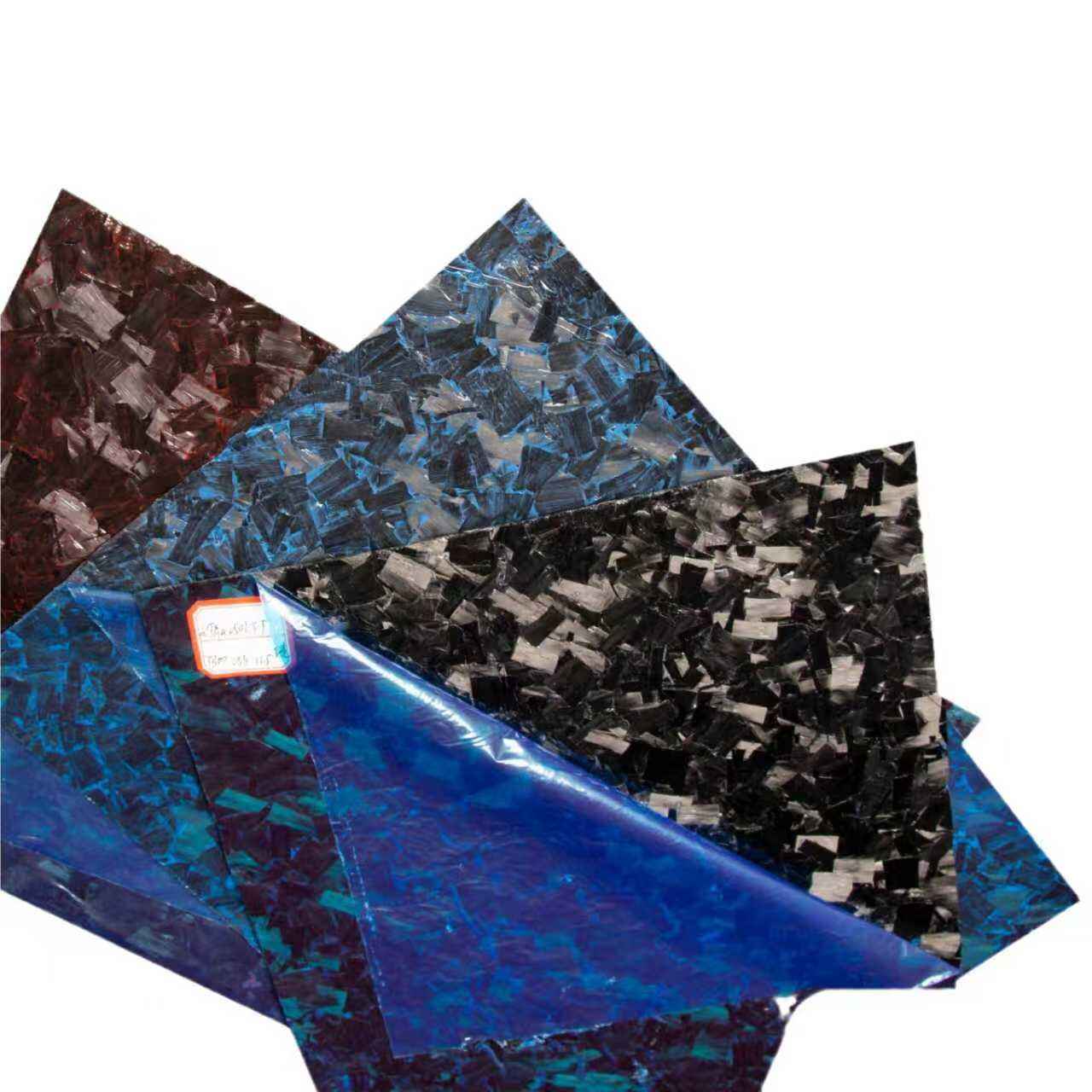
In today's competitive manufacturing landscape, material selection is one of the most critical decisions engineers and product developers face. Forged carbon fiber has emerged as a transformative material that addresses the dual demands of structural performance and design flexibility. Unlike traditional manufacturing materials or even standard woven carbon fiber composites, forged carbon fiber offers a unique combination of mechanical strength, weight efficiency, and geometric freedom that is reshaping how industries approach component design and production.
Understanding the key benefits of forged carbon fiber is essential for any manufacturer looking to optimize part performance, reduce material waste, and streamline production cycles. This article explores the core advantages this advanced composite material brings to manufacturing workflows, from mechanical properties to cost dynamics, and explains why more industries are integrating it into their supply chains and product lines.
The Mechanical Advantages of Forged Carbon Fiber
Superior Strength-to-Weight Ratio
One of the most celebrated properties of forged carbon fiber is its exceptional strength-to-weight ratio. The material combines short, randomly oriented carbon fiber flakes with high-performance resin systems under compression molding, resulting in a component that is significantly lighter than aluminum or steel while maintaining impressive tensile and compressive strength. This makes it particularly valuable in applications where every gram of mass reduction translates directly into performance gains or fuel savings.
For manufacturers in the automotive, aerospace, and sporting goods sectors, this ratio is not simply a technical specification — it is a competitive advantage. Lighter components reduce the load on drive systems, improve handling dynamics, and contribute to overall system efficiency. Forged carbon fiber consistently delivers these gains without the structural compromise that would be expected from a lighter material alternative.
The random fiber orientation in forged carbon fiber contributes to its isotropic-like mechanical behavior, meaning it resists loads applied from multiple directions more uniformly than unidirectional or woven composites. This characteristic makes it well-suited for complex three-dimensional components that experience multi-axial stress in real-world service conditions.
Impact Resistance and Durability
Forged carbon fiber demonstrates notable impact resistance compared to many competing lightweight materials. The chopped fiber structure creates a matrix that can absorb and distribute impact energy more effectively than brittle ceramics or some unreinforced polymers. This translates into components that maintain their integrity under shock loading, vibration, and cyclic stress conditions commonly encountered in high-performance or industrial applications.
Durability in harsh environments is another area where forged carbon fiber excels. It exhibits strong resistance to corrosion, chemical exposure, and UV degradation when properly formulated, making it a reliable choice for parts used outdoors, in marine environments, or in contact with industrial fluids. Manufacturers benefit from reduced maintenance cycles and longer service lives compared to traditional metal components.
Design Freedom and Geometric Complexity
Near-Net-Shape Manufacturing Capability
One of the defining manufacturing benefits of forged carbon fiber is its ability to produce complex, three-dimensional geometries in a single molding operation. The forging process uses compression molding with pre-impregnated or mixed fiber-resin charges, which flow and conform to intricate mold cavities. This capability eliminates many secondary machining operations and reduces the number of assembly steps required to produce a finished part.
Near-net-shape production directly reduces material waste and machining costs. Traditional metal forging or CNC machining operations often involve significant material removal, contributing to higher raw material consumption and longer cycle times. Forged carbon fiber components exit the mold with minimal excess material, which is a distinct advantage in high-volume or cost-sensitive production environments.
Designers working with forged carbon fiber enjoy a wider creative and engineering latitude when developing new components. Features such as integrated ribs, bosses, and variable wall thicknesses can be achieved without the tooling complexity or cost penalties associated with equivalent metal components. This encourages more ambitious design approaches that improve both function and aesthetics.
Compatibility with Insert Molding and Hybrid Structures
Forged carbon fiber is highly compatible with insert molding techniques, where metal inserts, threaded fasteners, or other functional elements are incorporated directly into the component during the molding process. This capability supports the creation of hybrid structures that leverage the specific strengths of multiple materials within a single, integrated component. The result is a part that can meet tightly defined performance requirements without requiring extensive post-processing or assembly.
Hybrid designs using forged carbon fiber as the primary structural matrix often achieve performance targets that would be difficult or impossible to meet with any single material alone. This is particularly relevant in precision engineering and high-end consumer product manufacturing, where differentiation is driven by both technical performance and visual appeal.
Production Efficiency and Scalability
Shorter Cycle Times Compared to Traditional Carbon Fiber Layup
Traditional carbon fiber manufacturing methods, such as hand layup or autoclave curing, are labor-intensive and time-consuming processes that limit production throughput. Forged carbon fiber, by contrast, is produced using compression molding, which is a highly scalable and relatively rapid process. Cycle times can be measured in minutes rather than hours, making the material far more suitable for medium to high-volume production runs.
This production efficiency directly impacts manufacturing economics. Lower cycle times translate into higher machine utilization, reduced labor costs per part, and faster response to market demand. For manufacturers scaling up production or launching new product lines, the speed advantage of forged carbon fiber is a significant operational benefit that contributes to overall business competitiveness.
The consistency of compression molding also reduces part-to-part variability compared to manual layup processes. Automated or semi-automated pressing operations produce components with tightly controlled dimensions and fiber volume fractions, which is critical for applications where structural reliability must be guaranteed across large production batches.
Reduced Post-Processing Requirements
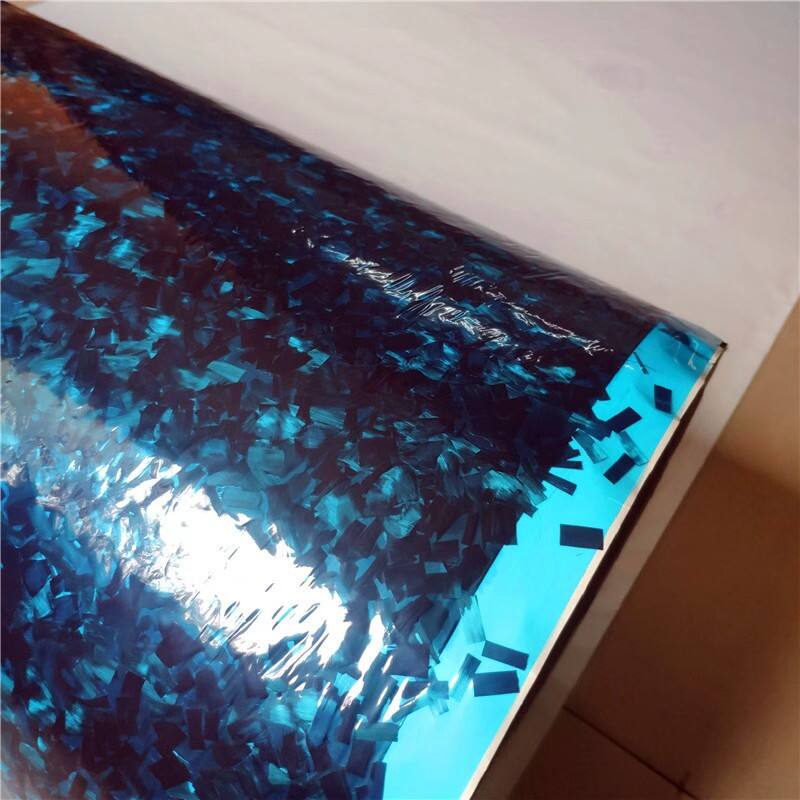
Forged carbon fiber components typically require less post-processing than machined metal parts or hand-laid composites. Surface finish quality emerging from the mold is generally suitable for direct use or minimal finishing, reducing the labor and equipment costs associated with sanding, painting, or polishing. In applications where the distinctive visual texture of forged carbon fiber is a desired aesthetic feature, the molded surface itself becomes a design element rather than a liability.
The elimination or reduction of secondary operations shortens the total manufacturing lead time from raw material to finished part. This is particularly valuable in industries with rapid product development cycles or where just-in-time manufacturing principles are applied. Manufacturers adopting forged carbon fiber often report measurable reductions in total production time, contributing to faster time-to-market for new products.
Cost Efficiency Relative to Performance
Material Utilization and Waste Reduction
Raw material efficiency is a fundamental driver of manufacturing cost. Forged carbon fiber processes are designed to minimize scrap, as the fiber-resin charge is formulated to match the volume of the finished component closely. Unlike subtractive manufacturing processes that generate significant swarf or offcuts, compression molding of forged carbon fiber produces very little waste material, improving the cost-per-part economics substantially.
For manufacturers operating under sustainability mandates or seeking to improve environmental performance metrics, the low-waste characteristic of forged carbon fiber production is an additional advantage. Reducing material waste lowers both raw material expenditure and disposal costs, contributing to a more efficient and environmentally responsible manufacturing operation.
Tooling Investment and Long-Term Value
While the initial investment in compression molds for forged carbon fiber production can be significant, the long-term economics are favorable when viewed over the production life of a component. High-quality steel molds can produce hundreds of thousands of parts with consistent quality, spreading the tooling cost over a large number of units. This amortization dynamic makes forged carbon fiber increasingly cost-competitive as production volumes grow.
When the full lifecycle cost is considered — including material savings, reduced labor, lower scrap rates, and extended part service life — forged carbon fiber often presents a compelling economic case against both traditional metals and alternative composite manufacturing approaches. Decision-makers who evaluate total cost of ownership rather than unit material price frequently find that forged carbon fiber delivers superior long-term value.
Industry Applications and Adoption Drivers
Automotive and Motorsport Manufacturing
The automotive and motorsport industries have been early and enthusiastic adopters of forged carbon fiber due to the material's alignment with core performance objectives: weight reduction, aerodynamic optimization, and visual differentiation. Interior trim components, structural panels, wheel centers, and performance accessories produced from forged carbon fiber are now standard features in premium and performance vehicle segments.
Beyond aesthetics, the structural benefits of forged carbon fiber contribute to vehicle safety and handling. Components such as seat shells, pedal boxes, and dashboard structures benefit from the material's energy absorption characteristics and dimensional stability. As automakers face increasing pressure to reduce fleet weight for regulatory compliance, forged carbon fiber is becoming a key part of lightweighting strategies at scale.
Aerospace, Consumer Electronics, and Beyond
In aerospace applications, forged carbon fiber is valued for its ability to produce complex brackets, housings, and structural fittings with minimal weight penalty. The material's compatibility with tight dimensional tolerances and its resistance to thermal cycling make it suitable for both interior and exterior aerospace components. As certification processes become more accommodating of composite materials, adoption in this sector is expected to grow.
Consumer electronics manufacturers are increasingly exploring forged carbon fiber for laptop housings, wearable device frames, and premium audio components. The material's combination of rigidity, light weight, and distinctive appearance aligns well with the premium positioning strategies of leading electronics brands. Industrial machinery and robotics are also emerging application areas, where forged carbon fiber components contribute to the development of lighter, faster, and more energy-efficient automated systems.
FAQ
How does forged carbon fiber differ from woven carbon fiber?
Forged carbon fiber is made from short, randomly oriented chopped carbon fiber flakes mixed with resin and compression molded, producing isotropic-like mechanical properties and complex 3D geometries. Woven carbon fiber uses continuous fibers arranged in a specific weave pattern, offering directional strength but with greater limitations on geometric complexity and production speed. Forged carbon fiber is generally better suited for high-volume production of complex parts, while woven composites are preferred for flat or simply curved structures requiring maximum directional strength.
Is forged carbon fiber suitable for structural load-bearing components?
Yes, forged carbon fiber can be used in structural applications, though the specific design must account for the material's mechanical properties. Its random fiber orientation provides good multi-directional strength, making it appropriate for brackets, housings, frames, and other components that experience complex load states. For the most demanding structural applications, engineers may use forged carbon fiber in combination with other composite or metal elements to achieve the required performance profile.
What types of resin systems are used with forged carbon fiber?
The most common resin systems used with forged carbon fiber are epoxy resins, which offer an excellent balance of mechanical performance, chemical resistance, and processing characteristics. Vinyl ester and polyester resins are also used in cost-sensitive applications. The choice of resin significantly influences the final component's strength, temperature resistance, and surface quality. High-performance variants of forged carbon fiber often use aerospace-grade epoxy systems to maximize structural properties.
What industries benefit most from adopting forged carbon fiber?
Industries that benefit most from forged carbon fiber include automotive, motorsport, aerospace, consumer electronics, sporting goods, and industrial robotics. Any sector that values weight reduction, design flexibility, corrosion resistance, and the ability to produce complex geometries at reasonable production volumes will find forged carbon fiber a strong candidate material. The growing accessibility of compression molding technology is also enabling smaller manufacturers and product developers to incorporate forged carbon fiber into their product portfolios.