
 EN
EN

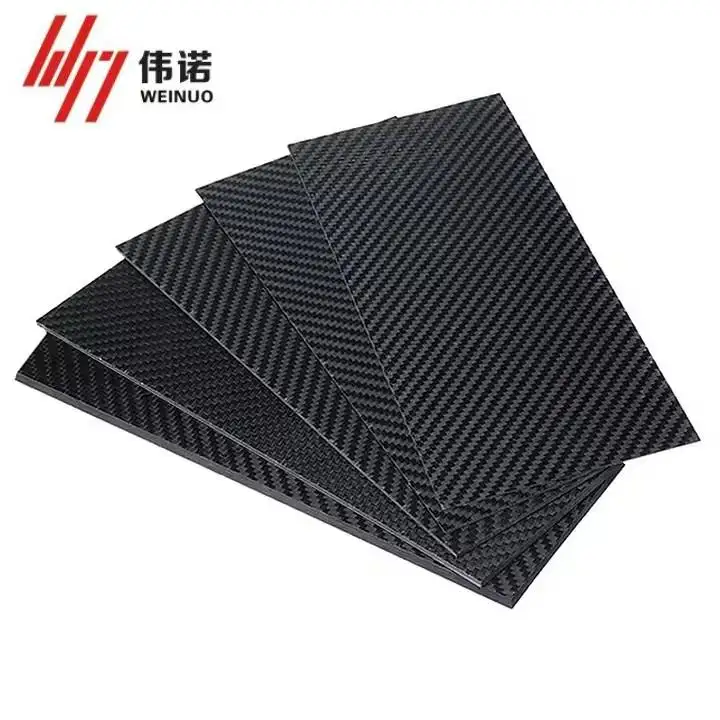
Engineers across automotive, aerospace, robotics, and manufacturing industries constantly seek materials that deliver superior performance without compromising structural integrity or adding excessive weight. Carbon fiber sheets have emerged as a transformative solution for engineers looking to upgrade existing designs, enhance performance metrics, and meet increasingly stringent efficiency requirements. Understanding why carbon fiber sheets deserve serious consideration for engineering upgrades requires examining their unique combination of mechanical properties, design flexibility, and long-term cost-effectiveness that traditional materials simply cannot match.
The decision to integrate carbon fiber sheets into engineering projects stems from measurable advantages that directly impact product performance, operational efficiency, and competitive positioning. Unlike incremental material improvements, carbon fiber sheets represent a fundamental shift in how engineers approach weight reduction, strength optimization, and durability challenges. This article explores the compelling technical, economic, and practical reasons why engineering teams should seriously evaluate carbon fiber sheets for their next upgrade cycle, providing insight into application scenarios where these advanced composite materials deliver the greatest value.
Exceptional Strength-to-Weight Ratio Drives Performance Gains
Understanding the Mechanical Advantage of Carbon Fiber Sheets
Carbon fiber sheets exhibit a strength-to-weight ratio that substantially exceeds traditional engineering materials such as aluminum, steel, and titanium. With tensile strength values typically ranging from 3,500 to 6,000 MPa while maintaining a density approximately one-fifth that of steel, carbon fiber sheets enable engineers to achieve structural requirements with significantly less material mass. This fundamental property translates directly into performance improvements across applications where weight reduction correlates with efficiency gains, speed increases, or payload capacity enhancements.
The specific stiffness of carbon fiber sheets allows engineers to maintain or even increase structural rigidity while dramatically reducing component weight. In applications involving dynamic loading, vibration control, or precision positioning, this stiffness-per-unit-mass advantage becomes critically important. Engineers working on robotic arms, for instance, find that replacing metal components with carbon fiber sheets reduces inertia, enabling faster acceleration, improved positioning accuracy, and reduced energy consumption during repetitive motion cycles.
The anisotropic nature of carbon fiber sheets provides an additional engineering advantage that isotropic metals cannot offer. By orienting fiber directions according to primary load paths, engineers can optimize material placement to resist specific stress patterns while minimizing weight in non-critical directions. This directional reinforcement capability allows for more efficient material utilization and enables custom-tailored mechanical properties that align precisely with application requirements, something impossible to achieve with conventional homogeneous materials.
Real-World Performance Impact Across Engineering Disciplines
In automotive engineering, the integration of carbon fiber sheets into chassis components, body panels, and structural reinforcements has demonstrated measurable improvements in vehicle dynamics and fuel efficiency. Each kilogram removed from vehicle weight typically translates to fuel consumption reductions between 0.3 and 0.5 percent, making carbon fiber sheets a strategic material choice for meeting emissions regulations while maintaining performance standards. Engineers upgrading existing vehicle platforms can achieve these benefits without complete redesigns by strategically replacing high-stress metal components with engineered carbon fiber sheets.
Aerospace applications showcase even more dramatic performance gains from carbon fiber sheet implementation. Aircraft components upgraded with carbon fiber sheets experience weight reductions that directly increase fuel efficiency, extend flight range, or enable increased payload capacity. The fatigue resistance of properly manufactured carbon fiber sheets also extends component service life compared to aluminum structures subject to repeated loading cycles, reducing maintenance frequency and improving operational reliability over the aircraft's lifespan.
Manufacturing equipment and industrial machinery represent another domain where carbon fiber sheets deliver tangible performance advantages. Conveyor systems, robotic end effectors, and precision tooling upgraded with carbon fiber sheets benefit from reduced moving mass, which decreases wear on drive systems, lowers energy consumption, and improves throughput rates. Engineers find that these performance improvements often justify the material cost differential through reduced operating expenses and increased production capacity over the equipment's operational lifetime.
Superior Corrosion Resistance Reduces Lifecycle Costs
Chemical Stability Advantages Over Metallic Alternatives
Unlike metals that oxidize and corrode when exposed to moisture, chemicals, or salt environments, carbon fiber sheets exhibit exceptional chemical resistance across a broad range of exposure conditions. This inherent stability eliminates the need for protective coatings, frequent inspections, and periodic replacement that characterize metal component maintenance schedules. Engineers designing equipment for marine environments, chemical processing facilities, or outdoor installations find that carbon fiber sheets maintain structural integrity and dimensional stability without the degradation that limits metal component service life.
The absence of galvanic corrosion concerns when carbon fiber sheets interface with other materials simplifies design considerations and expands material pairing options. While engineers must account for galvanic potential when combining dissimilar metals, carbon fiber sheets can be integrated with various metals, polymers, and composites without initiating electrochemical degradation processes. This compatibility reduces design constraints and enables engineers to select supporting materials based purely on functional requirements rather than corrosion prevention considerations.
Long-term exposure testing demonstrates that carbon fiber sheets retain mechanical properties in harsh environments where metal alternatives experience measurable strength degradation. In applications involving repeated thermal cycling, chemical exposure, or humidity fluctuations, carbon fiber sheets provide consistent performance throughout extended service intervals. Engineers upgrading legacy systems with carbon fiber sheets often eliminate recurring maintenance procedures and extend component replacement intervals, generating substantial lifecycle cost savings that offset initial material investment.
Maintenance Reduction and Operational Reliability Benefits
The maintenance advantages of carbon fiber sheets extend beyond corrosion resistance to include reduced inspection requirements and simplified preservation procedures. Equipment upgraded with carbon fiber sheets typically eliminates protective coating application, rust treatment, and corrosion-related component replacement from maintenance schedules. This reduction in preventive maintenance activities translates to lower operational costs, reduced downtime, and simplified logistics for organizations managing distributed equipment installations.
Engineers responsible for equipment operating in remote or difficult-to-access locations particularly value the reduced maintenance requirements of carbon fiber sheets. Offshore platforms, mountaintop installations, and underground facilities benefit substantially from components that maintain performance without frequent servicing. The reliability improvements from carbon fiber sheet upgrades often prove decisive in applications where maintenance access involves significant expense, safety risks, or operational disruption.
Predictable aging characteristics of carbon fiber sheets enable more accurate lifecycle planning and replacement scheduling compared to metals subject to unpredictable corrosion progression. Engineers can establish component replacement intervals based on fatigue cycles or operational hours rather than uncertain corrosion-driven failure modes. This predictability improves asset management, simplifies spare parts inventory, and reduces the risk of unexpected failures that disrupt production schedules or compromise safety.
Design Flexibility Enables Innovation and Customization
Complex Geometry Fabrication Capabilities
Carbon fiber sheets offer fabrication versatility that enables engineers to create complex geometries difficult or impossible to manufacture with traditional metalworking processes. The formability of carbon fiber sheets during layup allows for compound curves, variable thickness sections, and integrated reinforcement features without the tooling complexity required for equivalent metal stampings or machined components. This geometric freedom empowers engineers to optimize designs for performance rather than constraining concepts to manufacturing limitations.
Consolidated part designs represent a significant engineering advantage enabled by carbon fiber sheets. Components that would require multiple metal parts joined through fasteners or welding can often be manufactured as single integrated carbon fiber sheet structures. This consolidation reduces part counts, eliminates joint interfaces that concentrate stress or introduce failure points, and simplifies assembly procedures. Engineers upgrading assemblies find that transitioning to carbon fiber sheets frequently enables design simplification that improves reliability while reducing manufacturing complexity.
The ability to embed inserts, integrate mounting features, and incorporate local reinforcements during carbon fiber sheet fabrication provides additional design optimization opportunities. Engineers can position threaded inserts, load-bearing cores, or sensor mounting provisions precisely where needed without secondary operations. This integration capability streamlines manufacturing workflows and enables design refinements that enhance functionality without compromising the weight and strength advantages that motivate carbon fiber sheet selection.
Tailored Mechanical Properties Through Layup Engineering
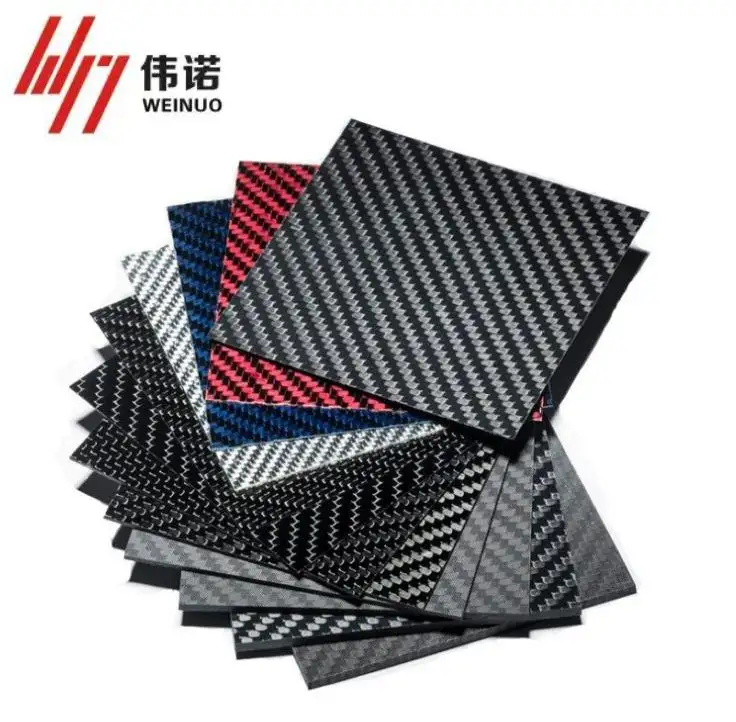
Engineers can precisely control mechanical properties of carbon fiber sheets by adjusting fiber orientation, layer sequencing, and resin systems during fabrication. This tunability allows for custom-engineered solutions optimized for specific loading conditions rather than accepting the fixed properties of rolled metal stock. Applications with directional loading, combined tension and compression requirements, or specific stiffness targets benefit substantially from this ability to tailor carbon fiber sheets to exact engineering specifications.
The modular nature of carbon fiber sheet layup enables engineers to implement localized property variations within single components. Areas requiring maximum strength receive additional layers or specific fiber orientations, while regions with lower stress requirements use lighter layup schedules. This material optimization reduces weight beyond what uniform-thickness metal components can achieve while maintaining structural adequacy throughout the component. Engineers find that this selective reinforcement capability often reveals opportunities for performance improvements not apparent when working within the constraints of homogeneous materials.
Hybrid construction techniques combining carbon fiber sheets with other materials enable engineers to optimize cost-performance tradeoffs across component designs. Strategic placement of carbon fiber sheets in high-stress regions while using less expensive materials in lower-load areas achieves performance targets at reduced material cost. This hybrid approach proves particularly valuable for engineers upgrading existing designs where complete material substitution might not be economically justified but targeted improvements in critical areas deliver substantial performance gains.
Thermal and Fatigue Performance for Demanding Applications
Temperature Stability and Thermal Management Advantages
Carbon fiber sheets maintain mechanical properties across temperature ranges that would cause significant strength degradation in many engineering plastics and performance changes in metals. With glass transition temperatures exceeding 120°C for standard epoxy matrix systems and specialized formulations performing reliably above 200°C, carbon fiber sheets enable equipment operation in thermal environments that limit alternative materials. Engineers designing components exposed to engine compartments, industrial processes, or solar radiation find that carbon fiber sheets eliminate temperature-related performance limitations.
The low coefficient of thermal expansion exhibited by carbon fiber sheets minimizes dimensional changes across temperature fluctuations that would cause significant expansion or contraction in metal components. Precision equipment requiring tight tolerances benefits substantially from this thermal stability, as carbon fiber sheet components maintain alignment and clearances throughout temperature cycles. Engineers upgrading measurement instruments, optical systems, or precision positioning equipment frequently select carbon fiber sheets specifically for this dimensional stability advantage.
Thermal management applications leverage the directional thermal conductivity properties of carbon fiber sheets to implement efficient heat spreading or targeted thermal isolation. By orienting fibers to conduct heat along preferred paths or using layup patterns that create thermal barriers, engineers can implement passive thermal management strategies within structural components. This dual functionality eliminates separate thermal management hardware, reducing system weight and complexity while maintaining temperature control requirements.
Fatigue Resistance for Cyclically Loaded Components
Carbon fiber sheets exhibit superior fatigue resistance compared to metals subject to repeated loading cycles, retaining greater percentages of ultimate strength after millions of stress cycles. This fatigue performance proves particularly valuable in applications involving vibration, oscillation, or repeated loading where metal components develop fatigue cracks that eventually propagate to failure. Engineers upgrading rotating equipment, reciprocating mechanisms, or vibration-exposed structures often specify carbon fiber sheets specifically to extend component service life and improve operational reliability.
The damage tolerance characteristics of carbon fiber sheets provide gradual performance degradation rather than catastrophic failure modes typical of metal fatigue. While metals develop microscopic cracks that suddenly propagate to complete fracture, carbon fiber sheets exhibit progressive fiber breakage and delamination that provides warning before structural failure. Engineers appreciate this predictable degradation behavior for safety-critical applications where sudden unexpected failures pose unacceptable risks to personnel or operations.
Testing protocols for carbon fiber sheets in fatigue-critical applications have matured substantially, providing engineers with reliable design data for lifecycle predictions. Standardized test methods and accumulated service experience enable confident fatigue life estimates that support upgrade decisions. Engineers can quantify expected service life improvements when replacing metal components with carbon fiber sheets, enabling data-driven cost-benefit analyses that demonstrate long-term value despite higher initial material costs.
Economic Justification Through Total Cost of Ownership Analysis
Initial Investment Versus Lifecycle Value
While carbon fiber sheets typically command higher material costs than metals on a per-kilogram basis, comprehensive total cost of ownership analysis frequently demonstrates economic advantages over equipment lifecycles. Engineers must evaluate not only material acquisition costs but also fabrication expenses, assembly labor, finishing requirements, maintenance intervals, and operational savings from weight reduction and efficiency improvements. This holistic economic assessment often reveals that carbon fiber sheet upgrades generate positive returns through reduced lifecycle costs and improved performance value.
Manufacturing process efficiency improvements often offset higher material costs for carbon fiber sheets in production applications. The ability to consolidate multiple metal parts into single carbon fiber sheet components reduces assembly labor, eliminates fasteners, and simplifies quality control procedures. Engineers find that these manufacturing efficiency gains become increasingly significant in medium to high production volumes where labor costs and assembly time substantially impact total product cost.
Energy savings from weight reduction represent a quantifiable economic benefit that accumulates throughout equipment operational life. Transportation applications, mobile equipment, and systems with frequent start-stop cycles realize ongoing fuel or electricity cost reductions that continue generating savings year after year. Engineers can calculate net present value of these operational savings to demonstrate how carbon fiber sheet upgrades pay for themselves through reduced energy consumption over realistic service periods.
Risk Mitigation and Performance Value Considerations
Carbon fiber sheets reduce technical risk in upgrades targeting performance improvements that might not be achievable through incremental metal optimization. When weight targets, strength requirements, or durability objectives exceed what metal alternatives can deliver, carbon fiber sheets enable engineers to meet specifications that would otherwise require complete system redesigns. This risk reduction proves valuable when upgrade timelines are constrained or when maintaining compatibility with existing interfaces limits design freedom.
Competitive advantage from performance improvements enabled by carbon fiber sheets generates economic value that extends beyond direct cost comparisons. Products with superior power-to-weight ratios, longer service intervals, or enhanced capabilities command premium pricing, capture market share, or enable entry into higher-value market segments. Engineers developing next-generation products find that carbon fiber sheet integration provides differentiation that justifies development investment through improved competitive positioning.
The sustainability advantages of carbon fiber sheets increasingly influence engineering decisions as organizations prioritize environmental performance alongside technical and economic factors. Reduced material consumption, extended product lifecycles, and lower operational energy requirements contribute to improved environmental profiles that support corporate sustainability commitments and appeal to environmentally conscious customers. Engineers find that carbon fiber sheet specifications align with broader organizational objectives beyond immediate project requirements.
FAQ
What performance improvements can engineers expect when upgrading components to carbon fiber sheets?
Engineers typically observe weight reductions of forty to seventy percent compared to equivalent steel components and twenty to forty percent compared to aluminum when upgrading to carbon fiber sheets. These weight savings translate directly into improved acceleration, reduced energy consumption, increased payload capacity, and enhanced dynamic response depending on the specific application. Additionally, carbon fiber sheets provide superior fatigue resistance, maintaining structural integrity through millions of loading cycles where metals would develop performance-limiting fatigue damage. The combination of weight reduction and durability improvement often enables performance levels unattainable with traditional materials.
How do carbon fiber sheets perform in high-temperature industrial environments?
Carbon fiber sheets with standard epoxy matrix systems maintain full mechanical properties at temperatures up to 120°C and retain significant strength to 150°C, making them suitable for most industrial applications including engine compartments, process equipment, and outdoor installations in hot climates. Specialized high-temperature resin systems extend this capability above 200°C for demanding applications. The thermal stability of carbon fiber sheets exceeds engineering thermoplastics and eliminates the thermal expansion concerns associated with aluminum components in precision applications. Engineers should specify resin systems appropriate for maximum expected service temperatures and verify compatibility with thermal cycling conditions specific to their application environment.
What design considerations are critical when specifying carbon fiber sheets for engineering upgrades?
Engineers must account for the anisotropic mechanical properties of carbon fiber sheets by aligning fiber orientations with primary load directions and implementing appropriate layup schedules for combined loading conditions. Joint design requires particular attention since carbon fiber sheets cannot be welded like metals, necessitating bonded joints, mechanical fasteners, or integrated attachment features incorporated during fabrication. Surface preparation and environmental protection at cut edges warrant specification to prevent moisture ingress in humid environments. Engineers should also consider the electrical conductivity of carbon fiber sheets in applications involving electrical isolation requirements or where lightning strike protection becomes relevant, particularly in aerospace applications.
Are carbon fiber sheets cost-effective for small production runs or custom engineering projects?
Carbon fiber sheets prove economically viable even for small production quantities when performance requirements justify the material investment or when lifecycle cost advantages offset higher initial expenses. Custom engineering projects benefit from the design flexibility and rapid prototyping capabilities that carbon fiber sheets enable compared to metal components requiring expensive tooling for forming operations. Engineers working on specialized equipment, research platforms, or performance-critical applications find that carbon fiber sheets enable solutions that would be impractical or impossible with conventional materials regardless of production volume. The key economic consideration involves evaluating total project value including performance gains, development time savings, and operational benefits rather than focusing exclusively on material cost comparisons.
Table of Contents
- Exceptional Strength-to-Weight Ratio Drives Performance Gains
- Superior Corrosion Resistance Reduces Lifecycle Costs
- Design Flexibility Enables Innovation and Customization
- Thermal and Fatigue Performance for Demanding Applications
- Economic Justification Through Total Cost of Ownership Analysis
-
FAQ
- What performance improvements can engineers expect when upgrading components to carbon fiber sheets?
- How do carbon fiber sheets perform in high-temperature industrial environments?
- What design considerations are critical when specifying carbon fiber sheets for engineering upgrades?
- Are carbon fiber sheets cost-effective for small production runs or custom engineering projects?