
 EN
EN

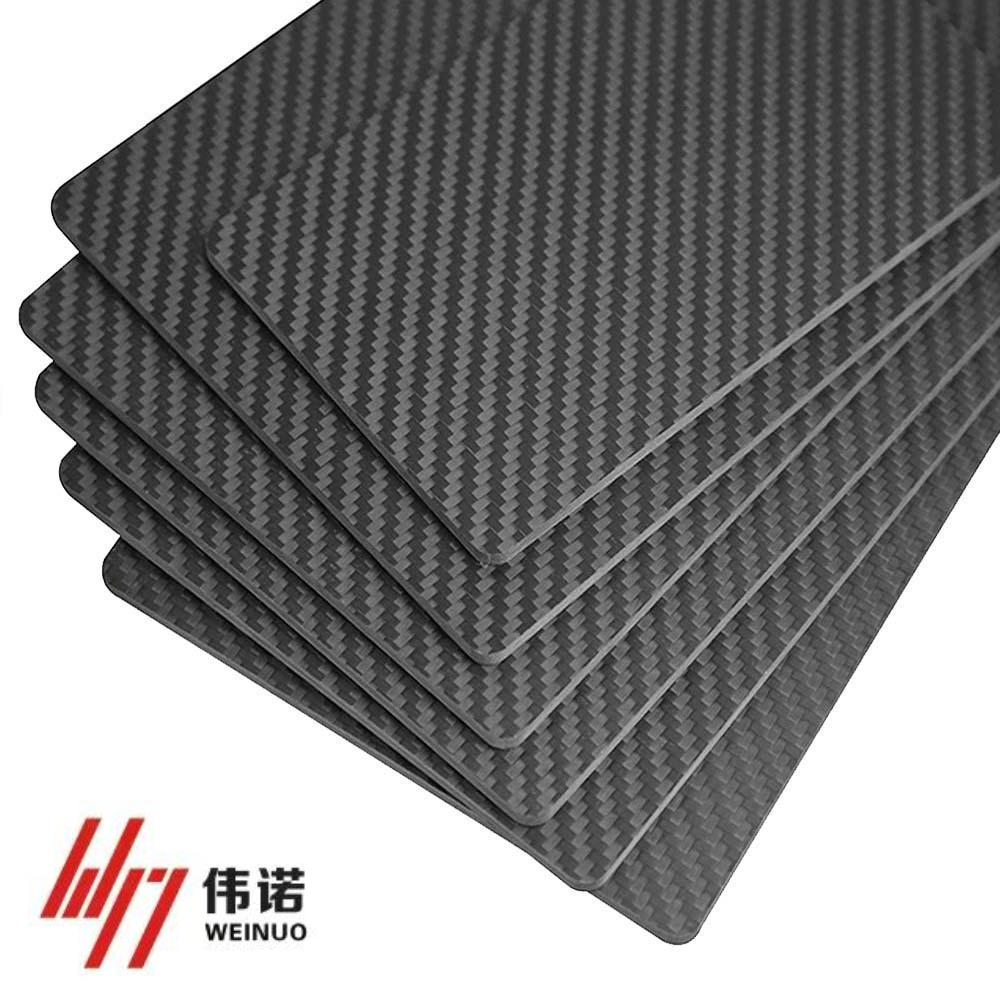
Optimizing layer orientations in multiaxial carbon fiber fabric represents a critical engineering decision that directly influences structural performance, load distribution, and material efficiency across diverse industrial applications. The strategic arrangement of fiber angles within multiaxial carbon fiber fabric determines how effectively the composite transfers stress, resists deformation, and maintains structural integrity under complex loading conditions. Understanding which layer orientations work best requires careful analysis of application-specific mechanical requirements, stress vectors, manufacturing constraints, and performance objectives that define successful composite design.
Engineers selecting layer orientations for multiaxial carbon fiber fabric must balance competing mechanical demands while accounting for manufacturing feasibility and cost effectiveness. The most common orientation configurations include zero-degree plies for longitudinal strength, ninety-degree layers for transverse reinforcement, and plus-minus forty-five degree angles for shear resistance and torsional stability. Each orientation contributes distinct mechanical properties to the laminate stack, and their strategic combination creates composite structures capable of withstanding multiaxial stress states encountered in aerospace components, automotive chassis elements, marine structures, and wind turbine blades. The optimization process demands thorough understanding of load paths, failure modes, and the synergistic interaction between differently oriented fiber layers within the fabric architecture.
Fundamental Principles of Layer Orientation in Multiaxial Carbon Fiber Fabric
Understanding Fiber Angle Conventions and Coordinate Systems
Layer orientation in multiaxial carbon fiber fabric follows standardized angular conventions where zero degrees aligns with the primary longitudinal axis of the component or the principal load direction. This reference system provides consistent communication across design, manufacturing, and quality control processes. The zero-degree orientation maximizes tensile strength and stiffness along the fiber direction, making it essential for components experiencing primary axial loads. Ninety-degree orientations run perpendicular to the reference axis, providing transverse reinforcement that prevents splitting and enhances dimensional stability under thermal cycling or moisture absorption.
Angular designations for multiaxial carbon fiber fabric typically use positive and negative conventions to distinguish between bias layers oriented symmetrically about the reference axis. A plus-forty-five-degree layer angles upward from the zero-degree reference, while a minus-forty-five-degree layer angles downward, creating a balanced configuration when combined. This symmetric bias arrangement proves particularly effective for resisting in-plane shear stresses and torsional loads. Understanding these coordinate conventions enables engineers to accurately specify layup sequences, interpret mechanical testing data, and communicate design intent across multidisciplinary teams involved in composite development and production.
Mechanical Property Contributions from Different Orientations
Each fiber orientation within multiaxial carbon fiber fabric contributes specific mechanical properties to the overall laminate performance envelope. Zero-degree plies deliver maximum tensile modulus and strength along the fiber axis, with values typically ranging from three hundred to six hundred gigapascals for modulus and three to seven gigapascals for tensile strength, depending on fiber grade and volume fraction. These properties decrease dramatically in the transverse direction, creating highly anisotropic behavior that must be addressed through strategic layer orientation design. The longitudinal stiffness contribution from zero-degree layers proves essential for bending-critical structures like beams, panels, and pressure vessels where primary loads align with component geometry.
Ninety-degree layers in multiaxial carbon fiber fabric provide transverse reinforcement that limits Poisson contraction, resists crack propagation perpendicular to primary loads, and enhances impact damage tolerance by preventing longitudinal splitting. Although transverse properties remain lower than longitudinal values due to matrix-dominated behavior, these layers prove critical for preventing catastrophic failure modes and maintaining structural integrity under off-axis loading conditions. The ninety-degree orientation becomes particularly important in pressure containment applications, biaxial stress fields, and structures requiring dimensional stability across multiple directions. Properly proportioned transverse reinforcement prevents premature failure initiated by matrix cracking or delamination between adjacent plies.
Shear and Torsion Resistance Through Bias Orientations
Bias orientations at plus-minus forty-five degrees within multiaxial carbon fiber fabric provide superior in-plane shear stiffness and strength compared to zero-ninety cross-ply configurations. The diagonal fiber alignment creates a truss-like load path that efficiently transfers shear forces through tensile and compressive stresses along the fiber directions. This mechanism proves significantly more effective than relying on matrix-dominated shear properties between unidirectional plies. Components subjected to torsional loads, such as drive shafts, rotor blades, or structural tubes, benefit substantially from increased bias layer content within their laminate stacks.
The effectiveness of bias layers in multiaxial carbon fiber fabric depends on maintaining balanced configurations where plus-forty-five and minus-forty-five degree plies appear in equal proportions throughout the thickness. Unbalanced laminates exhibit coupling between extension and shear deformations, creating unwanted warping, twisting, or dimensional instability during cure or service loading. Symmetric placement of bias layers about the laminate midplane further eliminates extension-bending coupling, ensuring that in-plane loads do not induce out-of-plane deformations. These design principles become particularly critical for precision components requiring tight dimensional tolerances and predictable mechanical response under complex loading scenarios encountered in aerospace and automotive applications.
Standard Layer Orientation Configurations for Common Loading Scenarios
Uniaxial Tension and Compression Applications
Components experiencing predominantly uniaxial loading benefit from layer orientations that concentrate reinforcement along the principal stress direction while providing sufficient off-axis plies to prevent splitting and maintain handling integrity during manufacturing. A typical optimized configuration for uniaxial tension in multiaxial carbon fiber fabric might allocate sixty to seventy percent of plies at zero degrees, with the remaining thirty to forty percent distributed between ninety-degree and bias orientations. This arrangement maximizes strength and stiffness in the load direction while ensuring adequate transverse and shear properties to prevent secondary failure modes.
For compression-dominated uniaxial loading, layer orientation optimization in multiaxial carbon fiber fabric must account for buckling stability and fiber microbuckling resistance. Compressive strength typically reaches only fifty to sixty percent of tensile strength due to these failure mechanisms. Increasing the proportion of off-axis plies, particularly at ninety degrees, provides lateral support that delays fiber microbuckling and increases compressive strength. Additionally, thinner individual ply thickness within the multiaxial fabric architecture reduces the characteristic wavelength of potential buckling modes, further enhancing compression performance. Components like struts, columns, or compression panels benefit from these orientation adjustments tailored specifically for compression loading rather than adopting tension-optimized configurations.
Biaxial Stress Fields and Pressure Containment
Pressure vessels, tanks, and structural panels subjected to biaxial stress states require balanced layer orientations that provide equal or proportional reinforcement in orthogonal directions. The classic quasi-isotropic layup for multiaxial carbon fiber fabric uses equal proportions of zero, ninety, plus-forty-five, and minus-forty-five degree orientations, creating approximately isotropic in-plane properties. This configuration proves ideal when principal stress directions vary during service or when design uncertainty necessitates conservatively robust mechanical properties in all planar directions. The equal distribution strategy simplifies analysis, testing, and quality control while providing predictable performance across diverse loading scenarios.
Cylindrical pressure vessels utilizing multiaxial carbon fiber fabric benefit from orientation optimization based on the two-to-one stress ratio between hoop and axial directions predicted by thin-wall pressure vessel theory. An optimal configuration places approximately twice as many fibers in the hoop direction compared to the axial direction, typically achieved through combinations of helical winding angles and axial reinforcement layers. Filament wound structures commonly employ plus-minus helical angles calculated to align fibers with principal stress directions, while also incorporating circumferential and axial plies to address end effects, handling loads, and manufacturing considerations. This tailored approach maximizes structural efficiency by aligning material anisotropy with the known stress distribution.
Combined Bending and Torsion Loads
Structural elements experiencing combined bending and torsion, such as helicopter rotor blades, wind turbine spars, or automotive drive shafts, require carefully balanced layer orientations within multiaxial carbon fiber fabric that address both loading modes simultaneously. Bending resistance benefits from concentrating material at maximum distances from the neutral axis with fiber orientations aligned with bending stresses, typically zero and ninety degrees for rectangular cross-sections. Torsional resistance demands significant bias layer content to efficiently carry the resulting shear flows around the cross-section perimeter. The optimization challenge involves finding the proportion of axial versus bias reinforcement that minimizes total structural weight while satisfying stiffness and strength requirements for both load types.
A common starting point for combined loading uses equal proportions of zero, ninety, plus-forty-five, and minus-forty-five degree orientations in multiaxial carbon fiber fabric, then iteratively adjusts these percentages based on the relative magnitude of bending versus torsion loads. Components with bending-dominated loading increase axial ply content, while torsion-dominated applications increase bias layer proportions. Advanced optimization techniques employ finite element analysis coupled with mathematical optimization algorithms to determine layer orientations that minimize structural mass subject to multiple constraint equations representing strength, stiffness, buckling, and vibration requirements. This systematic approach proves particularly valuable for high-performance applications where structural efficiency directly impacts system-level performance metrics like range, payload capacity, or energy consumption.
Advanced Optimization Strategies for Complex Loading Environments
Tailored Layer Orientation for Variable Load Paths
Complex structural components with spatially varying stress distributions benefit from regionally tailored layer orientations within multiaxial carbon fiber fabric that align reinforcement with local stress fields rather than applying uniform layups across entire structures. This approach requires detailed stress analysis through finite element methods to map principal stress magnitudes and directions throughout the component geometry. High-stress regions receive proportionally more reinforcement aligned with principal stress directions, while lower-stressed areas use reduced material allocations or alternative orientations that address secondary loading conditions or manufacturing constraints.
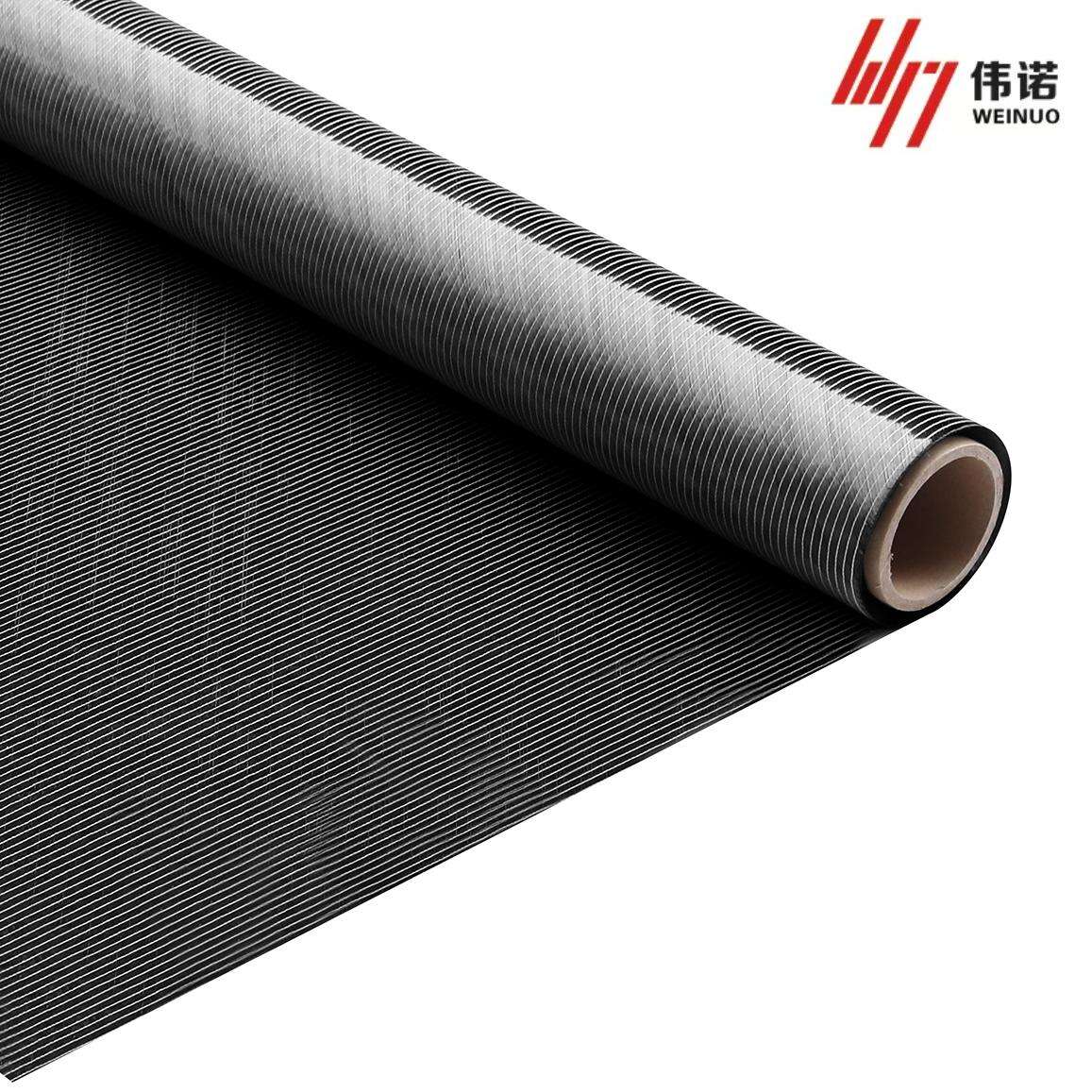
Implementation of tailored layer orientations in multiaxial carbon fiber fabric typically employs ply drop-offs, where specific oriented layers terminate at predetermined locations rather than extending across the full component area. These terminations must be carefully designed to avoid stress concentrations that could initiate delamination or premature failure. Gradual tapering, stepped thickness transitions, and strategic placement of toughened resin interlayers help manage the stress concentrations inherent in ply terminations. Aerospace structures like wing skins, fuselage panels, and control surfaces extensively employ ply drop-off strategies to achieve minimum weight designs that place material only where structural analysis indicates it provides necessary performance contributions.
Accounting for Manufacturing Constraints in Orientation Selection
Theoretical optimal layer orientations for multiaxial carbon fiber fabric must be reconciled with practical manufacturing limitations related to fabric handling, draping over complex geometries, consolidation quality, and production cost. Fabric architectures with closely spaced orientation angles, such as combinations including fifteen, thirty, or sixty degree plies alongside standard zero-ninety-bias orientations, may offer marginal theoretical performance improvements but dramatically increase manufacturing complexity and cost. Standard orientation sets using zero, ninety, plus-forty-five, and minus-forty-five degrees benefit from established manufacturing processes, widely available material forms, and extensive industry experience that reduces technical risk.
Draping multiaxial carbon fiber fabric over compound curved surfaces introduces shear deformations within the fabric architecture that can alter intended fiber orientations, create wrinkles, or produce local fiber waviness that degrades mechanical properties. Orientation selection must consider the drapability characteristics of specific fabric constructions, with bias-dominated layups generally conforming more readily to complex geometries compared to cross-ply configurations. Manufacturing process simulation software enables prediction of fabric deformation during forming operations, allowing engineers to assess whether intended layer orientations remain achievable given specific component geometry. This analysis may necessitate orientation adjustments, alternative fabric architectures, or component geometry modifications to ensure manufacturable designs that achieve required structural performance.
Optimization for Damage Tolerance and Fatigue Resistance
Layer orientation strategies for multiaxial carbon fiber fabric must address damage tolerance requirements in applications where impact events, tool drops, or foreign object strikes may introduce barely visible impact damage that reduces residual strength and fatigue life. Configurations with greater proportions of off-axis plies, particularly ninety-degree layers adjacent to potential impact surfaces, demonstrate improved damage resistance by distributing impact energy across multiple ply interfaces and preventing extensive fiber breakage in primary load-carrying directions. The resulting damage typically manifests as matrix cracks and limited delamination rather than catastrophic fiber fracture, preserving greater residual load-carrying capacity.
Fatigue loading considerations influence optimal layer orientations in multiaxial carbon fiber fabric used for structures experiencing cyclic loads, such as wind turbine blades, helicopter components, or automotive suspension elements. While carbon fiber composites exhibit excellent fatigue resistance compared to metals, damage accumulation under cyclic loading occurs primarily through matrix cracking, delamination growth, and fiber-matrix interface degradation. Layer orientations that minimize interlaminar shear stresses and provide redundant load paths help slow damage progression and extend fatigue life. Balanced symmetric laminates with gradual stiffness transitions between adjacent plies demonstrate superior fatigue performance compared to configurations with large property mismatches that concentrate interlaminar stresses at ply interfaces.
Analytical and Computational Methods for Orientation Optimization
Classical Lamination Theory Applications
Classical lamination theory provides the foundational analytical framework for predicting mechanical behavior of multiaxial carbon fiber fabric laminates based on individual ply properties, orientation angles, stacking sequence, and geometric parameters. This theory transforms anisotropic ply-level stiffness matrices through coordinate rotations corresponding to each layer orientation, then integrates these contributions through the laminate thickness to generate overall stiffness matrices relating forces and moments to strains and curvatures. Engineers use these relationships to calculate laminate properties including extensional stiffness, bending stiffness, coupling terms, and effective engineering constants for preliminary design and optimization studies.
Optimization workflows employing classical lamination theory for multiaxial carbon fiber fabric typically define objective functions representing structural mass, compliance, or cost, then systematically vary layer orientation angles and ply thicknesses to minimize the objective while satisfying constraint equations for strength, stiffness, buckling, or vibration frequency requirements. Gradient-based optimization algorithms efficiently handle continuous orientation angle variables, while genetic algorithms or simulated annealing methods address discrete orientation selection from standard angle sets. These approaches rapidly evaluate thousands of potential layup configurations, identifying promising candidates for detailed analysis and experimental validation. The computational efficiency of lamination theory enables extensive parametric studies that reveal how different design variables and constraint definitions influence optimal solutions.
Finite Element Analysis for Complex Geometries
Finite element analysis extends orientation optimization capabilities beyond the flat plate assumptions underlying classical lamination theory, enabling accurate modeling of complex three-dimensional geometries, non-uniform thickness distributions, and realistic boundary conditions representative of actual component installations. Modern finite element software packages incorporate specialized composite modeling capabilities including layered shell elements that represent individual ply orientations within multiaxial carbon fiber fabric laminates, progressive damage models that simulate failure initiation and propagation, and integrated optimization modules that automate the search for improved layer orientation configurations.
Advanced finite element optimization for multiaxial carbon fiber fabric employs topology optimization techniques that determine optimal material distribution patterns, then translate these continuous density fields into discrete ply orientations and thicknesses achievable with available fabric forms. This approach has revealed unconventional orientation strategies and load path architectures that outperform traditional engineering intuition-based designs. Validation of finite element predictions requires careful attention to material property characterization, accurately representing fabric architecture details like stitch patterns or through-thickness reinforcement, and experimental testing of representative coupons and subscale components under relevant loading conditions. The investment in high-fidelity modeling and validation pays dividends through reduced development cycles, fewer physical prototypes, and higher-confidence designs that fully exploit the performance potential of multiaxial carbon fiber fabric systems.
Design of Experiments and Response Surface Methods
Statistical design of experiments methodologies provide systematic frameworks for exploring the multidimensional design space of layer orientation variables in multiaxial carbon fiber fabric while minimizing the number of required analyses. Techniques like factorial designs, Latin hypercube sampling, or optimal space-filling designs strategically select representative orientation combinations that efficiently capture the relationships between design variables and performance responses. Analyzing results from these design points using regression analysis or machine learning algorithms generates response surface models that approximate system behavior across the entire design space, enabling rapid evaluation of alternative configurations without additional detailed analyses.
Response surface optimization for multiaxial carbon fiber fabric orientation selection proves particularly valuable when computational costs of high-fidelity finite element analyses limit the number of evaluations possible within project schedules and budgets. The surrogate models developed through design of experiments enable thousands of candidate designs to be screened using fast approximate analyses, identifying promising regions of the design space where detailed finite element validation analyses should concentrate. This hierarchical approach balances the competing demands of design space exploration, computational efficiency, and solution accuracy. Uncertainty quantification techniques applied to response surface models further characterize confidence intervals around predicted optimal solutions, informing risk management decisions and identifying which design variables most significantly influence performance outcomes.
Industry-Specific Orientation Optimization Practices
Aerospace Structures and Certification Requirements
Aerospace applications of multiaxial carbon fiber fabric employ orientation optimization strategies constrained by stringent certification requirements, safety factors, and damage tolerance criteria that exceed those in other industries. Regulatory agencies require demonstration of structural integrity under ultimate loads representing one-point-five times limit loads, with residual strength after specified damage scenarios meeting established safety thresholds. These requirements influence orientation selection by favoring conservatively robust layups with substantial off-axis reinforcement that maintains load-carrying capacity despite impact damage, manufacturing defects, or unexpected loading conditions not fully captured in design load cases.
Aerospace designers typically adopt building-block validation approaches where coupon-level testing validates material properties and failure mechanisms, element-level testing confirms structural detail behavior, and subcomponent then full-component testing demonstrates integrated performance under representative loading. Layer orientation optimization for multiaxial carbon fiber fabric proceeds iteratively through these validation levels, with testing results informing refinements to analytical models and orientation selections. This systematic methodology ensures that certified designs achieve required safety margins while maximizing structural efficiency. Documentation requirements mandate complete traceability of orientation selections including analysis methods, load cases, failure criteria, and test results supporting certification basis, creating extensive design records that enable future modifications and derivatives.
Automotive Applications Balancing Performance and Cost
Automotive applications of multiaxial carbon fiber fabric face cost constraints more severe than aerospace, necessitating orientation optimization approaches that emphasize manufacturing efficiency, material utilization, and high-volume production compatibility alongside structural performance. Standard orientation sets using readily available fabric forms minimize material costs and inventory complexity. Designs often employ symmetric laminates with simple stacking sequences that reduce manufacturing errors and simplify quality control inspection. The orientation optimization objective function typically includes cost terms representing material expense, layup labor, cycle time, and scrap rates alongside traditional structural performance metrics.
Crash energy absorption represents a critical design consideration for automotive multiaxial carbon fiber fabric components that influences orientation selection differently than aerospace applications. Controlled progressive crushing requires specific failure mode sequences including splaying, fragmentation, and folding that dissipate kinetic energy without catastrophic brittle fracture or excessive peak forces. Layer orientations with substantial bias content and moderate thickness promote these desirable crushing modes, while excessive zero-degree dominance may produce unstable catastrophic failures with poor energy absorption characteristics. Experimental testing using dynamic crush fixtures validates predicted energy absorption performance and failure mode progression, informing iterative refinement of orientation configurations optimized for crashworthiness alongside stiffness and strength requirements.
Wind Energy and Marine Structures
Wind turbine blades utilizing multiaxial carbon fiber fabric require orientation optimization addressing fatigue loading from millions of stress cycles over twenty to thirty year service lives, combined with extreme event loads from storm conditions and emergency shutdowns. The dominant structural element, the main spar cap, typically employs uniaxial or biaxial fabric with high zero-degree content aligned with the blade span to maximize bending stiffness and strength. Shell skin regions use more balanced orientations providing torsional stiffness, aerodynamic surface smoothness, and damage tolerance against environmental exposure, lightning strikes, and maintenance activities.
Marine structures including boat hulls, masts, and hydrofoils constructed from multiaxial carbon fiber fabric face orientation optimization challenges related to impact from floating debris, resistance to moisture absorption, and complex loading from hydrodynamic pressures, wave slamming, and rigging loads. Outer fabric layers often incorporate substantial bias content providing impact damage resistance and preventing crack propagation parallel to principal reinforcement directions. Moisture barrier coatings and resin selection work synergistically with layer orientation strategies to ensure long-term durability in wet environments. The variable loading directions characteristic of sailing vessels and marine structures favor quasi-isotropic or near-quasi-isotropic orientation distributions that provide robust performance across diverse loading scenarios without catastrophic weakness in any particular direction.
FAQ
What is the most common layer orientation sequence for general-purpose multiaxial carbon fiber fabric laminates?
The most widely adopted orientation sequence for general-purpose multiaxial carbon fiber fabric uses a quasi-isotropic configuration with equal proportions of zero, ninety, plus-forty-five, and minus-forty-five degree plies. This balanced arrangement provides approximately isotropic in-plane mechanical properties, making it suitable for applications with uncertain or variable loading directions. A typical stacking sequence might follow a pattern like zero, plus-forty-five, minus-forty-five, ninety, repeated symmetrically about the laminate midplane. This configuration simplifies design analysis, provides predictable behavior, and serves as an effective baseline for subsequent optimization when specific loading conditions become better defined.
How does increasing the percentage of bias layers affect the performance of multiaxial carbon fiber fabric?
Increasing bias layer content in multiaxial carbon fiber fabric significantly enhances in-plane shear stiffness and strength, making the laminate more resistant to torsional loads and shear deformations. This comes at the expense of reduced axial stiffness and strength in the zero and ninety degree directions, since bias layers contribute less effectively to these properties. Components experiencing substantial torsion or requiring high damage tolerance benefit from elevated bias content, typically ranging from forty to sixty percent of total reinforcement. The optimal balance depends on the specific ratio of axial versus shear loading in the application, with iterative analysis or testing required to identify the configuration that minimizes weight while meeting all performance requirements.
Can layer orientations other than zero, ninety, and plus-minus forty-five degrees provide performance advantages?
Alternative layer orientations beyond the standard set can theoretically provide performance improvements for specific loading conditions, particularly when principal stress directions differ significantly from standard orientations. For example, pressure vessels with specific diameter-to-length ratios may benefit from helical wind angles calculated to align precisely with principal stresses. However, non-standard orientations dramatically increase manufacturing complexity, limit available material forms, complicate quality control, and often provide only marginal performance gains compared to optimized combinations of standard angles. Most applications achieve satisfactory performance using standard orientation sets, with the proportion of each angle adjusted to match loading requirements. Non-standard angles prove most justifiable in highly specialized, performance-critical applications where the additional cost and complexity generate measurable system-level benefits.
How do layer orientation requirements differ between compression-molded and hand-layup multiaxial carbon fiber fabric components?
Manufacturing process selection influences practical layer orientation strategies for multiaxial carbon fiber fabric due to differences in fabric handling, consolidation mechanisms, and achievable tolerances. Compression molding processes accommodate complex orientation sequences and tight manufacturing tolerances, enabling full exploitation of optimized layer configurations with multiple orientation angles and strategic ply drop-offs. Hand layup processes face greater challenges maintaining precise orientation angles, achieving consistent consolidation pressure, and avoiding wrinkles or bridging over complex geometries. Hand-layup designs often simplify orientation sequences, increase individual ply thickness to reduce layup time, and incorporate additional off-axis plies to compensate for potential misalignments during manual fabric placement. Both processes can produce high-quality structures when design details appropriately account for process-specific capabilities and limitations.
Table of Contents
- Fundamental Principles of Layer Orientation in Multiaxial Carbon Fiber Fabric
- Standard Layer Orientation Configurations for Common Loading Scenarios
- Advanced Optimization Strategies for Complex Loading Environments
- Analytical and Computational Methods for Orientation Optimization
- Industry-Specific Orientation Optimization Practices
-
FAQ
- What is the most common layer orientation sequence for general-purpose multiaxial carbon fiber fabric laminates?
- How does increasing the percentage of bias layers affect the performance of multiaxial carbon fiber fabric?
- Can layer orientations other than zero, ninety, and plus-minus forty-five degrees provide performance advantages?
- How do layer orientation requirements differ between compression-molded and hand-layup multiaxial carbon fiber fabric components?