In the realm of carbon fiber reinforced composites, unidirectional fabrics have long held a central position in the technology landscape. However, as application demands continue to evolve, multi-axial fabrics are gradually reshaping the industry with their unique advantages. Whether in wind turbine blades, aerospace components, or high-performance sports equipment, designers increasingly favor this material solution for its greater engineering flexibility.
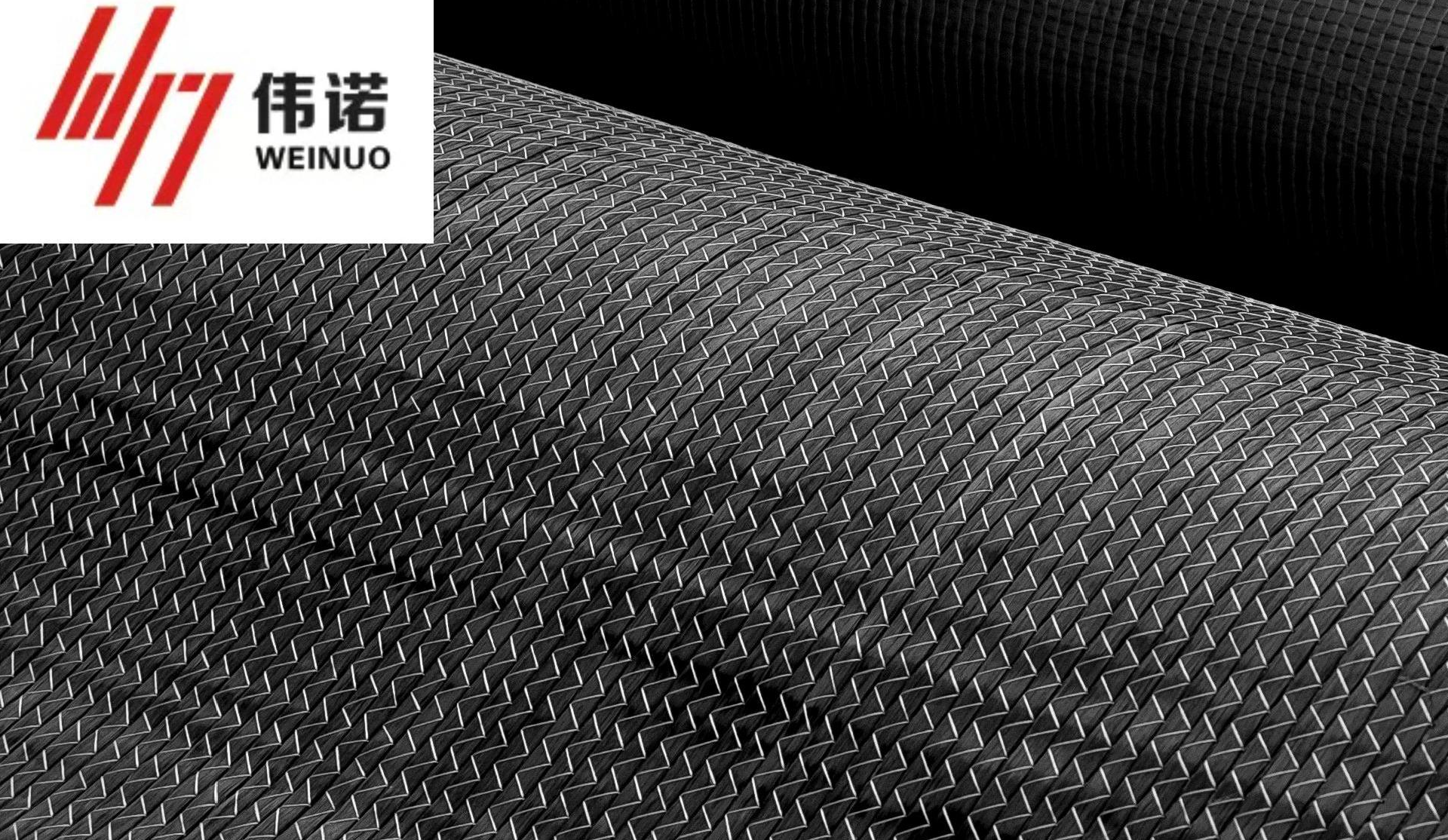
Core Advantages of Multi-Axis Fabrics
→Multi-directional load-bearing capacity
Carbon fiber unidirectional fabrics feature fibers aligned in a single direction, resulting in strength that is highly directional. In contrast, multi-axial fabrics combine fibers at different angles (commonly 0°, ±45°, and 90°) to achieve nearly isotropic mechanical properties.
→Superior Impact Resistance and Fatigue Performance
The presence of ±45° layers in multi-axial fabrics significantly enhances shear strength and damage tolerance. During impact, crack propagation follows a more tortuous path, resulting in superior energy absorption.
→Revolutionary Production Efficiency Improvement
Traditional unidirectional fabrics require dozens or even hundreds of oriented layers to form structural components, whereas multi-axial fabrics provide multidirectional reinforcement in a single layer. This translates to:
(1) 50-70% reduction in layup time
(2) Substantial decrease in labor costs
(3) Significant improvement in production consistency
→Reduced Waste and Optimized Material Utilization
Multi-axial fabrics enable fiber orientation tailored to specific component geometries and stress conditions, achieving "precision reinforcement." This eliminates material waste caused by over-engineering inherent in unidirectional fabrics.
→Enhanced Interlaminar Performance
With fibers interwoven in multiple directions within a single layer, multi-axial fabrics inherently reduce the risk of interlaminar delamination, improving the integrity and durability of composite structures.
Practical Applications and Technological Advancements
→Practical Applications
Taking wind turbine blades as an example:
(1) Unidirectional fabric solution: Requires complex layup combinations of 0°, ±45°, and 90°, resulting in cumbersome production processes and challenging quality control.
(2) Multi-axial fabric solution: Single or few layers can meet multi-directional stress requirements, enhancing production efficiency and delivering more reliable performance.
→Technological Advancements
Driven by automated placement technologies and growing customization demands, multi-axial fabrics are expanding beyond high-end applications into broader industrial sectors. Future developments include:
(1) Smart multi-axial fabrics: Integrating sensors and functional coatings
(2) Finer angle combinations: Exceeding traditional four-direction layups to achieve continuous angular variations
(3) Integration with 3D knitting technology: Creating truly three-dimensional reinforcement structures
It is worth noting that while multi-axial fabrics offer advantages in many aspects, unidirectional fabrics remain irreplaceable in scenarios demanding purely unidirectional high strength. The optimal material selection always hinges on specific application requirements, cost considerations, and production conditions.
Carbon fiber multi-axial fabrics represent a more efficient and intelligent direction in composite manufacturing. They embody not only material innovation but also a transformation in design thinking and production methods. As the technology matures and costs optimize, we can expect to witness the outstanding performance of this versatile material across an expanding range of fields.
For manufacturers and designers, understanding and effectively leveraging the characteristics of multi-axial fabrics may be the critical step toward gaining a technological edge in intense competition.
Copyright © 2026 Zhangjiagang Weinuo Composites Co., Ltd. All rights reserved
 EN
EN