Over the past few years, the term "high modulus" has become virtually synonymous with carbon fiber in high-end applications. Whether in aerospace, luxury automobiles, or sports equipment, any project that didn't incorporate high modulus carbon fiber seemed to lack credibility. Recently, however, an intriguing shift has emerged: an increasing number of premium projects are quietly reevaluating their reliance on high modulus carbon fiber.
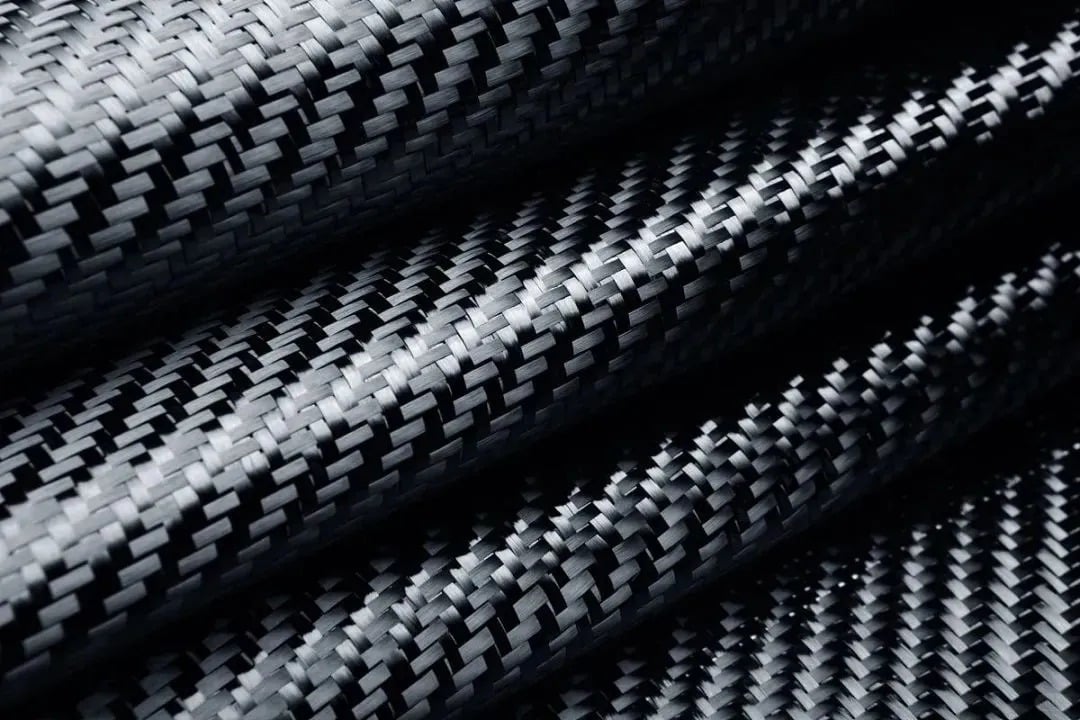
The True Cost of High-Modulus Carbon Fiber
High-modulus carbon fiber is undoubtedly the "noble" of the materials world—extremely rigid, exceptionally lightweight, and theoretically capable of delivering outstanding performance. But this noble status comes at a cost:
→Soaring Costs:
The manufacturing process for high-modulus carbon fiber is complex, with finished products typically costing 2–4 times more than standard carbon fiber. For projects requiring substantial quantities, the cost difference can reach millions or even hundreds of millions of dollars.
→Increased brittleness:
As modulus increases, material toughness often decreases. In extreme cases, high-modulus carbon fiber components may exhibit weaker impact resistance than medium-modulus alternatives.
"The Right Fit Is the Best Fit" Emerges as New Consensus
In recent years, engineers and designers have gradually recognized a simple yet long-overlooked truth: the best material isn't necessarily the one with the strongest performance, but the one best suited for a specific application.
→A Shift in the Automotive Industry:
A renowned electric supercar brand has reverted to using medium-modulus carbon fiber for critical structural components in its latest model, abandoning high-modulus variants. Their test data reveals that in real-world collision scenarios, medium-modulus materials demonstrate superior energy absorption while reducing costs by 30%.

→Aerospace Pragmatism:
Spacecraft manufacturers have discovered that using high-modulus carbon fiber in certain non-load-bearing structures offers extremely poor cost-effectiveness. An aerospace engineer who requested anonymity revealed: "We used to incur hundreds of thousands in additional costs just to save 0.5 kilograms. Now we ask ourselves: Is it really necessary?"

→Sports Equipment's Rational Return:
Top road bike brands have publicly downgraded the modulus grade of their carbon fiber in their latest flagship models. Their engineers explain: "By optimizing the layup design and fiber orientation, we've achieved superior overall performance using medium-modulus materials."

System Thinking Prevails Over Material Worship
Modern engineering projects increasingly emphasize system optimization rather than maximizing the performance of individual materials:
→Overall Design Optimization:
Using intelligent algorithms to optimize component shapes and structures, achieving stronger performance with more common materials.
→Hybrid Material Strategy:
High-modulus carbon fiber is used in critical areas, while conventional materials are employed in non-critical areas, achieving an optimal balance between performance and cost.
→Manufacturing Process Advancements:
Developments in new weaving techniques and resin systems enable medium-modulus carbon fiber to achieve performance levels previously attainable only with high-modulus materials.
Future Trends: Smart, Not Expensive
Against the backdrop of global carbon reduction efforts, the environmental footprint of materials has become a critical consideration. The energy consumption required to produce high-modulus carbon fiber is typically 1.5 to 2 times that of conventional carbon fiber, which runs counter to sustainable development principles.
The direction of materials science is shifting from "pursuing extreme performance" to "intelligent adaptation to demand":
(1) Self-sensing carbon fiber composites can monitor their own structural health in real time.
(2) Programmable stiffness materials can adjust their properties according to varying usage conditions.
(3) More environmentally friendly recycled carbon fiber technologies are maturing.
High-modulus carbon fiber will not disappear; it will continue to play a critical role in specialized fields demanding extreme performance. However, the era of blindly pursuing high modulus is over.
Future engineering projects will be more rational and pragmatic, focusing on overall system optimization rather than showcasing individual material parameters.
This shift represents not only technological advancement but also the maturation of engineering thinking—only when we cease being dazzled by the "most advanced" can we truly discover the "most suitable" solutions. In material selection, moderation often demands greater wisdom than extremes.
Copyright © 2026 Zhangjiagang Weinuo Composites Co., Ltd. All rights reserved
 EN
EN