When we speak of "carbon fibre", most people envision lightweight, high-strength components in supercars, high-end bicycles, or aerospace craft. Yet you may not realise that a quiet "plastics revolution" is unfolding within the carbon fibre realm – thermoplastic carbon fibre is challenging the dominance of traditional thermoset carbon fibre. Today, let us lift the veil on this materials showdown.
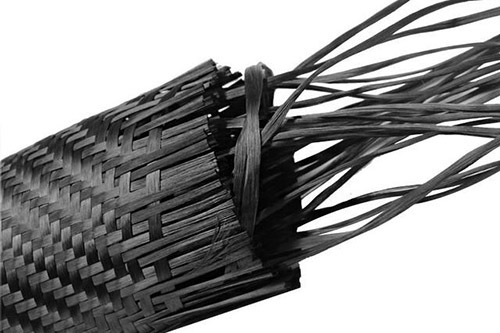
The Difference Between the Two
Imagine thermosetting carbon fibre as a permanently moulded ceramic—once formed, its shape cannot be altered; whereas thermoplastic carbon fibre resembles a plastic that can be repeatedly heated and reshaped—recyclable, reworkable, possessing a 'second life'.
1.Thermosetting Carbon Fibre: Classic Yet "Stubborn"
(1) Curing Principle: Cures via irreversible chemical reactions, akin to boiling an egg (transitioning from liquid to solid)
(2) Typical Resins: Epoxy, polyester, vinyl ester
(3) Advantages: Ultra-high stiffness, excellent heat resistance, mature manufacturing processes, low moisture absorption
(4)Disadvantages: Non-recyclable, lengthy moulding cycles, difficult to repair
2.Thermoplastic carbon fibre: Flexible and “renewable”
(1) Curing principle: Physical melting and solidification, similar to heating plastic to reshape it (from solid to liquid)
(2) Typical Resins: PEEK, PEKK, PA6, PP
(3) Advantages: Recyclable, rapid moulding, excellent impact resistance, weldable
(5)Disadvantages: Relatively low high-temperature performance, higher cost, relatively new process
Performance Showdown
| Dimension | Thermosetting carbon fibre | Thermoplastic carbon fibre | The winning party |
| Forming speed | Slow (minutes to hours) | Fast (seconds to minutes) | Thermoplastic |
| Recyclability | Virtually non-recyclable | Fully recyclable | Thermoplastic |
| Impact toughness | Fairly good | Excellence | Thermoplastic |
| Heat resistance | Excellent (200°C) | Good (150–250°C) | Thermosetting |
| Stiffness | extremely high | High | Thermosetting |
| Connection method | Adhesive bonding, mechanical connection | Welding, co-forming | Thermoplastic |
Real-World Application Showdown
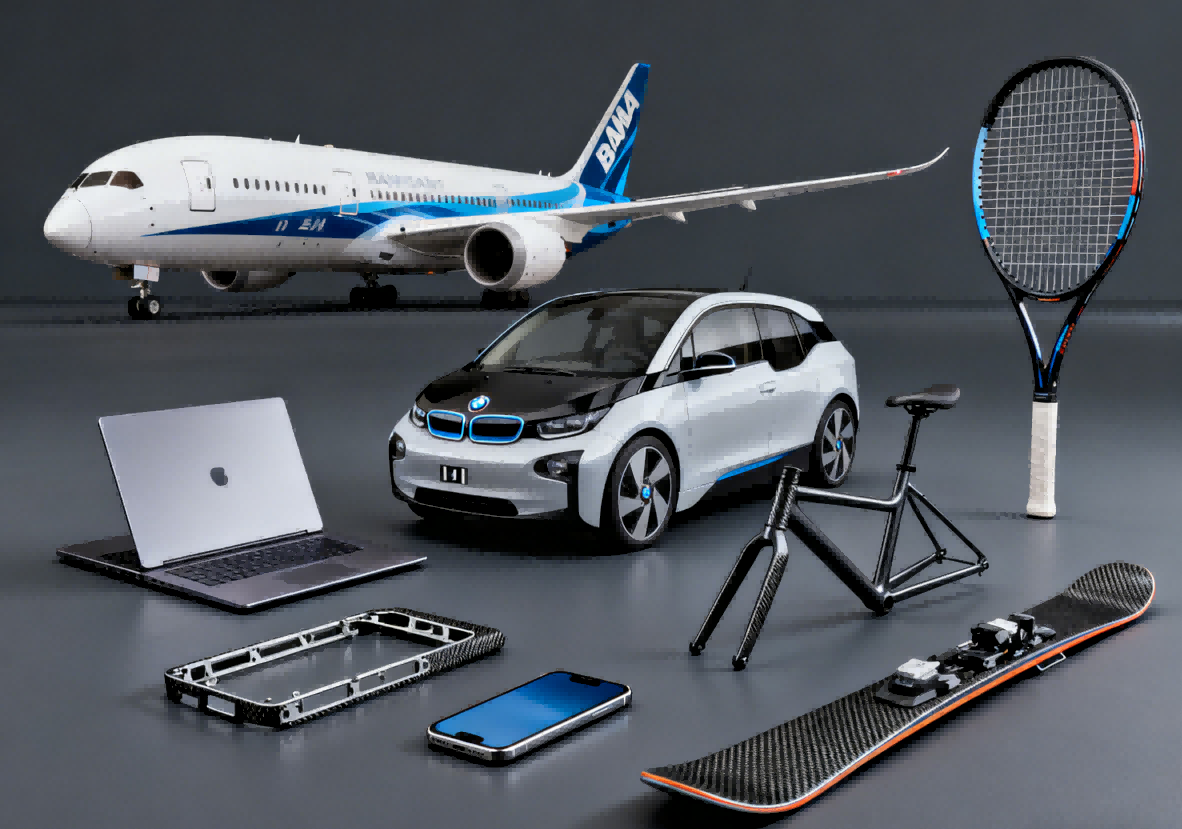
Aerospace:
The Boeing 787 Dreamliner's fuselage is a masterpiece of thermoset carbon fiber, but the Airbus A350 has begun incorporating thermoplastic composite components to reduce weight while boosting production efficiency.
Automotive Industry:
BMW's i3 extensively utilizes thermoset carbon fiber, while the latest generation of sports cars is beginning to explore the rapid prototyping advantages of thermoplastic carbon fiber to achieve mass production.
Consumer Electronics:
Ultra-thin laptop casings and high-end smartphone frames increasingly utilize thermoplastic carbon fiber, balancing strength with design flexibility.
Sports Equipment:
Top-tier bicycle frames and tennis rackets still favor the ultimate rigidity of thermosetting materials, but products like skis that require impact absorption are beginning to shift toward thermoplastics.
Selection Guide: When to Use Which One?
Select thermoset carbon fiber when:
(1) You require ultimate stiffness and high-temperature resistance;
(2) No modifications or recycling are needed throughout the product lifecycle;
(3) Traditional manufacturing processes are mature, and risk control is prioritized.
Select thermoplastic carbon fiber when:
(1) Sustainability and recyclability are key considerations;
(2) Rapid mass production is required;
(3) The product may need repair or re-molding;
(4) Impact toughness and damage tolerance are more important.
Conclusion: Not Replacement, but Coexistence
Thermoplastic carbon fiber will not entirely replace thermoset carbon fiber, just as plastics have not fully supplanted metals. They will each find their niche in different fields, jointly driving progress in materials science.
The future materials landscape will be an era of "smart choices"—finding the optimal balance between performance, cost, and sustainability based on specific requirements. Ultimately, this "fiber battle" between thermosets and thermoplastics will benefit the entire manufacturing industry and our planet.
Whether adhering to the classic thermosets or embracing innovative thermoplastics, the carbon fiber story continues to unfold. In this materials revolution, which "contender" do you favor? Share your thoughts in the comments section!
Copyright © 2026 Zhangjiagang Weinuo Composites Co., Ltd. All rights reserved
 EN
EN