When you see a carbon fiber sports car at an auto show, is your first thought, "This material must be ridiculously expensive"? When you come across a review of a carbon fiber water bottle, do you instinctively think, "It'll shatter if dropped—not as durable as stainless steel"? Or even when picking out athletic gear, seeing nothing but black carbon fiber products, do you assume, "This material is inherently only black"?
As industry veterans with years of experience in carbon fiber, we've grown accustomed to these common misconceptions. It's undeniable that when carbon fiber first transitioned from aerospace to consumer markets, its high technical barriers and niche applications earned it labels like "expensive," "fragile," and "monotonously black." But with breakthroughs in mass production and process innovations, today's carbon fiber has shed these stereotypes. It achieves cost control while enabling large-scale applications, rivals metal materials in impact resistance tests, and can even showcase vibrant colors through technical means.
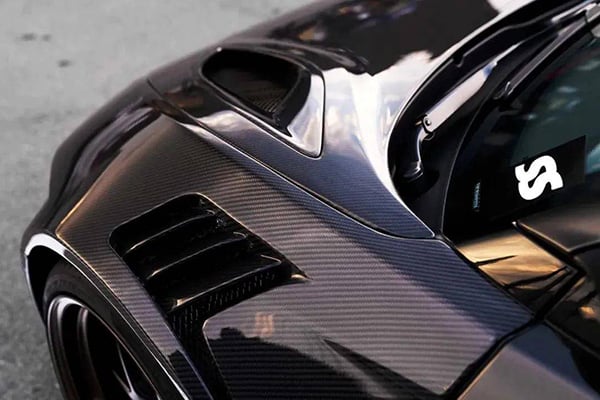
Overpriced? Uncovering the Technical Costs Behind the Price Tag
The saying "one kilogram of carbon fiber is equivalent to ten kilograms of steel" is widely circulated, but the high price has never been a "material premium"—it is the inevitable result of technology-intensive production.
Taking automotive carbon fiber as an example, its cost structure hides three layers of technological barriers:
Hard-and-fast rules on raw material wastage
After undergoing multiple processes including spinning, pre-oxidation, and carbonization, 2.2 tons of polyacrylonitrile precursor fiber ultimately yields only 1 ton of carbon fiber, with raw material costs reaching five times that of steel.
Actual energy consumption costs
The heat treatment process requires maintaining temperatures of over 1,000 degrees Celsius, with electricity costs accounting for as much as 30% of production expenses. This equates to consuming 200 kilowatt-hours of electricity for every 10 kilograms of carbon fiber produced.
Hidden Accounts of Process Precision
The carbon fiber conversion kit for the Mercedes-Benz V260L requires over 300 layers of fiber cloth to be precisely hand-laid. Any misalignment could render the product unusable, with exterior components alone costing 300,000 yuan.
More crucially, it achieves a "reversal of cost-effectiveness": a carbon fiber body is 60% lighter than steel, boosting new energy vehicle range by 15%. Long-term energy savings quickly offset initial costs. With breakthroughs in mass production technology, consumer-grade carbon fiber prices have dropped 70% compared to a decade ago, making it increasingly accessible to ordinary households in the future.
Shattered on impact? Impact resistance test proves otherwise.
The misconception that "carbon fiber is as brittle as glass" stems from a one-sided understanding of its mechanical properties. Let us present two sets of experimental data:
Drop Weight Impact Test
Under identical impact conditions of 10kg weight and 2-meter height, a 5mm-thick carbon fiber plate exhibited only minor surface indentation, while an aluminum alloy plate of the same thickness developed through-cracking. This is because carbon fiber possesses tensile strength seven times that of steel, enabling it to absorb impact energy through the synergistic interaction between fibers and resin.
Practical Verification Cases
The Ford Mustang Shelby GT drift car features an all-carbon-fiber body. In a 120 km/h crash test, body deformation was reduced by 40% compared to a steel body, while the passenger compartment remained intact. Race data indicates that the carbon-fiber body reduces the risk of collision-related injuries by 65%.
This "tough yet not brittle" characteristic is precisely why the aerospace industry relies on it as the core material for spacecraft hulls—capable of withstanding impacts from space debris while reducing launch weight.
Only black? Colorful carbon fiber has long been mass-produced and applied.
Traditional carbon fiber naturally appears black because the π electron clouds formed by sp² hybridized carbon atoms on its surface absorb the entire visible light spectrum. However, this technological bottleneck has now been overcome.
The micro-nano structured coloring technology developed by Academician Xu Weilin's team at Wuhan Textile University has given carbon fiber a colorful makeover: By constructing nanoscale periodic structures on the fiber surface via magnetron sputtering and utilizing light interference effects to generate color, the technology is not only environmentally friendly and fade-resistant but also preserves the original mechanical properties. Currently mass-produced colored carbon fibers span multiple color ranges including red, blue, and gold, achieving practical applications in three major fields:
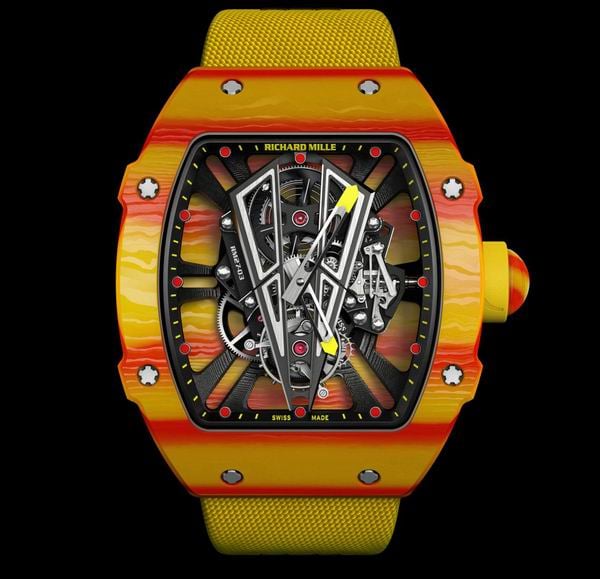
High-end consumption sector
The Richard Mille Fruits collection features an orange gradient carbon fiber case crafted through alternating layers of black and colored carbon fiber pressed together, achieving a hardness of HRC55 and weighing 40% less than a stainless steel case.
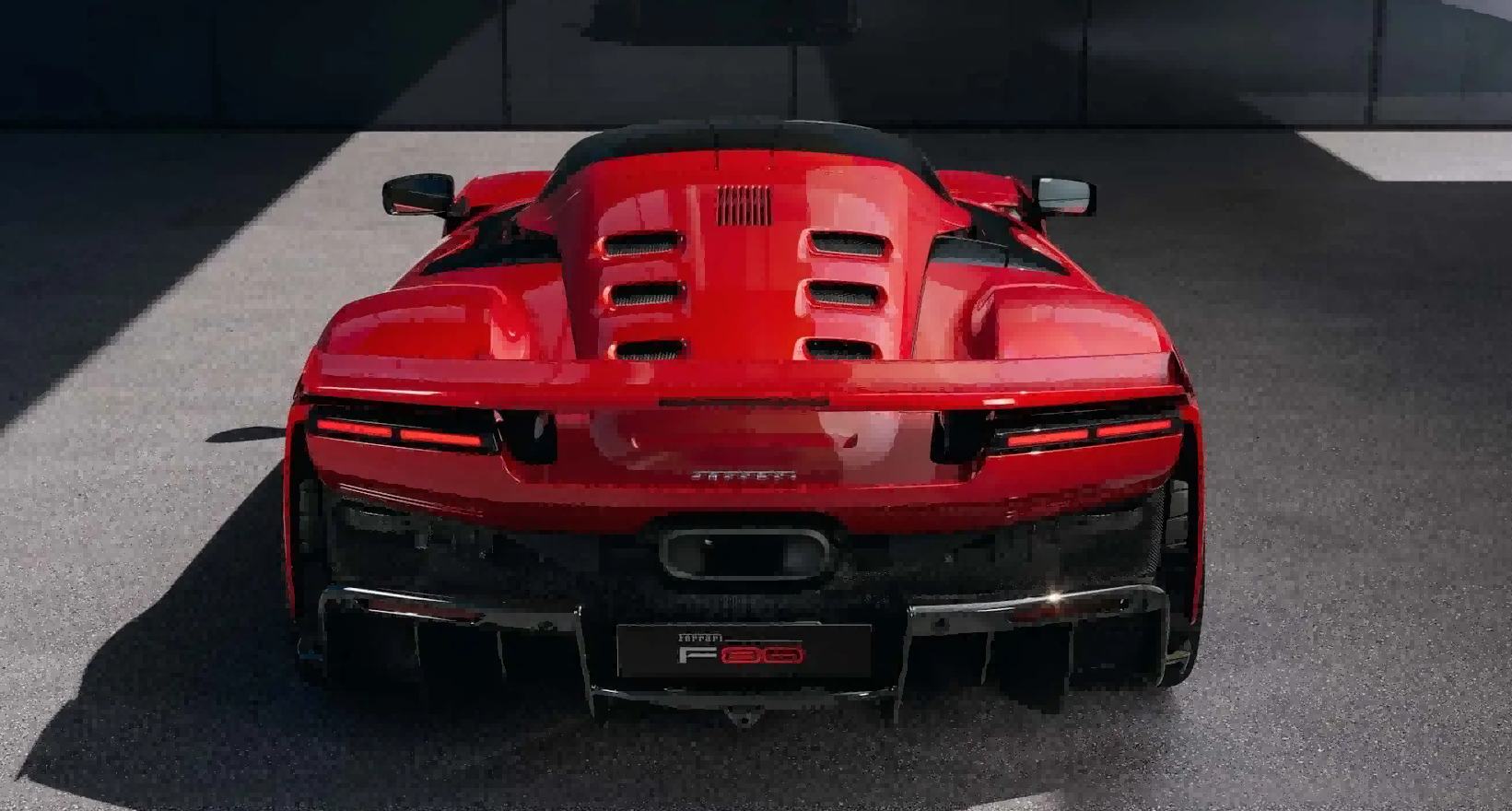
Automotive Tuning Industry
Red carbon fiber spoilers have become a signature feature of performance vehicles, with certain domestic manufacturers now achieving large-scale production.
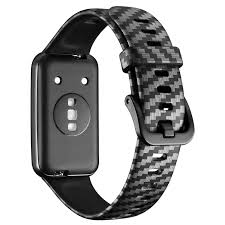
Smart Wearables Sector
A health wristband crafted from silver-coated conductive carbon fiber not only monitors heart rate but also boasts durability that withstands 100,000 bends without deformation.
The emergence of these colorful products is transforming carbon fiber from an "industrial material" into a "fashion element."
Breaking Prejudice: Carbon Fiber's Next Decade
From cutting-edge materials in aerospace to accessible options in consumer markets, carbon fiber's evolution shows no signs of stopping. When we consider that 30% of its cost stems from electricity (which can be reduced with green power in the future), its impact resistance far surpasses metals, and its color options continue to expand, it becomes clear: the "stereotypes" surrounding carbon fiber are being shattered one by one through technological innovation.
Copyright © 2026 Zhangjiagang Weinuo Composites Co., Ltd. All rights reserved
 EN
EN