At some point, whether among elite marathon runners or the growing number of recreational runners around us, running shoes have quietly undergone an 'upgrade'. They no longer rely solely on traditional cushioning foam but have become more 'aggressive', with the most common feature being the faintly visible carbon fibre plate in the sole.
This wave of "carbon-plated running shoes" began with Nike's Breaking 2 project in 2017 and has since swept across the entire running shoe market. Today, virtually every brand's top-tier racing shoes incorporate a carbon plate.
So the question arises: why has this slender sheet of carbon fibre become the 'soul' of elite running shoes? Is it merely a marketing gimmick, or a genuine technological revolution?
Today, we delve into the matter.
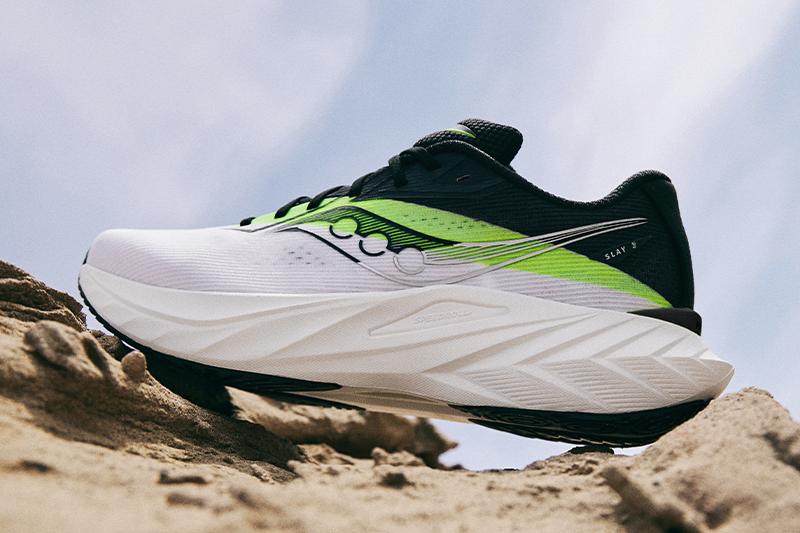
From 'Support' to 'Advancement': The Revolutionary Transformation of Carbon Fibre's Role
Prior to the era of carbon plates, running shoes also incorporated plastic or carbon plates, but their primary function was to provide torsional rigidity and stability, preventing excessive deformation of the shoe that could lead to injury. They served as the 'skeleton' of the running shoe.
Today's carbon fibre plates, however, have undergone a fundamental shift in role: from being a 'stabilising skeleton' to becoming an 'energy engine'.
Their core principle can be explained by a simple physics concept: the seesaw effect.
Imagine pressing down on a flat, rigid board – it merely bends and stores energy. But if you shape this board into a curved 'spoon' form, when you press down, it not only bends to store energy but also generates a forward, upward propulsive force the instant you push off the ground, effectively 'springing' you forward.
This captures the essence of modern carbon-plated running shoes: they don't merely rebound; they actively 'propels' you forward.
The Three Core Advantages of Carbon Plate Running Shoes
Ultimate Energy Return
Conventional running shoes with EVA or rubber midsoles dissipate some energy when absorbing impact. Carbon fibre plates, however, offer exceptional rigidity and outstanding shape recovery. When combined with next-generation supercritical foam materials (such as Pebax or ZoomX), the midsole material undergoes extreme compression to store energy. The carbon plate then functions like a compressed bow, rapidly springing back upon toe-off to release the stored energy with tremendous force, converting it into forward propulsion. Research indicates that top-tier carbon plate running shoes can achieve energy return rates exceeding 80%.
The astonishing propulsive sensation
This is the most immediate feeling runners experience when lacing up carbon-plate trainers. The rigidity of the carbon plate delivers a distinct, forward-propelling leverage during the 'toe-off' phase of the gait cycle. It effectively reduces the time the forefoot spends in contact with the ground, propelling you more swiftly into the next stride. For runners experiencing fatigue and a drop in cadence during the latter stages of a marathon, this propulsive sensation is nothing short of a godsend, helping maintain pace.
Enhancing Running Economy
Multiple sports science experiments have demonstrated that athletes wearing carbon-plated running shoes exhibit significantly reduced oxygen consumption at equivalent paces. This means your body expends less energy to cover the same distance. Carbon plates enhance overall running economy by optimising your stride pattern, thereby reducing unnecessary work from smaller muscle groups such as the ankles. For elite athletes, this could be the key to breaking records; for recreational runners, it means being able to run further or feel less fatigued afterwards.

Are carbon-plate running shoes truly all-purpose?
Despite the significant advantages of carbon plate running shoes, they are not suitable for everyone or every scenario.
Not a 'cure-all' for beginners: Carbon plate running shoes place greater demands on a runner's ankle, calf, and Achilles tendon strength. If core and lower-body strength are insufficient, forcing their use may actually increase injury risk by altering established power generation patterns.
A 'luxury item' for daily training: Their high cost and relatively short lifespan (primarily designed for racing) make them less than ideal as primary footwear for everyday jogging or long-distance aerobic training. Many runners reserve these 'divine' shoes for race days or critical speed sessions.
Controversy over dependency: Concerns exist that prolonged use of carbon-plated shoes may diminish natural muscle strength. Therefore, alternating between carbon-plated shoes and non-plated training shoes is considered a more scientific and healthier approach.
The wheels of time and the choice of reason
The widespread adoption of carbon fibre in elite running shoes represents a convergence of materials science, biomechanics and commercial marketing, tangibly pushing the boundaries of human endurance performance. No longer the preserve of a select few, it affords every ordinary runner the opportunity to experience a sensation akin to 'adding wings to a tiger'.
Yet, whilst riding this wave, we must maintain a measure of rationality. Carbon plates are tools, formidable instruments, but the essence of running remains human. Robust cardiovascular fitness, solid strength, and scientific technique are the true foundations enabling us to master these 'rocket boots' and soar longer and farther on the track.
So next time you lace up those carbon-plated trainers, savour the exhilarating power unleashed by technology. Yet remember: the most potent engine remains your own heart – that relentless passion for running, beating ceaselessly.
Copyright © 2026 Zhangjiagang Weinuo Composites Co., Ltd. All rights reserved
 EN
EN